Max. Elevation







Climb the highest mountain on Earth on our Mount Everest Expedition 2027, following the legendary South Col Route from Nepal. Standing at 8,848.86 meters, Mount Everest is more than a summit—it is the final objective after years of climbing, training, patience and experience in the high mountains.
Departure: 7 April 2027
End Date: 29 May 2027
Duration: 53 Days
Maximum Elevation: 8,848.86 m
Route: South Col, Nepal
Best Season: Spring – April to May
Difficulty: Extreme
Activity: High-Altitude Mountaineering
Accommodation: Hotel, mountain lodge and expedition tents
Climbing Support: 1:1 High-Altitude Climbing Sherpa
Departure Point: Kathmandu, Nepal
 EVEREST HIGH ALTITUDE SAFTEY
During the Everest expedition, high altitude affects every climber differently. Headaches, fatigue, poor appetite, and disturbed sleep may occur as oxygen levels decrease. Gradual acclimatization, proper rest, hydration, and careful monitoring are essential for safe climbing. Never ignore serious or worsening symptoms.
Read MoreAbove 8,000 meters, climbers enter what is commonly called the Death Zone. At this altitude, the amount of available oxygen is extremely low, and the human body can no longer properly recover or maintain itself for long periods.
There is a major difference between briefly climbing above 8,000 meters and spending many hours there. For this reason, Everest summit plans are designed to minimize unnecessary time at extreme altitude.
The objective is not simply to reach the summit. The real objective is to reach the summit and return safely.
At extreme altitude, physical and mental performance can deteriorate quickly.
Possible effects include:
Difficulty maintaining adequate hydration and nutrition
In serious situations, climbers may become unable to properly judge their own condition.
This is one reason why communication between the climber, Expedition Leader, and high-altitude Sherpa is extremely important during the summit push.
Proper acclimatization is one of the most important parts of an Everest expedition.
Acclimatization begins during the gradual trek to Everest Base Camp and continues through a series of rotations on the mountain.
After arriving at Base Camp, climbers normally spend time resting, training, and allowing their bodies to adjust before beginning higher rotations.
The climbing strategy then gradually exposes the body to greater altitude before returning lower for recovery.
A typical progression may include:
The exact schedule depends on weather, route conditions, the climber's health, previous altitude experience, and the Expedition Leader's assessment.
There is no fixed acclimatization formula that works equally well for everyone.
A successful rotation is not measured only by how high you climb.
It is also important to understand how well you:
If symptoms become worse as you climb higher, the correct decision may be to stop ascending or descend.
Never continue simply because other climbers are moving higher.
Every person's acclimatization is different.
Rotations allow the body to experience higher elevations before returning to a lower altitude for rest and recovery.
Depending on the expedition strategy, climbers may progressively reach Camps I, II, and III before returning to Base Camp.
These rotations also provide an opportunity to test:
The number and height of rotations can change according to conditions. More rotations do not automatically mean better acclimatization. The Expedition Leader must balance altitude exposure with sufficient recovery.
Dehydration is a significant concern at high altitude. Cold temperatures, dry air, increased breathing, physical effort, and reduced appetite can all contribute to fluid loss. Climbers should drink regularly throughout the expedition rather than waiting until they feel extremely thirsty.
At high camps, drinking water is generally produced by melting snow or ice. Electrolyte drinks can also be useful for some climbers, particularly during long climbing days. However, hydration should be managed together with food intake, rest, and overall physical condition.
Before beginning the final summit rotation, the team evaluates several factors:
The summit push should only begin when the Expedition Leader believes there is a reasonable opportunity to climb and descend safely. Conditions can still change after the team leaves Base Camp. For this reason, plans must remain flexible.
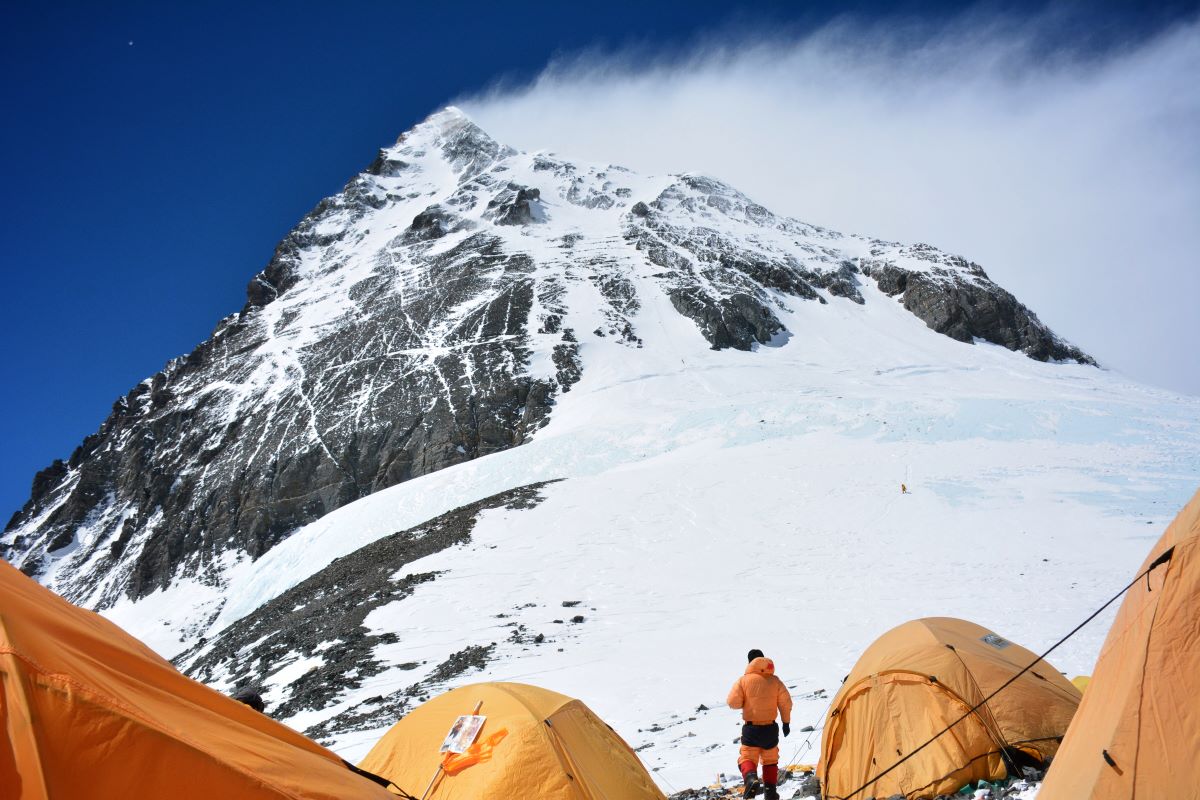
Camp IV is located on the South Col at approximately 7,900 meters.
This is the final major camp before the Everest summit attempt.
At this altitude, recovery is extremely limited. Most climbers rest only for a short period while preparing oxygen, clothing, food, water, headlamps, and other equipment for the summit climb.
The summit attempt normally begins during the night.
Time at Camp IV and above must be managed carefully because prolonged exposure to extreme altitude greatly increases physical deterioration.
Above approximately 8,500 meters, physical exhaustion becomes severe. However, one of the greatest dangers is the effect of altitude on judgment. A climber must still be able to:
Mental determination is valuable on Everest, but determination must never replace good judgment. Sometimes the strongest decision a climber can make is to turn around.
Every summit attempt must have clear limits. The Expedition Leader and high-altitude team may establish a turnaround time based on weather, route conditions, climbing speed, oxygen supply, and the individual's physical condition.
If you reach the turnaround time before reaching the summit, you must descend. Continuing upward too late increases the risk of running out of oxygen, descending in darkness or bad weather, becoming exhausted, or being unable to return safely to Camp IV.
The mountain will remain. Your safety must come first.
Weather can transform Everest conditions very quickly. Strong winds, snowfall, extreme cold, cloud, poor visibility, or unexpected storms can dramatically increase the danger.
Even a physically strong and well-acclimatized climber may need to wait or turn around because of weather. For this reason, our expedition team monitors available weather forecasts throughout the climbing period. However, forecasts are not guarantees. Conditions on the mountain must always be evaluated in real time.
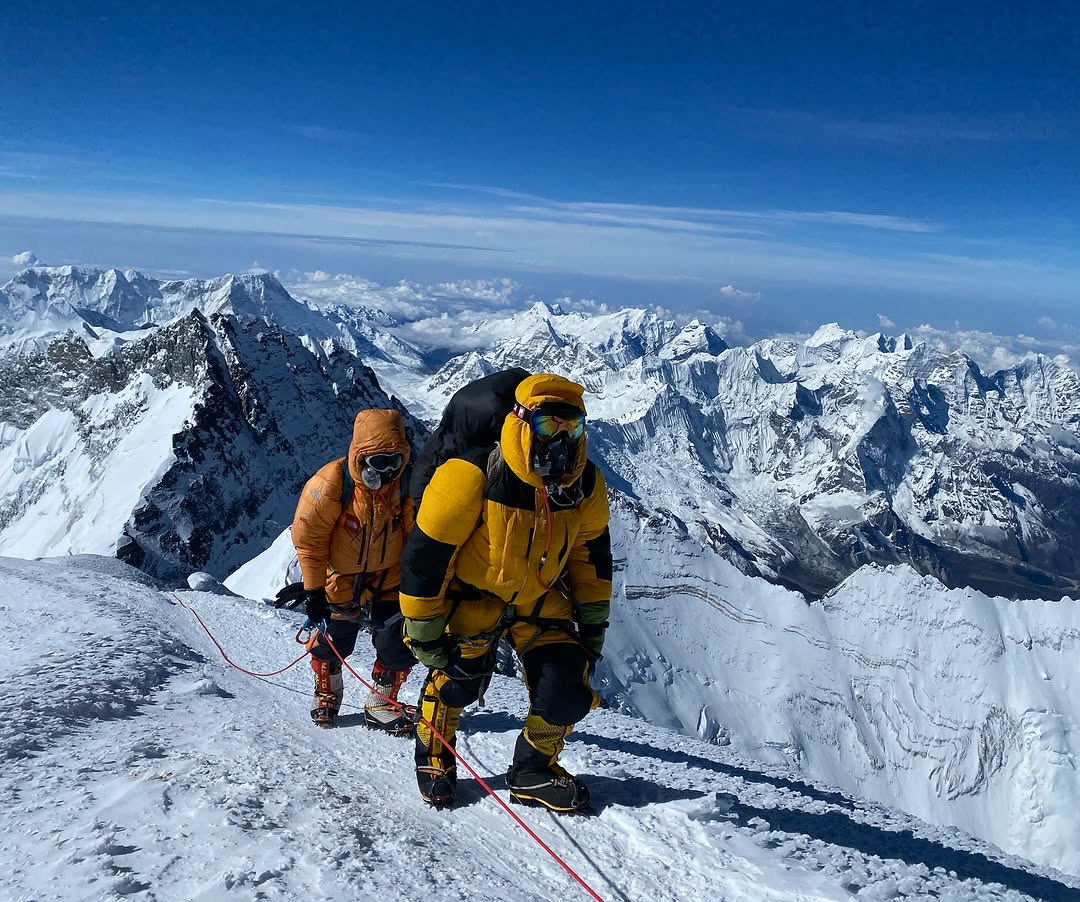
Most Everest climbers use supplemental oxygen during the upper part of the climb. Oxygen can help climbers maintain movement, warmth, concentration, and physical performance at extreme altitude, but it does not remove the risks of climbing above 8,000 meters.
Climbers must understand how to use their:
Your high-altitude Sherpa will assist with oxygen management, but each climber should also know how their own system works. Oxygen should never create a false sense of security.
At extreme altitude, climbers may not always recognize changes in their own behavior or condition. Team members and Sherpas should remain alert for unusual signs such as:
Any serious change should be reported immediately. A climber who appears confused or physically unstable may require assistance and descent.
Altitude illness can occur even in strong, experienced climbers. Symptoms such as headache, nausea, dizziness, unusual fatigue, poor coordination, confusion, or breathing difficulty should be taken seriously.
More severe altitude-related conditions, including High-Altitude Cerebral Edema (HACE) and High-Altitude Pulmonary Edema (HAPE), can become life-threatening.
Serious or worsening symptoms require immediate attention and may require descent. Medication should only be used according to appropriate medical advice and should never be used simply to hide symptoms so that a climber can continue upward.
Climbing Everest requires excellent preparation, gradual acclimatization, technical ability, physical endurance, teamwork, clear thinking, and respect for the mountain. At extreme altitude, ambition must always be balanced with judgment.
There may be moments when you feel strong and others when your body tells you that continuing is no longer safe. Listen to those warnings. Reaching the summit is an achievement. Knowing when to descend is mountaineering experience. Everest will still be there for another attempt.
Less MoreEverest does not begin at Base Camp.
For most climbers, it begins years earlier—with smaller mountains, long training days, cold nights, difficult decisions, successful summits and sometimes unsuccessful attempts. Eventually, after enough time in the mountains, Everest starts to feel possible.
Our Everest Expedition 2027 follows Nepal's historic South Col Route, first successfully climbed by Sir Edmund Hillary and Tenzing Norgay Sherpa in 1953.
The journey starts in Kathmandu before flying into the Khumbu and trekking gradually through Namche Bazaar, Tengboche and Dingboche toward Everest Base Camp. This approach is not simply transportation to the mountain. It gives the body time to acclimatize while allowing climbers to settle into the rhythm of expedition life.
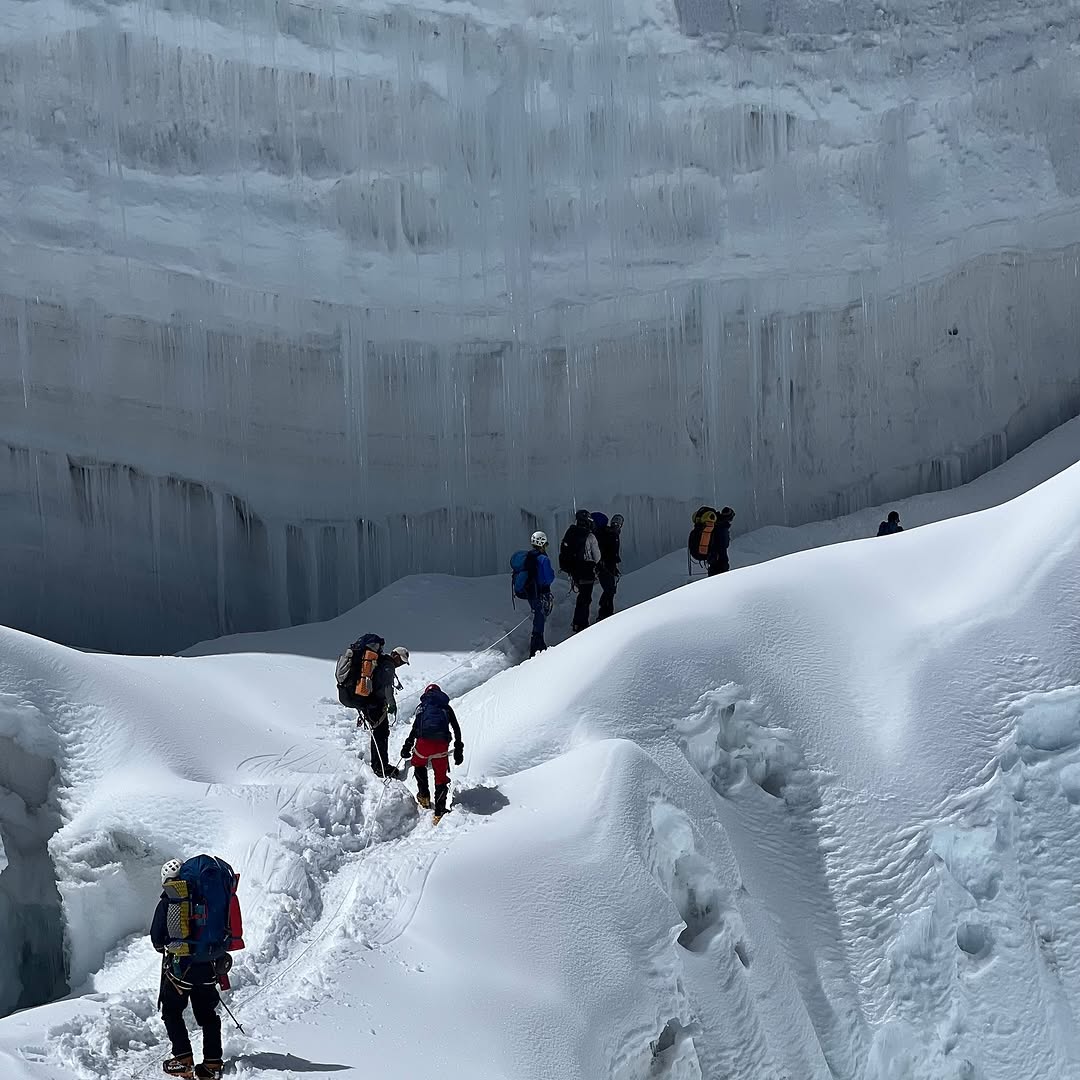
At Everest Base Camp (5,364 m), the expedition changes completely. For several weeks, life becomes simple: eat, rest, recover, climb, descend, and repeat. Acclimatization rotations take climbers through the Khumbu Icefall toward Camp I and Camp II before progressing higher toward Camp III. Between rotations, the team returns to Base Camp to recover and wait.
Eventually, when acclimatization is complete, the route is prepared and a suitable weather window develops, the summit push begins. From Camp II, the route climbs the Lhotse Face to Camp III before continuing across the Yellow Band and Geneva Spur to the South Col at approximately 7,900 m.
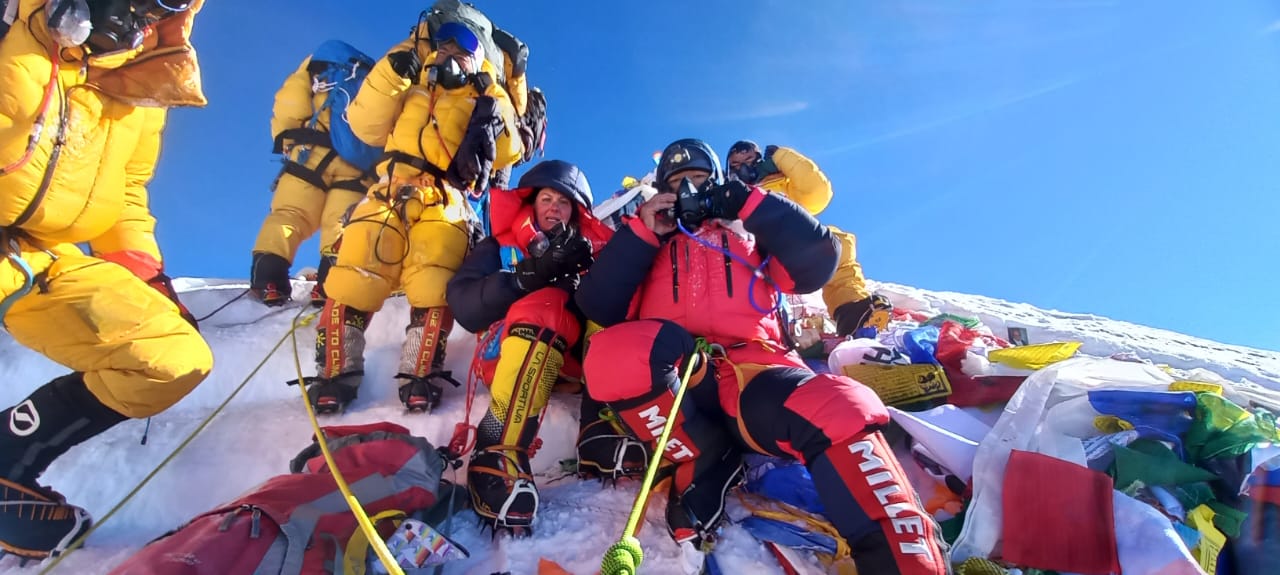
From there comes the final climb through the night: the Balcony, South Summit, summit ridge and finally the highest point on Earth at 8,848.86 meters. Reaching the summit is only half the expedition. Every decision is made with one priority—the team must still descend safely.
Day | Itinerary | Altitude |
|---|---|---|
Day 1 | Arrival in Kathmandu | 1,350 m |
Days 2–3 | Expedition Preparation in Kathmandu | 1,350 m |
Day 4 | Fly to Lukla and Trek to Phakding | 2,610 m |
Day 5 | Trek from Phakding to Namche Bazaar | 3,440 m |
Day 6 | Acclimatization Day in Namche Bazaar | 3,440 m |
Day 7 | Trek from Namche Bazaar to Tengboche | 3,860 m |
Day 8 | Trek from Tengboche to Dingboche | 4,410 m |
Day 9 | Trek from Dingboche to Lobuche | 4,910 m |
Day 10 | Acclimatization Day in Lobuche | 4,910 m |
Day 11 | Trek from Lobuche via Gorak Shep to Everest Base Camp | 5,364 m |
Days 12–14 | Acclimatization and Climbing Training at Everest Base Camp | 5,364 m |
Days 15–47 | Everest Climbing, Acclimatization Rotations, and Summit Period | Varies |
Day 48 | Trek from Everest Base Camp to Dingboche | 4,410 m |
Day 49 | Trek from Dingboche to Namche Bazaar | 3,440 m |
Day 50 | Trek from Namche Bazaar to Lukla | 2,850 m |
Day 51 | Fly from Lukla to Kathmandu | 1,350 m |
Day 52 | Rest and Contingency Day in Kathmandu | 1,350 m |
Day 53 | Final Departure from Kathmandu | — |
Welcome to Nepal. Upon arrival at Tribhuvan International Airport, our Alpinist Club representative will meet you and transfer you to your hotel in Kathmandu.
After check-in, you can rest after your international journey. Later, we will meet for an introduction to the expedition and discuss the program ahead.
These two days are dedicated to final expedition preparation.
We will check your personal climbing equipment, high-altitude clothing, boots, oxygen system requirements, and other essential gear. If anything is missing, Kathmandu has several specialist mountaineering shops where additional equipment can be purchased or rented.
At the same time, our operations team will complete the necessary expedition documents, climbing permits, and final logistical arrangements.
You will also receive a detailed expedition briefing covering safety, communication, climbing strategy, oxygen use, and Base Camp procedures.
Early in the morning, we fly toward Lukla, the gateway to the Everest region.
After meeting our trekking staff and organizing the loads, we begin with a relatively gentle trek following the Dudh Koshi River toward Phakding.
This first trekking day is intentionally easy, allowing the body to begin adjusting gradually to altitude.
We continue along the Dudh Koshi River, crossing several suspension bridges and passing through traditional Sherpa villages.
After entering Sagarmatha National Park, the trail climbs steadily toward Namche Bazaar, the main trading center of the Khumbu region.
On a clear day, we may catch our first distant view of Mount Everest along the way.
Today is an important acclimatization day.
Rather than remaining completely inactive, we normally make a short hike above Namche before returning to sleep at the same altitude.
You can also explore Namche Bazaar and learn more about the history and mountaineering culture of the Everest region.
The objective today is simple: climb a little higher, return lower, rest, and allow your body to adapt.
We follow a beautiful trail with views of Everest, Lhotse, Nuptse, and Ama Dablam.
After descending toward the river, we cross a bridge and begin a steady climb through forest to Tengboche.
The village is famous for Tengboche Monastery and its remarkable Himalayan surroundings.
We descend through forest before crossing the river and continuing toward Pangboche.
As we climb higher, vegetation becomes thinner and the landscape increasingly alpine.
We eventually reach Dingboche, surrounded by impressive views of Ama Dablam and other peaks of the Khumbu.
The trail climbs gradually above the valley toward Thukla.
From Thukla, we make a steeper ascent before continuing across open high-altitude terrain toward Lobuche.
At this elevation, we deliberately maintain a slow and steady pace.
We spend an additional day in Lobuche to improve acclimatization before moving to Everest Base Camp.
Depending on weather and the condition of the team, we may make a short acclimatization hike before returning to the lodge for rest.
Hydration, nutrition, and recovery are especially important at this stage.
Today we finally reach Everest Base Camp.
We first trek toward Gorak Shep before continuing across the glacial moraine toward Base Camp.
The surroundings become increasingly dramatic as we approach the Khumbu Glacier and the famous Khumbu Icefall.
After arriving at Base Camp, our expedition team will show you your tent and introduce you to camp life.
From this point, the trekking phase ends and the climbing expedition begins.
The first few days at Base Camp are dedicated to rest, acclimatization, and technical preparation.
Everest Base Camp will become our home for the coming weeks.
During this period, we organize equipment and prepare for the first climbing rotation. Training may include:
There is no reason to rush.
The objective is to arrive at the first rotation healthy, rested, and properly prepared.
This period is reserved for the main climbing phase of the Everest Expedition. The exact schedule cannot be fixed in advance because it depends on weather, route conditions, acclimatization, health, and the progress of the climbing team.
Climbers normally complete several acclimatization rotations before the final summit push.
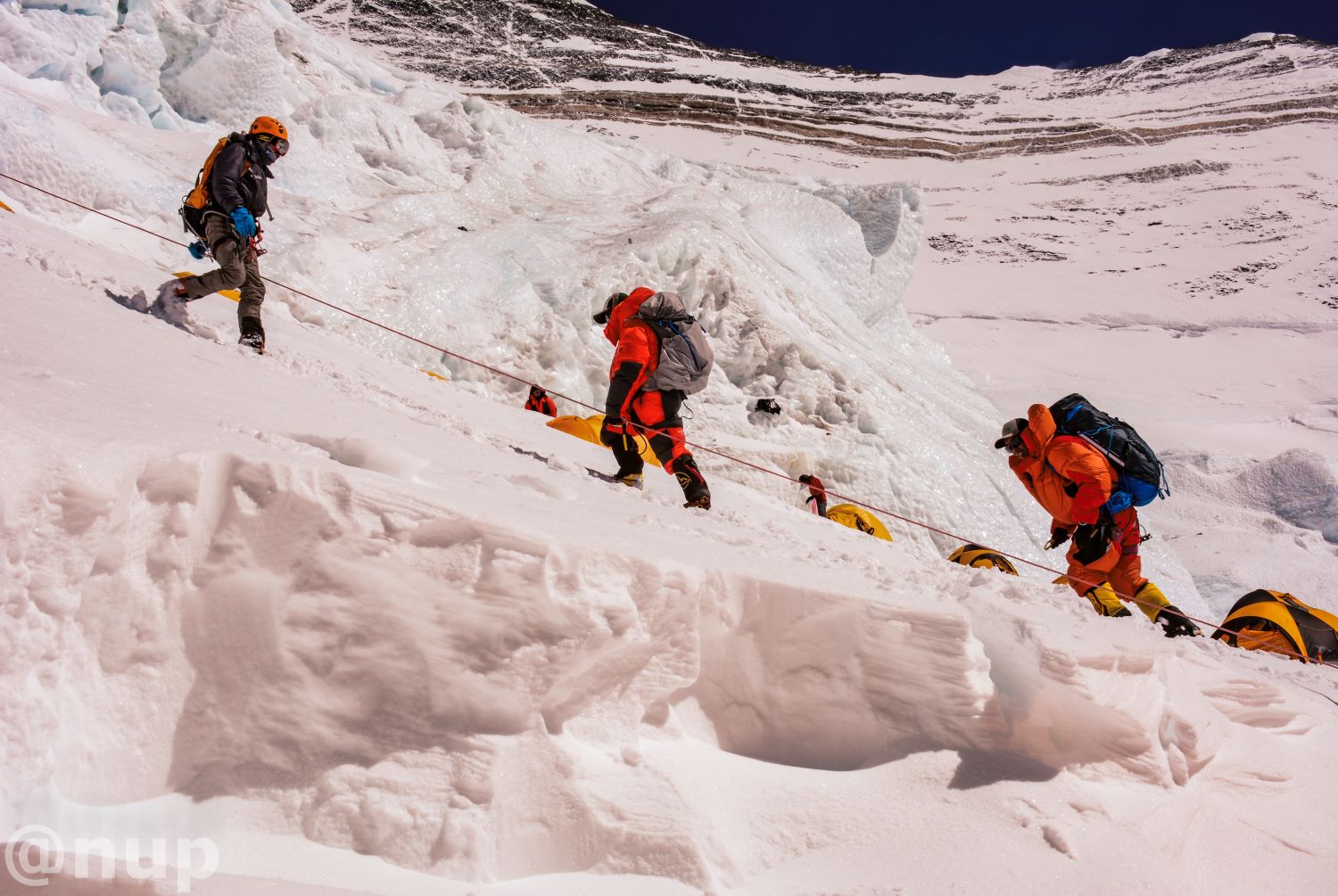
Climbers cross the Khumbu Icefall using fixed ropes and ladders before reaching Camp I at the entrance to the Western Cwm.
The route continues through the Western Cwm to Camp II. This camp serves as an Advanced Base Camp and includes kitchen and dining support during the expedition.
From Camp II, climbers ascend the steep Lhotse Face using fixed ropes. Camp III is an important part of the acclimatization process before returning lower for recovery.
After completing the main rotations, climbers descend to Everest Base Camp to rest, eat well, recover, prepare oxygen equipment, and wait for a suitable weather window.
During the final summit push, climbers move through Camp II and Camp III before reaching Camp IV at the South Col. At this extreme altitude, rest is limited and preparations are made for the summit attempt.
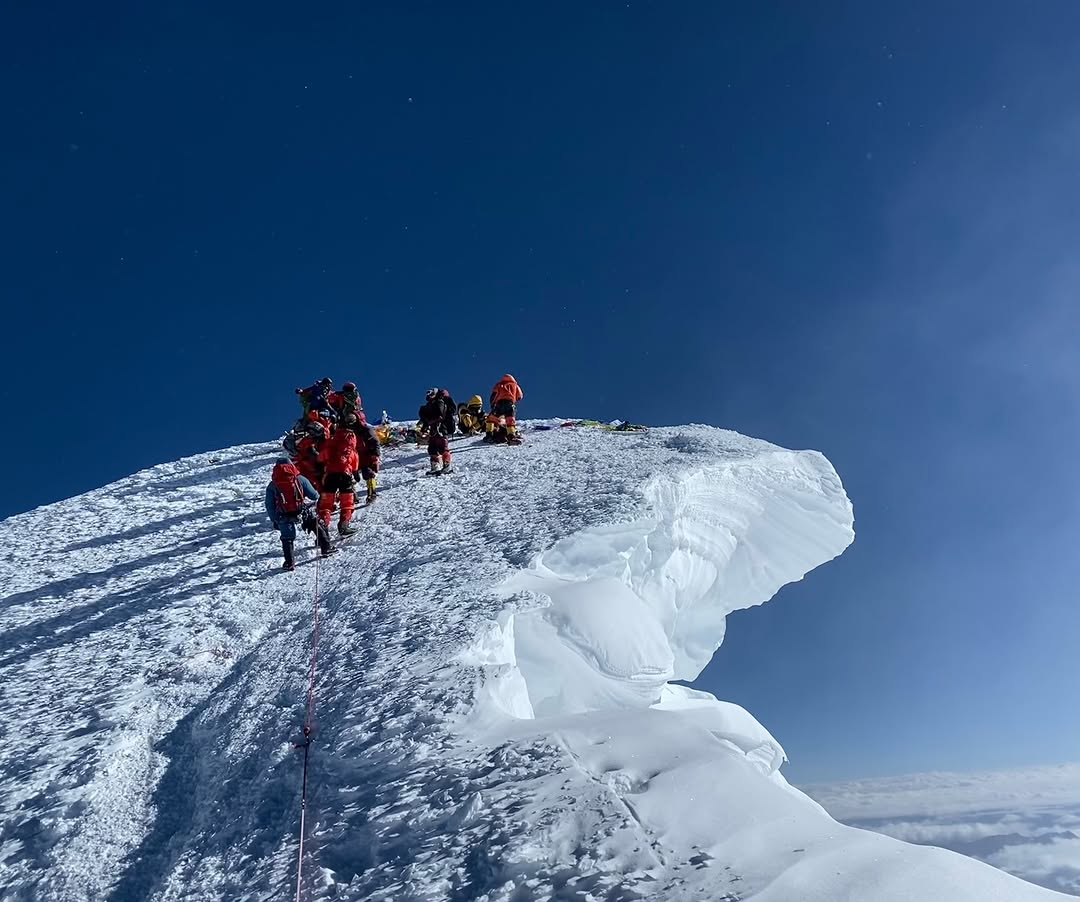
The summit climb usually begins during the night. The route passes the Balcony and South Summit before following the final ridge to the summit of Mount Everest.
After reaching the summit, climbers begin the descent as soon as possible.
The Expedition Leader and Climbing Sherpa will monitor weather, oxygen supply, climbing speed, health, and turnaround times throughout the summit attempt.
The exact climbing plan may change at any time for safety. Reaching the summit is important, but returning safely is always the priority.
After completing the climbing period, we leave Everest Base Camp and begin our journey back through the Khumbu Valley.
We descend past Gorak Shep and Lobuche before continuing toward Dingboche.
After weeks at extreme altitude, the thicker air and greener surroundings are immediately noticeable.
We continue descending through Pangboche and Tengboche.
The route returns to forests, rivers, villages, and increasingly rich vegetation before reaching Namche Bazaar.
This is a long but rewarding day as we return toward lower altitude.
Our final trekking day follows the Dudh Koshi Valley back toward Lukla.
We cross familiar suspension bridges and pass through the villages visited during our approach.
After arriving in Lukla, we spend our final evening in the Khumbu with the trekking and support team.
Weather permitting, we take an early flight from Lukla and return to Kathmandu.
After arriving, our vehicle will transfer you to the hotel.
The rest of the day is free for rest, shopping, or simply enjoying the comforts of the city after several weeks in the mountains.
Flights from Lukla are highly weather-dependent, so schedules may change.
Today is kept as an important contingency day in case of weather delays, changes to the climbing schedule, or delays with the Lukla flight.
If the expedition has operated according to schedule, the day is free for relaxation, sightseeing, shopping, or celebrating the completion of your Everest expedition.
A farewell dinner may be arranged in the evening according to your confirmed package.
Your Everest Expedition comes to an end today.
Depending on your international flight time, you may have some free time in Kathmandu.
Our representative will collect you from the hotel and transfer you to Tribhuvan International Airport for your departure.
After 53 days of trekking, acclimatization, climbing, waiting, teamwork, and life in the world's highest mountains, you leave Nepal with an experience that extends far beyond the summit itself.
Thank you for climbing with Alpinist Club. We wish you a safe journey home and hope to welcome you back to the Himalayas again.
Note:
If you have a private group and prefer a personalized experience, we can organize a custom trip tailored to your requirements and group size, running it any day you choose.
Plan a Private TripFrom arrival in Kathmandu to final departure, Alpinist Club coordinates your Everest expedition, including trekking logistics, accommodation, meals, acclimatization, and climbing operations. The Expedition Leader and high-altitude Sherpas manage mountain activities and summit planning. Follow all safety instructions and report any illness or altitude symptoms immediately. Safety always comes before summit success.
Read MoreOne of the most important parts of our Everest expedition is our 1:1 support system—one high-altitude Climbing Sherpa for each participant.
Your Climbing Sherpa is an experienced high-altitude mountaineer who supports you during important stages of the expedition, including climbing rotations and the summit push. Our high-altitude Sherpas have experience working on major Himalayan expeditions, including mountains above 8,000 meters.
Your Sherpa assists with route movement, high-altitude logistics, oxygen management, equipment, and summit-day support.
However, a 1:1 Sherpa service does not mean that your Sherpa will remain physically beside you at every moment of every rotation. High-altitude Sherpas also help establish camps, transport expedition equipment, prepare oxygen supplies, and support the wider mountain operation.
Every participant must therefore arrive with sufficient technical ability, fitness, experience, and independence to move safely on fixed ropes and high-altitude terrain.
A summit bonus for your high-altitude Sherpa is payable in cash in Nepal according to the conditions stated in your confirmed expedition package.
Where the summit bonus is payable separately, it becomes due once the climber and Sherpa depart from the final camp for the official summit attempt, regardless of whether the summit is ultimately reached.
Please confirm the applicable summit bonus and payment arrangement with Alpinist Club before departure so there is no misunderstanding during the expedition.
The Expedition Leader plays a central role in the organization and safety of the climb.
The leader plans the overall climbing strategy, including acclimatization rotations, rest periods, movement between high camps, weather assessment, oxygen planning, and the timing of the summit push.
The Expedition Leader represents Alpinist Club throughout the expedition and is normally based at Everest Base Camp, although they may move higher when required to supervise operations.
Conditions on Everest can change quickly. Weather, snowfall, wind, route conditions, illness, injury, acclimatization, or the condition of an individual climber may require the original plan to be changed.
The Expedition Leader has the authority to delay, modify, interrupt, or stop a climber's ascent if they believe continuing would create an unacceptable safety risk.
Every participant must respect these decisions.
No summit is more important than returning safely.
A successful Everest expedition depends on a large team working both behind the scenes and on the mountain.
Our Base Camp staff manage food, accommodation, equipment, communication, camp maintenance, and general expedition logistics.
A dedicated kitchen team prepares meals at Everest Base Camp, while we also maintain kitchen support at Camp II during the main climbing period.
Porters and/or yaks are used to transport expedition equipment and supplies during the approach to Base Camp. Above Base Camp, high-altitude Sherpas take responsibility for transporting and positioning collective climbing equipment, tents, oxygen, fuel, food, and other essential supplies.
At Camp II, our expedition setup includes a kitchen and dining area with cooking staff, depending on the operational conditions of the expedition.
Although our Sherpa team transports much of the collective expedition equipment, every climber must carry their own personal climbing equipment and other items required during the rotations.
Depending on the stage of the expedition, your backpack may normally weigh approximately 10–12 kg.
During the final summit push, climbers should expect to carry approximately 6–8 kg, which may include personal equipment, water, food, clothing, and an oxygen cylinder.
Your Sherpa provides important support, but participants must be physically prepared to carry their own essential equipment at extreme altitude.
Climbing Mount Everest is an extreme high-altitude mountaineering objective.
At 8,848.86 meters, Everest requires excellent physical conditioning, strong mental resilience, previous mountaineering experience, and the ability to perform for several weeks in a demanding environment.
The greatest difficulty is not simply the technical climbing. Extreme altitude, prolonged exposure to cold, wind, poor sleep, limited recovery, heavy equipment, changing weather, and the cumulative fatigue of repeated climbing rotations make Everest particularly demanding.
Participants should already be comfortable using crampons, an ice axe, climbing harness, ascender/Jumar, descender, carabiners, fixed ropes, and other standard mountaineering equipment.
You must also be comfortable moving independently on snow, ice, glacier terrain, and steep fixed-rope sections.
The Expedition Leader and Sherpas provide guidance, logistical support, and assistance, but they cannot physically carry an unprepared participant to the summit.
Training should begin well before the expedition. For most climbers, a structured preparation period of at least 6–8 months is recommended.
Training should focus on cardiovascular endurance, uphill movement, leg and core strength, carrying a weighted backpack, recovery, and the ability to maintain physical effort for many hours.
Running, cycling, swimming, hiking, stair climbing, ski touring, trail running, and regular mountain climbing can all contribute to preparation.
Long mountain days are especially valuable. Your body should become accustomed to walking or climbing for several hours while carrying weight and then recovering sufficiently to perform again the following day.
Technical mountaineering practice should continue alongside physical training.
Altitude is one of the greatest challenges on Everest.
As you climb higher, atmospheric pressure decreases and less oxygen is available to the body. Even highly trained athletes cannot avoid the effects of extreme altitude.
For this reason, our expedition includes gradual acclimatization during the trek to Base Camp followed by a series of climbing rotations on Everest.
Climbers normally move progressively through Camp I, Camp II, and higher camps before returning to Base Camp for recovery. The exact rotation schedule depends on the climber's acclimatization, mountain conditions, and the Expedition Leader's strategy.
Headache, nausea, unusual tiredness, loss of appetite, dizziness, poor coordination, breathing difficulty, confusion, or other unusual symptoms must never be ignored.
The physical environment can also affect you mentally. Weeks of cold, discomfort, waiting, fatigue, and uncertainty can create frustration and changes in mood. Patience, respect, communication, and a positive team attitude are important parts of a successful expedition.
Everest is intended for experienced mountaineers.
The South Col Route includes glacier travel, ladder crossings, fixed ropes, steep snow and ice, exposure, and sustained climbing at extreme altitude.
Conditions can vary considerably from year to year and even from one day to another. Fresh snow, strong wind, extreme cold, poor visibility, ice conditions, crevasses, and route changes can significantly increase the difficulty.
Participants must know how to use their technical equipment efficiently without depending entirely on their Sherpa for basic climbing skills.
Previous experience on high-altitude expeditions is strongly recommended. Experience on 6,000 m and 7,000 m peaks provides valuable preparation, and previous experience on an 8,000 m expedition is a significant advantage.
In Kathmandu, accommodation is provided in a hotel according to your confirmed package. Everest expedition members are normally provided with a private room.
During the trek to and from Everest Base Camp, accommodation is in local mountain lodges or teahouses.
Facilities become simpler as altitude increases. Rooms are generally basic, and bathrooms, showers, charging facilities, and Wi-Fi may be shared or available at an additional cost.
At Everest Base Camp, each participant is provided with an individual sleeping tent and mattress.
Because Base Camp becomes our home for several weeks, we aim to create a comfortable environment where climbers can rest and recover between rotations.
The camp includes dining facilities, kitchen facilities, toilets, shower arrangements, communication equipment, storage areas, and other expedition infrastructure.
Accommodation above Base Camp is much more basic.
High-altitude tents are normally shared by two climbers. At some camps and depending on operational conditions, three people may occasionally share a tent.
Space is limited, and comfort decreases significantly as altitude increases.
Maintaining good hygiene is particularly important during a long expedition because stomach illnesses, respiratory infections, or other infections can seriously affect acclimatization and climbing performance.
Base Camp has designated toilet facilities and toilet paper. Participants should regularly wash or sanitize their hands, particularly before eating and after using the toilet.
Basic washing water is available at Base Camp for personal hygiene. Hot water for showers can normally be arranged according to weather, water supply, fuel, and camp conditions.
Laundry can be done manually when suitable water and conditions are available. We ask climbers to use biodegradable products whenever possible.
At the high camps, facilities are extremely limited. Climbers should carry appropriate personal hygiene products, wet wipes, hand sanitizer, and a suitable nighttime urine bottle.
A welcome dinner is provided in Kathmandu according to the expedition program. A farewell dinner may also be arranged at the end of the expedition.
During the approach trek, meals are served in local mountain lodges. Typical meals include eggs, bread, porridge, pancakes, rice, noodles, soup, potatoes, vegetables, pasta, dal bhat, and other local or international dishes.
Tea and coffee are available according to the meal arrangements in your confirmed package.
We encourage participants to eat consistently even when appetite begins to decrease at higher elevations.
Our Base Camp kitchen team prepares fresh meals throughout the expedition. Meals normally include combinations of rice, pasta, noodles, lentils, potatoes, vegetables, eggs, soups, meat when available, and other suitable expedition food.
Tea, coffee, and other non-alcoholic hot drinks are available. Maintaining sufficient calorie intake and hydration is extremely important for recovery and acclimatization.
Please inform us in advance about allergies, vegetarian or vegan requirements, religious dietary requirements, or other important food restrictions.
Camp II has dedicated kitchen support during the main expedition period. At higher camps, food becomes simpler because of altitude, weight, fuel limitations, and the difficulty of cooking.
Freeze-dried meals, soups, noodles, snacks, energy foods, and hot drinks are commonly used. We will provide suitable high-altitude food, but climbers are also encouraged to bring some personal snacks that they know they can eat when their appetite is low. At higher camps, stoves and fuel are used to melt snow for drinking water and prepare simple meals and hot drinks.
Proper hydration is essential throughout the expedition. At Base Camp and during the trek, safe drinking water will be managed according to local conditions and expedition procedures.
At high camps, most drinking water must be produced by melting snow or ice. Climbers may wish to bring electrolyte or mineral replacement tablets that they have already used successfully during training. Avoid trying unfamiliar supplements for the first time during the expedition.
Airport and city transfers included in the program are arranged according to your confirmed expedition package. Access to the Everest region normally involves a flight to Lukla followed by the trek toward Everest Base Camp.
We deliberately approach Base Camp on foot because the gradual journey through the Khumbu plays an important role in acclimatization and allows the team to prepare physically and mentally for the expedition.
The planned return is also by trekking back toward Lukla. A helicopter return from Base Camp may sometimes be arranged at additional cost, depending on weather, aircraft availability, regulations, and operational conditions. A helicopter flight requested for convenience is different from an emergency medical evacuation.
Our Everest expedition normally operates with between 2 and 15 international participants. We maintain the required guide, Sherpa, kitchen, and logistical support according to the size of the expedition. Most importantly, our standard climbing support remains based on a 1:1 high-altitude Sherpa-to-member ratio.
Alpinist Club provides the collective equipment required to operate the expedition. This includes Base Camp tents and facilities, dining and kitchen equipment, toilets, shower facilities, high-altitude tents, cooking systems, fuel, communication equipment, and other group climbing and expedition equipment according to the confirmed package. High-altitude camps are established and maintained by the expedition team according to mountain and route conditions.
Personal mountaineering equipment is the responsibility of each participant unless specifically stated otherwise in the package. Every climber must arrive with expedition-quality equipment suitable for temperatures and conditions found above 8,000 meters.
A complete Everest equipment list will be provided before departure, and our team can review your equipment during the preparation period in Kathmandu. Certain items, such as expedition sleeping bags, down suits, and down jackets, may be available for rental through Alpinist Club depending on size and availability.
Rental equipment must be returned in good condition, and a security deposit may be required.
Most Everest climbers use supplemental oxygen during the upper part of the mountain. Our standard package provides five oxygen cylinders for each participant, together with an oxygen mask and regulator, according to the confirmed expedition package.
The exact point at which oxygen is started varies according to the expedition strategy, the climber's acclimatization, personal experience, and conditions. Many climbers begin using oxygen from around Camp III, while some may use it earlier.
Your oxygen plan will be discussed with the Expedition Leader and your Climbing Sherpa. If you require more oxygen than the standard package provides, additional cylinders should be requested as early as possible and will normally involve an additional charge.
Oxygen must be managed carefully throughout the summit push. Your Sherpa will assist with regulators, masks, cylinders, flow rates, and cylinder changes, but climbers should also understand how their own system works.
An Everest attempt without supplemental oxygen is an exceptionally demanding undertaking and is suitable only for climbers with extensive high-altitude experience.
If this is your objective, you must inform Alpinist Club well before the expedition so that your acclimatization, logistics, and safety plan can be discussed separately.
The Expedition Leader and high-altitude team may require you to change your plan if your acclimatization, climbing speed, health, weather, or other safety factors indicate that continuing without oxygen would create an unacceptable risk.
Emergency oxygen arrangements may be positioned according to the expedition plan, but they should never be treated as a guarantee that a no-oxygen attempt can safely continue.
Communication between Base Camp and the mountain is maintained using radio systems. The Expedition Leader, high-altitude team, and relevant camp personnel use radio communication to coordinate movements, weather information, climbing operations, and emergencies.
The expedition also has access to satellite communication for logistical, weather, and emergency purposes. Personal satellite communication may be available under certain circumstances and may involve an additional charge.
Base Camp will also have expedition medical supplies and a portable hyperbaric system for emergency altitude situations. These facilities provide additional emergency support but do not replace descent or evacuation when medically necessary.
Weather plays a major role in every Everest expedition. Our team monitors available mountain forecasts throughout the climbing period. Summit timing is based on several factors, including wind, snowfall, temperature, route conditions, crowd movement, climber condition, oxygen supply, and the progress of the expedition team.
A forecast is never a guarantee. The Expedition Leader may postpone or cancel a summit attempt even after the team has moved high on the mountain. Every climber must also respect established turnaround times. Reaching a certain altitude does not mean that continuing upward is automatically safe.
Everest preparation should include both physical and technical training. In addition to regular cardiovascular exercise, we strongly recommend long mountain days and repeated hikes of four to six hours or more while carrying a backpack. Training should progressively increase rather than suddenly becoming intense immediately before departure.
Technical preparation should include fixed-rope climbing, ascending with a Jumar, rappelling or descending, crampon technique, glacier travel, ladder crossing where possible, rope management, and familiarity with your oxygen equipment. Climbers should arrive rested rather than exhausted from excessive last-minute training.
Every Everest participant should undergo a medical evaluation before joining the expedition. Tell your doctor that you are planning to spend several weeks at very high and extreme altitude and intend to climb to 8,848.86 meters.
Discuss any existing medical conditions, previous altitude problems, allergies, medication, recent injuries, or other health concerns. A dental examination before departure is also recommended because untreated dental problems can become difficult to manage during a long expedition.
For an Everest expedition, consulting a doctor with experience in high-altitude or expedition medicine is strongly recommended. Participants must inform Alpinist Club about any important medical condition that could affect their safety or the management of an emergency.
Altitude illness must be taken seriously. Mild Acute Mountain Sickness (AMS) may include headache, nausea, poor appetite, dizziness, unusual tiredness, and disturbed sleep.
More serious altitude illness can involve High-Altitude Pulmonary Edema (HAPE) or High-Altitude Cerebral Edema (HACE), both of which can become life-threatening. Never continue climbing simply because reaching the summit is important to you.
If symptoms worsen, the safest response may be to stop ascending or descend immediately according to the advice of the expedition's medical and climbing team.
Preventive medication such as acetazolamide may be appropriate for some climbers, but medication should only be planned after discussion with your doctor or an experienced high-altitude medical professional.
Do not use medication to hide serious symptoms in order to continue climbing. Every climber must report symptoms honestly and promptly.
Comprehensive insurance is mandatory for an Everest expedition. Your insurance policy must specifically cover high-altitude mountaineering up to 8,848.86 meters, as ordinary travel insurance often excludes technical climbing or expeditions above certain altitudes.
Your policy should include emergency medical treatment, helicopter rescue and evacuation where possible, hospitalization, repatriation, trip interruption, and other relevant expedition risks.
You must carefully check the altitude limit and mountaineering exclusions directly with your insurance provider. A copy of your insurance details and emergency contact information should be provided before the expedition begins.
Emergency evacuation in the Himalayas depends on altitude, location, weather, visibility, aircraft availability, and the condition of the climber. Helicopter evacuation may be possible from Base Camp or some lower areas when conditions permit, but it cannot be guaranteed from high-altitude camps.
Above Base Camp, an emergency may first require assistance from the climbing team and descent to a location where further evacuation is possible. For this reason, rescue arrangements should never be considered a substitute for proper preparation, acclimatization, good judgment, or following the Expedition Leader's instructions.
Alpinist Club provides professional expedition organization, Sherpa support, logistics, equipment, communication, and climbing leadership according to the confirmed package.
However, every participant also carries personal responsibility. mYou must arrive with the required fitness, technical experience, personal equipment, insurance, and understanding of the risks involved in climbing Everest.
You must follow safety instructions, respect turnaround times, communicate honestly about your physical condition, and make responsible decisions throughout the expedition. No guide, Sherpa, or operator can completely remove the risks associated with climbing an 8,000-meter mountain.
Mount Everest is both an extraordinary natural environment and home to the communities of the Khumbu. We ask every participant to help us minimize the environmental impact of the expedition. Waste must be managed according to expedition procedures and local regulations. Do not leave personal rubbish, batteries, equipment, food packaging, or other unnecessary material on the mountain.
Whenever practical, we encourage reusable containers, responsible water management, and biodegradable personal hygiene products. Respect for the mountain, local communities, Sherpa culture, other climbers, and the expedition team is an essential part of the Everest experience.
Our objective is to help you climb Mount Everest with the strongest possible preparation and professional support. But mountaineering is never completely predictable. Weather can change. Routes can change. Your body can change. A summit window can disappear.
For this reason, the most important principle throughout the expedition is simple: The summit is optional. Returning safely is essential. The decision to wait, turn around, or descend should never be considered a failure. Good judgment is one of the most important skills an Everest climber can bring to the mountain.
Less More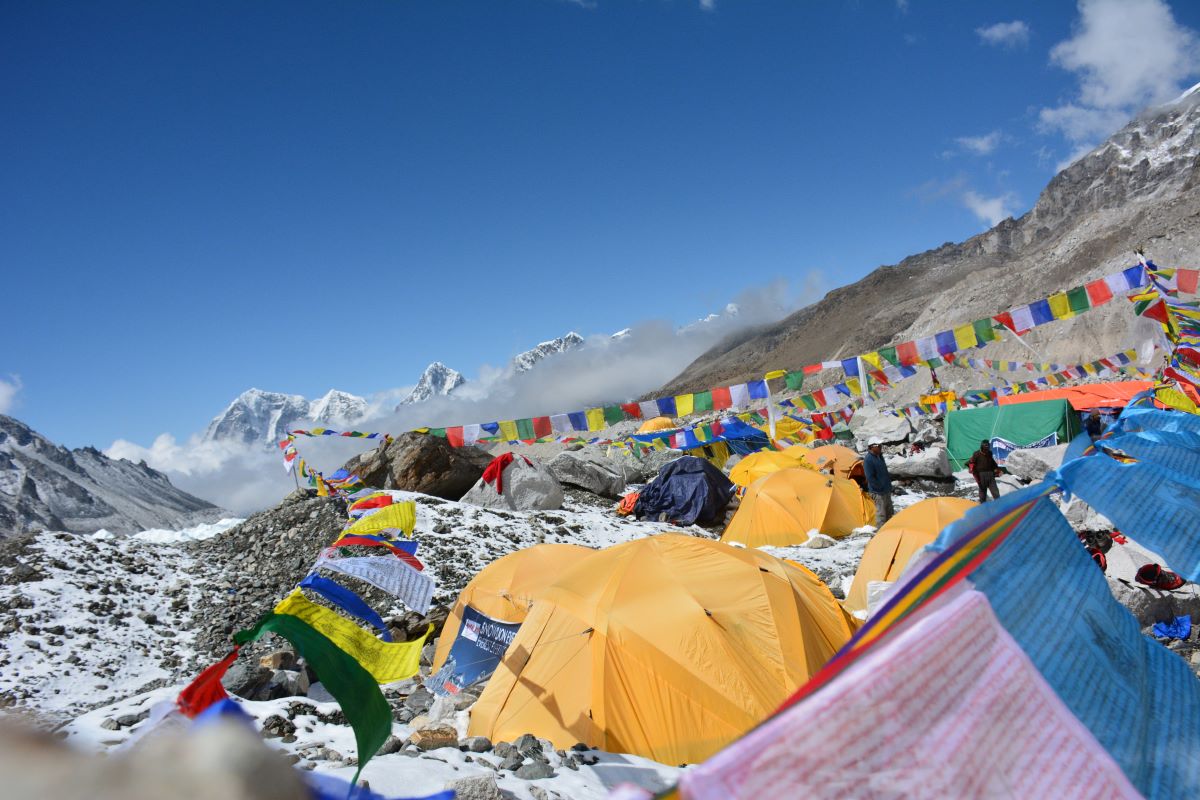
| Image | Trip | Dates | Price | Action |
|---|---|---|---|---|

|
Everest Climbing Expedition 8,848.86m – South Col Route 53 Days LeftEverest expedition 2027 |
Start:
2027-04-07
End: 2027-05-29 |
$ 48,999.00 | BOOK NOW |
The Alpinist Club Everest expedition is planned for 53 days, including arrival in Kathmandu, the trek to Everest Base Camp, acclimatization, climbing rotations, the summit period, and return to Kathmandu.
Spring, particularly April and May, is the main climbing season for Mount Everest via Nepal's South Col Route. Weather conditions and summit opportunities vary each year
The cost depends on the expedition services, climbing Sherpa support, oxygen allocation, permits, and logistics included in the package. Contact Alpinist Club for the confirmed price and a detailed breakdown of inclusions and exclusions.
Climbers need excellent physical fitness, strong technical mountaineering skills, high-altitude experience, and the ability to use fixed ropes and specialized climbing equipment. Previous experience on an 8,000-meter peak is strongly recommended.
The Everest expedition is an extremely challenging high-altitude climb involving steep snow and ice, technical sections, extreme cold, strong winds, and prolonged exposure to low oxygen levels. It requires extensive preparation and mental resilience.
Climbers need the applicable Nepal government Everest climbing permit and other required permits and official expedition arrangements. Alpinist Club can coordinate the necessary permits according to the confirmed package.
Supplemental oxygen is generally used during the high-altitude summit phase. The oxygen cylinders, masks, regulators, and backup arrangements provided by Alpinist Club should be confirmed before booking.
Acclimatization involves gradually adjusting to lower oxygen levels as altitude increases. The expedition includes planned acclimatization days and climbing rotations, with the schedule adjusted according to health, weather, and mountain conditions.
Accommodation generally includes hotels in Kathmandu, teahouses during the approach trek, and expedition tents at Everest Base Camp and higher camps. The exact facilities and arrangements depend on the confirmed package.
Yes. Climbers should obtain comprehensive insurance that explicitly covers high-altitude mountaineering, emergency medical treatment, helicopter evacuation where available, and repatriation. Check the policy limits and exclusions before departure.
No. Summit success depends on weather, route conditions, acclimatization, physical condition, and other factors. The Expedition Leader may delay or cancel a summit attempt whenever conditions are unsafe. Safety always takes priority over reaching the summit.
Climbers need expedition-grade clothing, high-altitude boots, an insulated sleeping bag, a climbing harness, helmet, crampons, ice axe, gloves, goggles, and other technical equipment. Alpinist Club will provide the recommended equipment checklist before departure.
The standard Nepal South Col Route uses Everest Base Camp, Camp I, Camp II, Camp III, and Camp IV at the South Col before the summit attempt. Camp locations and climbing arrangements may vary depending on route conditions and the expedition team's plan.
The summit push typically takes several days, involving movement through the higher camps and a return to a lower camp or Base Camp. The exact duration depends on weather, acclimatization, route conditions, and the climber's physical condition.
Bad weather can delay or cancel a summit attempt. The Expedition Leader monitors forecasts and mountain conditions and adjusts the schedule when necessary. Contingency days help accommodate some delays, but additional time or expenses may still be required.
Major risks include altitude sickness, exhaustion, frostbite, hypothermia, avalanches, crevasses, falling ice, severe weather, and low oxygen levels. Proper acclimatization, suitable equipment, experienced guides, and following safety instructions help manage these risks but cannot eliminate them.
Preparation should include endurance training, uphill hiking, stair climbing, strength exercises, and activities that improve balance and stamina. Climbers should also develop technical mountaineering skills and gain experience at high altitude before attempting Everest.
Private or customized arrangements may be possible depending on availability, logistics, and support requirements. Contact Alpinist Club to discuss your preferred dates, climbing experience, group size, Sherpa support, and expedition budget.