Max. Elevation






Standing at 8,188 metres, Cho Oyu is the sixth-highest mountain in the world. Its relatively straightforward Northwest Ridge makes it a popular choice for experienced mountaineers taking their first step into 8,000-metre climbing.
The expedition approaches from Tibet, where road access leads to Chinese Base Camp at around 4,900 metres. A two-day trek then reaches Advanced Base Camp at approximately 5,650 metres, the main base for acclimatization and climbing preparations.
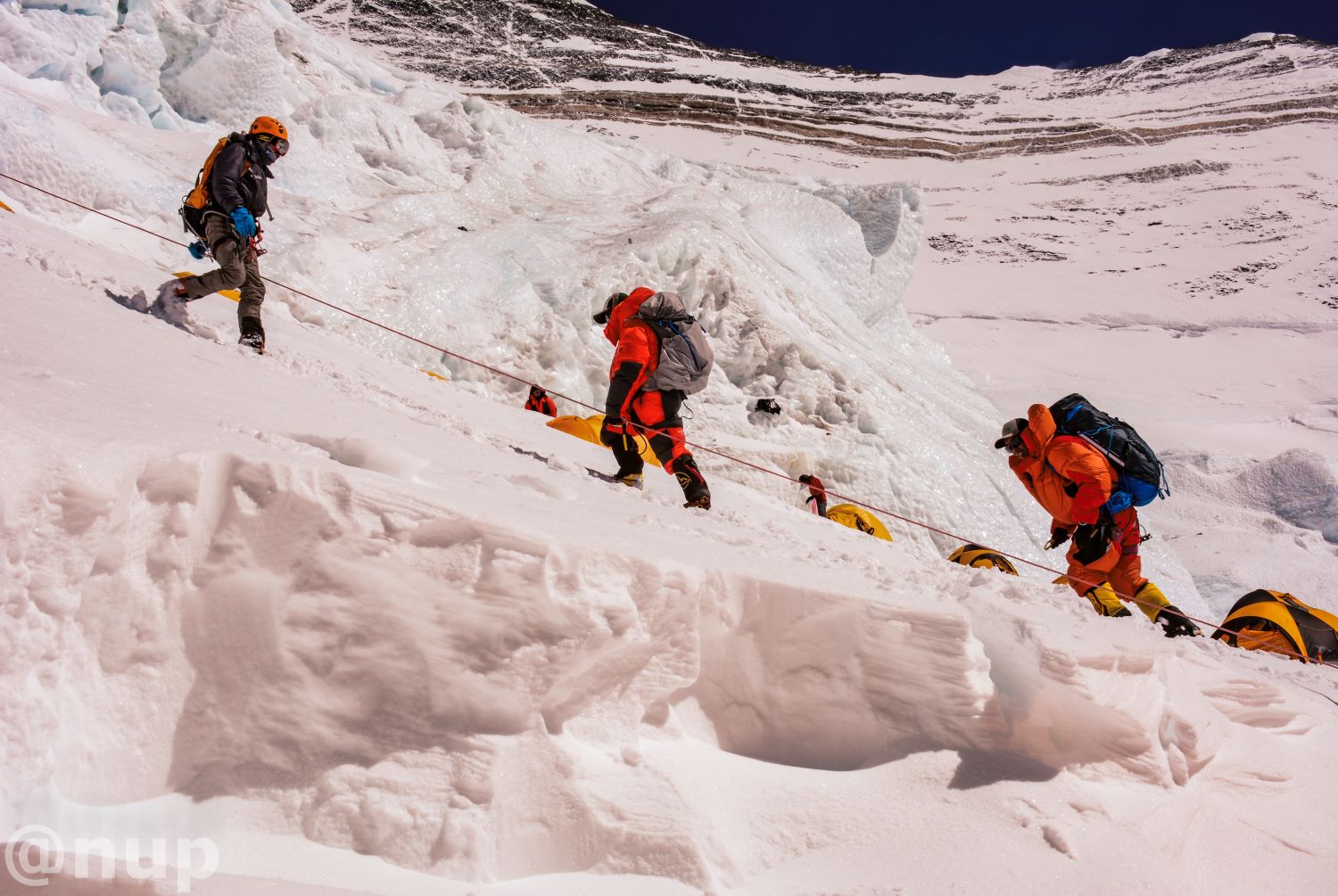
Above base camp, the route follows broad snow slopes, generally around 30 degrees, with two or three high camps established along the way. A steeper ice section near 6,600 metres presents one of the main technical challenges and is negotiated using fixed ropes.
Our autumn expedition takes place after the Nepalese monsoon, allowing time for acclimatization, climbing rotations and a suitable summit window. Snow conditions and weather guide every decision on the mountain.
Although Cho Oyu is considered one of the more accessible 8,000-metre peaks, it remains a demanding expedition. Extreme altitude, cold, accumulated snow and the long traverse across the summit plateau require strong fitness, previous mountaineering experience and careful preparation.
An Alpinist Club representative welcomes you at Tribhuvan International Airport and transfers you to your hotel. Settle in and rest after your journey. Our team collects the documents needed for your Tibet visa and expedition formalities.
Meet your expedition team for a briefing covering the route, acclimatization plan, climbing arrangements, and safety procedures. Your equipment is checked, with time to purchase any missing items in Thamel.
Leave Kathmandu early and drive through terraced hills, riverside valleys, and mountain villages. Pass through Syabrubesi before continuing to Timure, near the Nepal–Tibet border. A helicopter transfer to Syabrubesi may be arranged separately, subject to availability and weather, followed by a road transfer to Timure.
Complete immigration and customs procedures before entering Tibet. Meet the Tibetan support team and continue by vehicle to Kyirong. After checking into the hotel, spend the afternoon resting as you begin adjusting to the altitude.
Drive across the Tibetan Plateau through open valleys and high mountain passes. The route crosses a pass at approximately 5,100 m before descending to Tingri. The afternoon is reserved for rest following the significant increase in altitude.
Highest point en route: Approximately 5,100 m
Remain in Tingri for an acclimatization day. If you are adjusting well, the guide may arrange a gentle hike towards the monastery above town, reaching around 4,600 m before returning. The walk is optional and depends on your condition.
Leave Tingri and follow a rough track towards Cho Oyu’s Chinese Base Camp. Settle into your tent, have lunch, and rest. The team begins organizing equipment for the approach to Advanced Base Camp.
Take a relaxed day to adjust to the altitude. Short walks around camp may be arranged while the expedition team checks supplies and prepares loads for transport by yak.
Join an acclimatization walk on the nearby slopes if your condition allows. The guide chooses a suitable height and pace before returning to camp. Prepare your personal trekking bag while the support team organizes equipment for the approach.
Begin trekking towards Advanced Base Camp, following the valley and glacier moraine. Yaks carry the main expedition loads while you walk with your personal daypack. Stop at Intermediate Camp to divide the approach into two stages and allow more time to acclimatize.
Continue along the moraine to Advanced Base Camp, the main base for the climbing period. Settle into your tent and rest while the team establishes the kitchen, dining, and expedition facilities.
Spend the day resting and adjusting to the altitude. The team reviews your equipment and discusses the first climbing rotation. Gentle movement around camp may be included, depending on how you feel.
Join the climbing team for a traditional Buddhist puja ceremony before the ascent. Complete final equipment checks and review fixed-rope techniques, communication procedures, and arrangements for the higher camps.
These days are reserved for climbing rotations, recovery, weather delays, and the summit attempt. The expedition leader sets the schedule according to acclimatization, route conditions, and weather forecasts.
First climbing rotations
Begin with climbs towards Camp I, returning to Advanced Base Camp for recovery between rotations. Later movements may include overnight stays at Camp I and Camp II as the team prepares for the summit push.
Camp I — around 6,400 m
The approach crosses glacier terrain and moraine before reaching the snow slopes above. An intermediate glacier camp around 5,800 m may be used if needed.
Camp II — around 7,200 m
Climb above Camp I through steeper snow and ice, including the ice barrier. Fixed ropes assist movement through the more technical sections.
Camp III — around 7,600 m
Move to the final high camp when acclimatization and conditions allow. Keep activity limited, prepare equipment, and rest before the summit attempt.
Cho Oyu summit — 8,188 m
Leave during the night or early morning, following the guide’s plan. Climb the upper slopes and continue across the summit plateau towards the summit.
After the attempt, descend to the camp selected by the expedition leader. Turnaround decisions depend on weather, progress, oxygen supplies, and each climber’s condition.
Oxygen arrangements
Supplemental oxygen use is agreed upon before the summit push. Any attempt without oxygen requires prior discussion and approval from the expedition leader.
Weather reserve
There is no fixed summit date. The climbing period provides flexibility to wait for suitable conditions, but a summit attempt cannot be guaranteed.
Pack up Advanced Base Camp and begin the return trek. Yaks transport expedition equipment down the valley. At Chinese Base Camp, meet the vehicles and continue to Tingri for the night.
This is a long day, and the schedule depends on the team’s pace and transport arrangements.
Drive back across the Tibetan Plateau towards Kyirong. Depending on the confirmed route, the journey passes near Paiku Co Lake and crosses high mountain terrain before descending to town.
Drive to the border and complete the exit and entry formalities. Continue through Timure and Syabrubesi to Kathmandu, where you transfer to your hotel.
Enjoy a free day to rest, shop, or explore Kathmandu. This day also provides a buffer for delays during the return journey.
Our team transfers you to Tribhuvan International Airport for your international flight home.
 Note:
Note:
If you have a private group and prefer a personalized experience, we can organize a custom trip tailored to your requirements and group size, running it any day you choose.
Plan a Private TripPersonal Climbing Sherpa
Each participant has one dedicated climbing Sherpa for support during important climbing stages and the summit attempt. Your Sherpa also helps establish high camps, carry expedition supplies and prepare high-altitude meals.
During acclimatization rotations, your Sherpa may be carrying equipment or preparing camps, so continuous accompaniment should be agreed upon before each movement. Climbers must be able to manage their personal equipment and use fixed ropes confidently.
Sherpa summit bonuses and staff tips are separate expenses unless stated otherwise in your booking agreement.
Read MoreThe expedition leader coordinates the team, camp logistics, acclimatization rotations and summit plans. Decisions are based on weather, route conditions and each climber’s health and progress.
For everyone’s safety, the leader may change the itinerary, delay the summit attempt or require a climber to descend. All participants must follow safety instructions.
Local Support Team
The expedition team includes climbing Sherpas, cooks, kitchen assistants and base-camp staff. Yaks transport expedition equipment between Chinese Base Camp and Advanced Base Camp.
Your baggage allowance and any additional carrying services will be confirmed before departure. Above Advanced Base Camp, participants carry their personal daypack unless additional support has been arranged.
Cho Oyu is a demanding 8,000-metre expedition. Although its normal route is less technical than some other mountains of similar height, extreme altitude, cold, wind and long climbing days make it a serious undertaking.
Participants should have:
Previous high-altitude mountaineering experience, preferably on a 6,000- or 7,000-metre peak
Confidence using crampons, an ice axe, harness, ascender and descender
Experience climbing fixed ropes and moving on snow and glaciers
Strong endurance and the ability to carry a personal pack
The ability to manage clothing, equipment and basic camp tasks independently
Alpinist Club will review your climbing history before confirming your place.
Begin structured preparation several months before departure. Focus on endurance, leg strength and long uphill days with a loaded backpack.
Regular hiking, stair climbing, running, cycling and strength training can support your preparation. Practice using your mountaineering equipment before the expedition.
Arrange a medical assessment before travel and tell us about any health conditions, medication or previous altitude problems.
The expedition includes acclimatization during the journey through Tibet, followed by climbing rotations between Advanced Base Camp and the higher camps.
The summit schedule remains flexible. Your expedition leader will choose a suitable window based on weather, snow conditions and the team’s readiness.
Report headaches, nausea, unusual fatigue or breathing difficulties promptly. Climbing higher may be delayed, and descent may be necessary. Reaching the summit is never guaranteed.
The expedition begins and ends in Kathmandu, Nepal. Our team welcomes you at Tribhuvan International Airport and transfers you to your hotel.
Travel to Tibet follows the route confirmed for your departure. Vehicles carry the team to Chinese Base Camp, followed by a trek to Advanced Base Camp.
International flights are excluded unless specifically included in your quotation. Allow flexibility in your return booking because weather, permits and border procedures can affect the schedule.
Kathmandu and Tibet
Accommodation is in hotels before and after the climbing period. Hotel category, room sharing and any single-room supplement will be stated in your package.
Facilities in remote Tibetan towns may be basic.
Base Camp and Advanced Base Camp
The camp includes sleeping tents, mattresses, a dining tent, kitchen facilities and toilet arrangements. Washing facilities depend on water availability and weather.
Higher Camps
Climbers share mountain tents. Space and comfort are limited, and the number of occupants depends on camp conditions and the expedition plan.
Kathmandu
Breakfast is included according to your hotel booking. Other meals follow the inclusions listed in your package.
Travel in Tibet and Base Camp
Meals are provided during the expedition as specified in your quotation. At base camp, cooks prepare a varied menu using available ingredients.
Please tell us about allergies and dietary requirements before departure.
Higher Camps
Meals are simple and easy to prepare, including freeze-dried food, soups, noodles and suitable snacks. Stoves and fuel are supplied for cooking and melting snow.
Bring familiar snacks that you can comfortably eat at altitude.
Drinking Water
Use boiled or appropriately treated water as advised by the team. Carry insulated bottles to reduce freezing and drink regularly throughout the day.
Equipment Provided
The package specifies the shared equipment supplied, which generally includes:
Base-camp and high-camp tents
Kitchen equipment, stoves and fuel
Shared climbing ropes and anchors
Expedition communication equipment
Group first-aid and emergency equipment
Personal Equipment
Participants supply their own clothing and climbing equipment, including:
Boots suitable for 8,000-metre climbing
Down suit or equivalent expedition clothing
Expedition sleeping bag and sleeping mat
Crampons, harness, helmet and ice axe
Ascender, descender and suitable carabiners
Warm gloves, goggles and glacier sunglasses
Backpack, headlamp and insulated bottles
Personal medication, toiletries and sun protection
A detailed packing list is provided before departure. Rental availability and prices must be confirmed in advance.
Supplemental oxygen arrangements depend on your selected package. The number of cylinders, mask, regulator, starting point and cost of additional oxygen will be confirmed before booking.
An attempt without supplemental oxygen requires advance discussion and approval from the expedition leader. Approval depends on your experience, acclimatization and condition on the mountain.
Emergency oxygen is a limited resource and does not replace acclimatization or descent.
The expedition uses radios and satellite communication equipment to support coordination and emergency contact. Weather forecasts help the leader plan rotations and summit attempts.
Personal calls, messaging, internet access and device charging depend on equipment, coverage and package arrangements. Any Garmin inReach provision or specialist medical hotline must be specifically confirmed in your booking.
Emergency response at extreme altitude and in remote Tibet can be difficult. Immediate evacuation cannot be guaranteed.
The expedition requires the relevant Chinese visa, Tibet travel authorization and climbing permits. Alpinist Club coordinates the required arrangements with its local partners.
Participants must submit passport details and supporting documents within the requested deadlines. Entry and climbing access remain subject to approval by the authorities.
Nepal entry and re-entry visas must also cover your travel arrangements.
Participants must arrange insurance that explicitly covers:
Mountaineering to at least 8,188 metres
Search, rescue and evacuation in Tibet
Medical treatment and repatriation
The intended climbing style, including oxygen use where relevant
Check the policy’s altitude limits, exclusions and emergency payment procedures before purchasing.
Group size, guide arrangements and departure conditions are confirmed in your quotation. All departures depend on permits, access and operational arrangements.
Check your quotation for costs relating to international flights, Nepal visas, personal equipment, insurance, additional oxygen, extra baggage, communications, Sherpa bonuses and staff tips.
Extra accommodation or transport caused by delays or itinerary changes may also be payable.
Respect local customs, other climbers and expedition staff. Follow the team’s waste-management procedures and bring personal waste down from higher camps.
Ask permission before sharing photographs or personal information about other participants.
Less More