
Max. Elevation









Climb Himlung Himal (7,126m) in 2027 with 1:1 Sherpa support, full Base Camp services, three high camps and gradual acclimatization through Nepal’s remote Nar Phu Valley.
Himlung Himal Expedition 2027 is a fully supported high-altitude climbing expedition to the 7,126-meter summit of Himlung Himal in Nepal. Reached through the remote Nar Phu Valley, the expedition combines a beautiful Himalayan approach, gradual acclimatization, glacier travel, three high camps, and a demanding summit day.
For climbers who already have experience on 5,000m and 6,000m mountains and are ready to move toward 7,000 meters, Himlung Himal is a natural next step. The mountain is not extremely technical by Himalayan standards, but altitude, cold, crevasses, steep snow sections and long climbing days make it a serious expedition.
Alpinist Club operates the expedition with 1:1 high-altitude climbing Sherpa support, a fully equipped Base Camp, three high camps, professional weather forecasting and a flexible climbing strategy based on conditions on the mountain.
| Professional leadership with deep knowledge of the region |
| Personalized support, better safety, and stronger team dynamics |
| Ideal for climbers with prior alpine and high-altitude experience |
| Gradual altitude gain to maximize safety and summit success |
 Himlung Himal Expedition Facts
Mountain: Himlung Himal
Altitude: 7,126m / 23,379ft
Country: Nepal
Region: Nar Phu Valley / Peri Himal
Activity: High-Altitude Mountaineering Expedition
Duration: Approximately 30–32 days depending on departure
Standard Itinerary: 30 days
Difficulty: Moderately Technical / Strenuous
Best Season: April–May and September–November
Base Camp: Approximately 4,900m
Camp I: Approximately 5,400m
Camp II: Approximately 6,050m
Camp III: Approximately 6,200–6,300m
Summit: 7,126m
Group Size: 1–10 climbers
Sherpa Support: 1 climbing Sherpa per member
Accommodation: 4-star hotel, mountain lodges and expedition tents
Meals: Breakfast in Kathmandu; full-board meals during trekking and expedition
Transportation: Private vehicle
Starting Point: Kathmandu
Ending Point: Kathmandu
Himlung Himal Expedition remains a true wilderness peak, known for heavy snowfall and a long, demanding summit push that makes the climb both physically and mentally rewarding. It is an excellent objective for mountaineers looking to deepen their experience at extreme altitude while tackling a less-crowded Himalayan summit.
Himlung himal expedition begins with a scenic and culturally rich approach trek through the Nar–Phu region, offering dramatic landscapes, remote valleys, and breathtaking mountain views. Our carefully designed itinerary prioritizes gradual acclimatization, increasing safety and comfort while maximizing your chance of success.
A highlight of the journey is our stay in the traditional village of Phu, where time seems to stand still. Here, you will experience the unique lifestyle, ancient Tibetan culture, and warm hospitality of the high Himalayan communities—adding rich cultural depth to this exceptional mountaineering adventure.
Welcome to Nepal. Upon arrival at Tribhuvan International Airport, a member of the Alpinist Club team will meet you and transfer you to your hotel in Kathmandu.
After checking in, you can rest after your journey or explore the nearby streets at your own pace. In the evening, we will meet for a short introduction and discuss the days ahead.
Today is dedicated to expedition preparation and exploring Kathmandu.
After breakfast, you may visit several of the Kathmandu Valley's important cultural landmarks, including the sacred Hindu temple of Pashupatinath, the hilltop Buddhist site of Swayambhunath (Monkey Temple), Boudhanath Stupa, and historic Kathmandu Durbar Square.
Later, we return to the hotel for the expedition briefing and a complete equipment check. Your guide will review personal climbing gear, clothing, expedition equipment, permits, and the journey into the Nar Phu Valley.
This is also the best time to purchase or rent any last-minute equipment in Kathmandu.
After an early breakfast, we leave Kathmandu and drive west toward Besisahar, the gateway to the Annapurna region.
The journey follows winding highways through river valleys, terraced farmland, small towns, and rural villages. As we approach Besisahar, the landscape becomes increasingly mountainous, offering our first views toward the Himalayan foothills.
We spend the night in Besisahar before continuing deeper into the mountains the following morning.
Today we continue by local jeep from Besisahar toward Koto.
The road follows the Marsyangdi Valley through increasingly dramatic mountain scenery, passing settlements such as Dharapani and Chame before reaching Koto.
The road becomes rougher as we gain altitude, but the journey gives us impressive views of forested valleys, waterfalls, cliffs, and Himalayan peaks.
Koto marks the point where we leave the main Annapurna Circuit and enter the restricted Nar Phu region.
Our trek begins as we leave the busy Annapurna Circuit and enter the remote Nar Phu Valley.
After completing the required permit formalities, we follow the Nar Phu Khola through beautiful pine forests, narrow gorges, waterfalls, and steep rocky terrain.
The trail gradually gains altitude before climbing more steeply toward Meta, a small seasonal settlement surrounded by striking Himalayan landscapes.
From here, we begin to feel the remoteness that makes the Nar Phu Valley so special.
Leaving Meta, we continue deeper into the high mountain landscape of Nar Phu.
The trail crosses open slopes and several small streams while offering impressive views toward Pisang Peak, Kang Guru, Lamjung Himal, Annapurna II, and the surrounding mountains.
We pass the settlement of Chyakhu before continuing toward Kyang, a seasonal village traditionally used by people from Phu during the winter months.
The environment becomes increasingly dry and Tibetan in character as we gain altitude.
Today's trail leads us through one of the most dramatic sections of the Nar Phu Valley.
We follow the Phu Khola beneath towering cliffs and walk along trails carved into the mountainside. The views open toward Kang Guru, Juna Himal, Annapurna II, Annapurna IV, and the high mountains of the Peri Himal.
After crossing the river and making a final climb, we reach the entrance gate of Phu and continue into the ancient village.
Phu's stone houses, narrow lanes, monastery, traditional lifestyle, and Tibetan-influenced architecture give the village a character unlike anywhere else on the approach.
Today is an important acclimatization day before moving toward Himlung Himal Base Camp.
Rather than remaining completely inactive, we take a gentle acclimatization walk above the village and explore the surrounding area before returning to Phu to rest.
Spending a second night above 4,000m allows the body additional time to adapt before we move close to 5,000m.
There is also time to explore Phu Village, visit its monastery, observe traditional stone houses, and enjoy views toward the surrounding Himalayan peaks.
Today we leave Phu and make our way toward Himlung Himal Base Camp.
The trail gradually enters a much more isolated alpine environment, crossing moraine and glacial terrain as we approach the Pangri Glacier.
We move slowly throughout the day because of the significant altitude gain. Our team establishes the expedition Base Camp in a suitable location depending on glacier, weather, and seasonal conditions.
Once at Base Camp, we settle into our tents and begin preparing for the climbing phase of the expedition.
The next fifteen days are dedicated to acclimatization, climbing rotations, rest, weather assessment, establishing high camps, and the summit attempt.
There is no fixed daily schedule during this part of the expedition. Decisions are made by the expedition leader and climbing team according to weather, snow conditions, health, acclimatization, and conditions on the mountain.
Climbers normally complete one or more rotations between Base Camp and the higher camps before returning to Base Camp for recovery. Once the team is properly acclimatized and a suitable weather window appears, we begin our summit rotation.
From Base Camp, we climb gradually over rocky and glacial terrain toward Camp 1.
The route is generally moderate but requires careful movement as we enter the high mountain environment.
Camp 1 is established on a suitable protected area depending on snow and seasonal conditions.
The section between Camp 1 and Camp 2 is one of the more technical parts of the climb.
The route crosses mixed rocky and glaciated terrain before reaching the main glacier. Depending on conditions, fixed ropes may be installed on steeper or more exposed sections.
Once on the glacier, climbers travel roped together through potentially crevassed terrain before reaching the relatively flat area used for Camp 2.
From Camp 2, we continue across the upper glacier toward Camp 3.
Although the altitude makes every step demanding, this is normally a shorter climbing day and gives the team valuable time to rest before the summit attempt.
From Camp 3, the upper slopes of Himlung Himal and the surrounding mountains dominate the skyline.
Summit day begins during the night or very early morning.
Leaving Camp 3, we climb steadily across snow and glaciated slopes. Some sections are steeper and more exposed, with fixed ropes used where necessary.
As we gain altitude, progress becomes slower because of the thin air and extreme cold.
The final section leads toward the summit ridge and eventually the 7,126m summit of Himlung Himal.
From the summit, weather permitting, climbers are rewarded with extraordinary views across the remote Himalayan ranges of Nepal and Tibet.
After photographs and a short time on the summit, we begin our descent. Depending on the team's condition and mountain conditions, we descend to Camp 3 or lower.
The following day, we continue back toward Base Camp.
Important: The exact climbing schedule may change at any time. Safety, weather, acclimatization, snow conditions, and the guide's assessment always determine the final climbing plan.
After completing the climbing phase, today is used to rest, reorganize equipment, and prepare for our return journey.
Our expedition team dismantles the camp and carefully sorts all equipment, supplies, and waste. We follow a responsible mountain policy and make every effort to leave the Base Camp area clean.
It is also a welcome opportunity to recover after the demanding days spent high on Himlung Himal.
After breakfast, we say goodbye to Base Camp and begin our descent toward the Nar Phu Valley.
Descending through moraine and alpine terrain, we pass Phu and continue down the valley toward Kyang.
The thicker air and lower altitude are noticeable after spending so much time high on the mountain.
We continue descending through the remote Nar Phu Valley.
The trail passes familiar cliffs, forests, rivers, and settlements before eventually reaching Koto, where we reconnect with the main Annapurna route.
After weeks in the high mountains, the return to lower elevations and greener landscapes provides a welcome change.
After an early breakfast, we begin the long drive back to Kathmandu.
We first travel through the mountain roads toward Besisahar before continuing along the main highway to Kathmandu.
Upon arrival, you will be transferred to your hotel. The evening is free to rest, enjoy a hot shower, or explore Kathmandu.
Today is kept as a contingency day following the expedition.
High-altitude expeditions depend heavily on weather and mountain conditions, so having an additional day in Kathmandu provides useful flexibility in case the return schedule changes.
If the expedition finishes according to plan, the day is free for rest, shopping, sightseeing, or exploring Kathmandu independently.
In the evening, we gather for a farewell dinner and celebrate the completion of the Himlung Himal Expedition.
Your Himlung Himal Expedition comes to an end today.
Depending on your international flight schedule, you will have some free time before our representative transfers you to Tribhuvan International Airport.
We hope your journey through the Nar Phu Valley and Himlung Himal has given you not only a memorable climb, but also valuable experience in high-altitude Himalayan mountaineering.
Thank you for climbing with Alpinist Club, and we wish you a safe journey home.
Note:
If you have a private group and prefer a personalized experience, we can organize a custom trip tailored to your requirements and group size, running it any day you choose.
Plan a Private TripYour guide, from your arrival in Kathmandu until your departure, is responsible for the success of your trip and oversees your team. Do not hesitate to ask him questions, respect his position as the team leader, and above all follow his advice! Often your guide is the only English-speaking member of the team. In the mountains and, especially when during high-altitude travels, your guide is responsible for the safety of the group. The instructions he gives and the remarks he makes to all participants must be carefully followed. The interest and safety of the trekking group must be preserved, even when it may be to the detriment of an individual member of the group.
Expedition Grade: Moderately Technical / Strenuous
Himlung Himal is sometimes described as an easier 7,000-meter mountain, but this description can be misleading.
No mountain above 7,000 meters is easy.
The main challenges include:
Technical climbing ability is important, but endurance and acclimatization are equally important.
Training should begin several months before arriving in Nepal.
A strong program should include:
The goal is not only to become strong enough to reach the summit.
You need enough reserve fitness to descend safely afterward.
High-altitude mountaineering involves risk, and no expedition company can remove every danger.
Our approach focuses on preparation, acclimatization, communication and professional decision-making.
Expedition safety support includes:
The expedition leader may change, delay or cancel any part of the climbing schedule when conditions require it.
A summit is never more important than returning safely.
Himlung Himal reaches 7,126 meters, where the amount of available oxygen is dramatically lower than at sea level.
Proper acclimatization is therefore central to the expedition.
Our approach combines:
Members should speak with their doctor or a qualified mountain-medicine professional before joining a high-altitude expedition, particularly regarding personal medical conditions and altitude medication.
Comprehensive travel insurance is mandatory.
Your insurance should specifically cover:
Standard travel policies frequently exclude high-altitude mountaineering.
Please check the wording of your policy carefully before travelling.
We provide transparent information about what is included before confirming your booking.
Private and customized expedition arrangements are also available.
Some mountains are climbed for their name. Others are climbed because they arrive at exactly the right point in a mountaineer's journey.
Himlung Himal is often the second kind.
At 7,126 meters, Himlung stands high above Nepal's remote Nar Phu Valley, close to the Tibetan frontier. Getting there is part of the experience. Instead of flying directly into a busy mountain region, we travel overland from Kathmandu and gradually move deeper into the Himalaya.
Beyond Koto, the road is left behind and the character of the journey changes.
The trail follows the Nar Phu Valley through narrow gorges, pine forests, dry Himalayan landscapes and small settlements before eventually reaching Phu. Stone houses, old monasteries, prayer flags and high barren mountains create an atmosphere very different from Nepal's more frequently visited trekking routes.
The slow approach has another purpose: acclimatization.
By the time we reach Himlung Base Camp at approximately 4,900 meters, the body has already had several days to adjust to altitude.
From Base Camp, the expedition becomes a climbing journey.
We move progressively between Camp I, Camp II and Camp III, spending time high and returning lower to recover. These rotations help the body adapt while allowing the Sherpa team to establish camps and prepare the climbing route.
When the team is sufficiently acclimatized and the weather forecast offers a suitable window, we begin the final summit rotation.
The summit is important, but on a 7,000-meter mountain there is never a guarantee. Weather, snow conditions, health and acclimatization decide the schedule. The expedition leader and climbing Sherpas continually evaluate these factors before making decisions.
Our aim is not to rush Himlung.
Our aim is to give every climber a well-organized, professionally supported opportunity to climb it safely.
Himlung Himal should not be considered a beginner trekking peak.
We recommend that participants have previous mountain experience and be comfortable using basic mountaineering equipment.
You should ideally have experience with:
Experience on a 6,000-meter peak is strongly recommended.
Climbers should also arrive with excellent cardiovascular fitness, good endurance and the mental ability to remain patient during long periods of waiting and acclimatization.
Our standard climbing strategy uses three high camps above Base Camp.
Base Camp becomes our home during the climbing phase.
Each member has an individual sleeping tent with a mattress. The camp also includes a dining/mess tent, kitchen facilities, shower facilities, toilets, communication equipment and expedition support services.
We spend time here acclimatizing, preparing equipment and reviewing climbing procedures before moving higher.
The first stage of the climb begins across moraine and gradually rising mountain terrain.
Although the climbing is not highly technical, the moraine can be uneven and tiring. Higher up, the route follows snow and glacial terrain toward Camp I.
During the first rotation, climbers normally spend time at Camp I before returning to Base Camp for recovery.
Altitude: approximately 5,400m
Typical climbing time: around 5–6 hours depending on conditions and acclimatization
The route becomes more serious above Camp I.
Climbers move through a combination of snow, glacier terrain and steeper sections. Fixed ropes may be used where necessary, and crevasses require careful movement.
Reaching Camp II also represents an important psychological point in the expedition: climbers are now living above 6,000 meters.
Everything becomes slower at this altitude.
Eating, sleeping, dressing, melting water and even simple movements require more effort.
Altitude: approximately 6,050m
Typical climbing time: around 5–7 hours depending on route and snow conditions
Camp III is our final high camp before the summit attempt.
Although the altitude gain from Camp II is comparatively small, climbers are operating deep in the high-altitude environment.
The route follows upper glacial terrain before reaching the area selected for Camp III.
Once there, the priority is simple: rest, hydrate, eat and prepare equipment for summit night.
Altitude: approximately 6,200–6,300m
Summit day usually begins during the night.
After leaving Camp III, the team moves across upper glacial terrain toward steeper sections of the mountain. Fixed ropes are used where required.
Higher on the mountain, altitude becomes the greatest challenge.
Above 6,500 meters, every movement requires more energy. The team maintains a controlled pace while monitoring weather, temperature, climbing conditions and the physical condition of each member.
The upper route involves sustained snow and glacier climbing before reaching the final summit slopes.
Eventually, the terrain eases toward the highest point of Himlung Himal at 7,126 meters.
After reaching the summit, we do not stay long.
Photos are taken, the team evaluates conditions and the descent begins immediately.
Depending on the condition of the climbers and the time of day, the team may descend to Camp III, Camp II or farther down the mountain.
There is no fixed calendar that can guarantee a Himalayan summit.
Our climbing schedule is therefore flexible.
A typical strategy may look like this:
Base Camp → Camp I → Base Camp
The first rotation introduces climbers to the upper route and allows the body to spend time around 5,400 meters.
Base Camp → Camp I → Camp II → possibly Camp III → Base Camp
The second rotation takes climbers above 6,000 meters and provides further acclimatization before returning to Base Camp.
Back at Base Camp, climbers rest, hydrate, eat and wait for their bodies to recover.
During this period the expedition leader monitors weather forecasts and mountain conditions.
Base Camp → Camp I → Camp II → Camp III → Summit → descent
Once the team is properly acclimatized and a suitable weather window is available, the final summit rotation begins.
Important: The actual schedule may change according to weather, snow conditions, route conditions, individual acclimatization, health and the expedition leader's decision.
One of the most important features of the Alpinist Club Himlung Himal Expedition is our 1 member : 1 climbing Sherpa ratio.
Your high-altitude Sherpa plays an important role throughout the expedition.
Responsibilities can include:
The Sherpa is not simply someone who walks beside a climber every minute of the expedition. High-altitude Sherpas also work between camps carrying equipment and preparing the route.
The expedition leader coordinates the entire climbing strategy.
Himlung Himal is commonly climbed without supplemental oxygen.
Our standard expedition is therefore planned around proper acclimatization rather than routine bottled oxygen use.
Emergency oxygen is maintained at Base Camp as part of our safety preparation.
If a member specifically wishes to arrange personal supplemental oxygen for climbing, this should be discussed with Alpinist Club before the expedition and will involve additional costs.


Yes. Himlung Himal is a serious high-altitude expedition. While it is considered less technical than many other 7,000m peaks, climbers still need good fitness, previous mountaineering experience, and confidence using crampons, fixed ropes, an ascender, and glacier equipment
It is ideal for climbers who already have experience on 5,000m or 6,000m peaks and want to progress toward a 7,000m expedition before attempting an 8,000m mountain.
Yes. Previous high-altitude and basic technical mountaineering experience is strongly recommended. You should already be familiar with crampons, ice axe use, fixed ropes, rappelling, and glacier travel.
Our standard Himlung Himal Expedition takes approximately 28–30 days, including the approach trek, acclimatization, climbing rotations, summit period, and return to Kathmandu.
We normally establish three high camps above Base Camp:
Supplementary oxygen is not always necessary for Himlung Himal, but emergency oxygen is carried for safety. Oxygen support can also be arranged if required.
Yes. We can provide 1:1 high-altitude Sherpa support, giving each climber dedicated assistance during climbing rotations and the summit attempt.
Himlung Himal Base Camp is located at approximately 4,925m, above Phu Village in the remote Nar Phu Valley.
The expedition begins with a drive from Kathmandu to Besisahar and then toward Koto. From Koto, we trek through the Nar Phu Valley via Meta, Kyang, and Phu before reaching Himlung Himal Base Camp.
In Kathmandu, accommodation is provided in a hotel. During the approach trek, we use local teahouses or lodges. At Base Camp and on the mountain, accommodation is in expedition tents.
We recommend a combination of:
You will need full high-altitude mountaineering equipment, including expedition boots, crampons, ice axe, harness, helmet, ascender, descender, climbing gloves, down suit or high-altitude clothing, sleeping bag, goggles, sunglasses, and appropriate layering systems.
The climbing schedule is flexible. Our expedition leader will adjust rotations and summit plans according to weather forecasts, snow conditions, team health, and mountain safety.
No. No Himalayan summit can be guaranteed. Safety always comes first, and the final decision depends on weather, mountain conditions, acclimatization, and the guide's assessment.
Yes. Himlung Himal is an excellent progression peak for climbers preparing for mountains such as Manaslu, Cho Oyu, or Everest, because it provides valuable experience with high-altitude camps, fixed ropes, acclimatization rotations, cold conditions, and multi-day expedition climbing.
Yes. Solo climbers are welcome and can join one of our scheduled expeditions or request a private expedition, depending on availability.
Himlung Himal is 7,126 meters (23,379 ft) high and is located in the remote Nar Phu region of Nepal, close to the Tibetan border.


Kari Repo
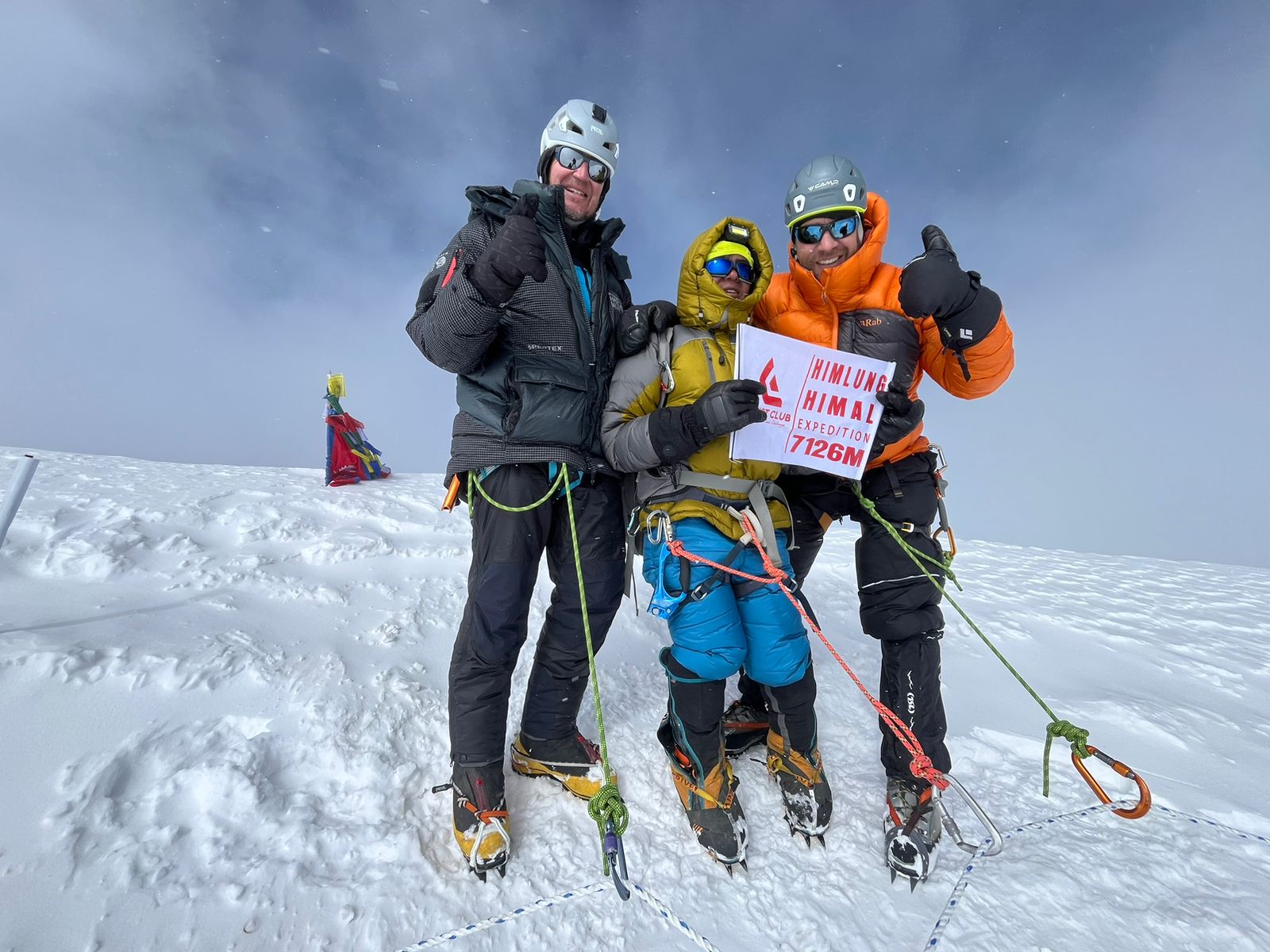
(19 Mar 2025)October 2024 Himlung Himal expedition. Absolutely great operator. Great food and amazing guides and staff. Logistics spot on. I highly recommend. We had a private group of four and all of us were taken by the commitment and joy that alpinist club members had during that amazing trip.