
Max. Elevation








The journey to Chulu East does not begin with ropes, crampons, or a summit push. It begins quietly, on the trail into Nar Phu Valley, where the villages become smaller, the roads disappear, and the mountains slowly begin to feel closer.
From Koto, we leave the main Annapurna route and walk into a much more isolated part of Manang. The trail follows narrow valleys, old stone paths and remote settlements before reaching Phu Village, set high above the river at around 4,080 metres. Here, traditional stone houses, monasteries and prayer walls sit beneath a wide Himalayan sky.
We spend time in Phu to acclimatize before continuing toward Nar. The route then climbs toward Kang La Pass at approximately 5,320 metres. From the pass, the landscape opens suddenly, with broad views across Annapurna II, Annapurna III, Annapurna IV, Gangapurna and the surrounding peaks.
Descending from Kang La brings us to Ngawal, where the character of the journey begins to change.
Until this point, we have been trekking.
From here, we begin preparing to climb.
We move higher toward Chulu East Base Camp at approximately 4,800 metres, leaving the villages behind and entering a landscape of moraine, snow and open mountain terrain. At Base Camp, the team settles in, checks equipment and spends time practising the climbing techniques that will be needed higher on the mountain.
The ascent does not happen in one sudden push.
First, we climb from Base Camp to High Camp, gradually moving into colder and more technical terrain. After a night there, we continue higher to Camp I at approximately 5,790 metres, the final camp before the summit.
By this stage, life becomes very simple: eat, drink, rest, prepare the equipment and watch the weather.
The summit attempt begins in the darkness.
Leaving Camp I in the early hours, we climb slowly across snow and glacier terrain, moving together as a rope team. The pace is steady. At this altitude, every step takes effort, and the mountain decides how quickly we can move.
Eventually, the route rises toward the summit of Chulu East at 6,584 metres.
From the top, if the weather is clear, the views stretch across the Annapurna range, the Manang Valley and the mountains of the Damodar Himal.
The summit is an important moment, but the climb is only half finished.
We descend carefully through Camp I and High Camp before returning to Base Camp, where the team can finally rest after the long summit day.
The journey then changes once again.
Instead of returning directly to Kathmandu, we continue toward Manang, Tilicho Lake and the Mesokanto La area. The trail leads back into remote high-altitude country before crossing toward the Kali Gandaki Valley and descending through Chauri Kharka, Thini and Marpha.
By the time the journey finishes, Chulu East is only one part of the story.
The full experience is about moving through remote Himalayan valleys, crossing high passes, living in mountain camps, climbing above 6,500 metres and seeing very different sides of the Annapurna and Manang region along the way.
Upon arrival at Tribhuvan International Airport, our representative will meet you and transfer you to your hotel. After check-in, you can rest after your journey or explore the surrounding area.
A trip briefing will be arranged to introduce the program, climbing logistics and preparations for the days ahead.
Altitude: 1,350 m
Meals: Welcome Dinner
Accommodation: Hotel
Today is dedicated to final preparation. Your guide will check your trekking and climbing equipment to make sure everything required for Chulu East is ready.
Depending on the schedule, you may also visit some of Kathmandu's important cultural sites, including Pashupatinath Temple, Boudhanath Stupa, Swayambhunath and Kathmandu Durbar Square.
The remaining time is used for permit preparation, equipment rental if necessary and final packing.
Altitude: 1,350 m
Meals: Breakfast
Accommodation: Hotel
We leave Kathmandu early and travel west toward Besisahar before following the mountain road into the Marsyangdi Valley.
The scenery gradually changes from low hills and farmland to steep Himalayan valleys. Passing through settlements along the Annapurna Circuit, we continue toward Koto, the gateway to Nar Phu Valley.
Road conditions can affect the driving time, so an early departure is important.
Altitude: Approx. 2,600 m
Meals: Breakfast, Lunch & Dinner
Accommodation: Lodge
After checking our restricted-area permits, we leave the main Annapurna trail and enter the Nar Phu Valley.
The trail follows the Nar Khola through a dramatic gorge, crossing bridges and passing forests, cliffs and waterfalls. As we gain altitude, the valley gradually opens and the environment becomes noticeably more remote.
We eventually reach Meta for our overnight stay.
Walking: Approx. 6–7 hours
Altitude: Approx. 3,560 m
Meals: Breakfast, Lunch & Dinner
Accommodation: Lodge
The trail continues through a dry Himalayan landscape with scattered grazing areas and views toward the surrounding peaks.
We pass small seasonal settlements and old trails traditionally used by local communities and traders. By afternoon, we reach Kyang, a small settlement surrounded by dramatic cliffs and mountains.
Walking: Approx. 5–6 hours
Altitude: Approx. 3,820 m
Meals: Breakfast, Lunch & Dinner
Accommodation: Lodge
The valley narrows again as the trail follows the Phu Khola.
After climbing through rocky terrain, Buddhist chortens and prayer walls begin to appear, marking our approach to Phu. The first view of the village is unforgettable, with traditional stone houses built closely together above the valley.
We enter the village and settle into our lodge.
Walking: Approx. 4–5 hours
Altitude: Approx. 4,080 m
Meals: Breakfast, Lunch & Dinner
Accommodation: Lodge
Today is important for acclimatization before we move toward higher elevations.
We make a gradual hike above the village and can visit local monasteries and viewpoints. Depending on weather, trail conditions and the group's fitness, the guide may organize a longer acclimatization walk toward the upper valley.
Afterwards, we return to Phu to rest.
Altitude: Approx. 4,080 m
Meals: Breakfast, Lunch & Dinner
Accommodation: Lodge
We leave Phu and retrace part of the trail through the valley before turning toward Nar Phedi.
After crossing the river, a short climb brings us to the monastery area at Nar Phedi. The relatively lower sleeping altitude also provides useful recovery after our stay in Phu.
Walking: Approx. 5–6 hours
Altitude: Approx. 3,490 m
Meals: Breakfast, Lunch & Dinner
Accommodation: Lodge/Monastery Guesthouse
The trail climbs steadily from Nar Phedi.
Along the way, we pass beautifully positioned chortens and enjoy views back toward Kang Guru and the surrounding mountains. Eventually the trail reaches the plateau where Nar Village appears among cultivated terraces.
The afternoon is free to explore this traditional Himalayan settlement.
Walking: Approx. 3–4 hours
Altitude: Approx. 4,110 m
Meals: Breakfast, Lunch & Dinner
Accommodation: Lodge
This is one of the longest and most rewarding trekking days.
We start early and climb gradually toward Kang La. From the pass, weather permitting, there are outstanding views across Annapurna II, Annapurna III, Annapurna IV, Gangapurna, Tilicho Peak and the surrounding mountains.
After crossing the pass, we make a long descent toward Ngawal.
Walking: Approx. 8–9 hours
Highest Altitude: Approx. 5,320 m
Overnight Altitude: Approx. 3,660 m
Meals: Breakfast, Lunch & Dinner
Accommodation: Lodge
We leave the villages of the Manang Valley and climb into increasingly wild alpine terrain.
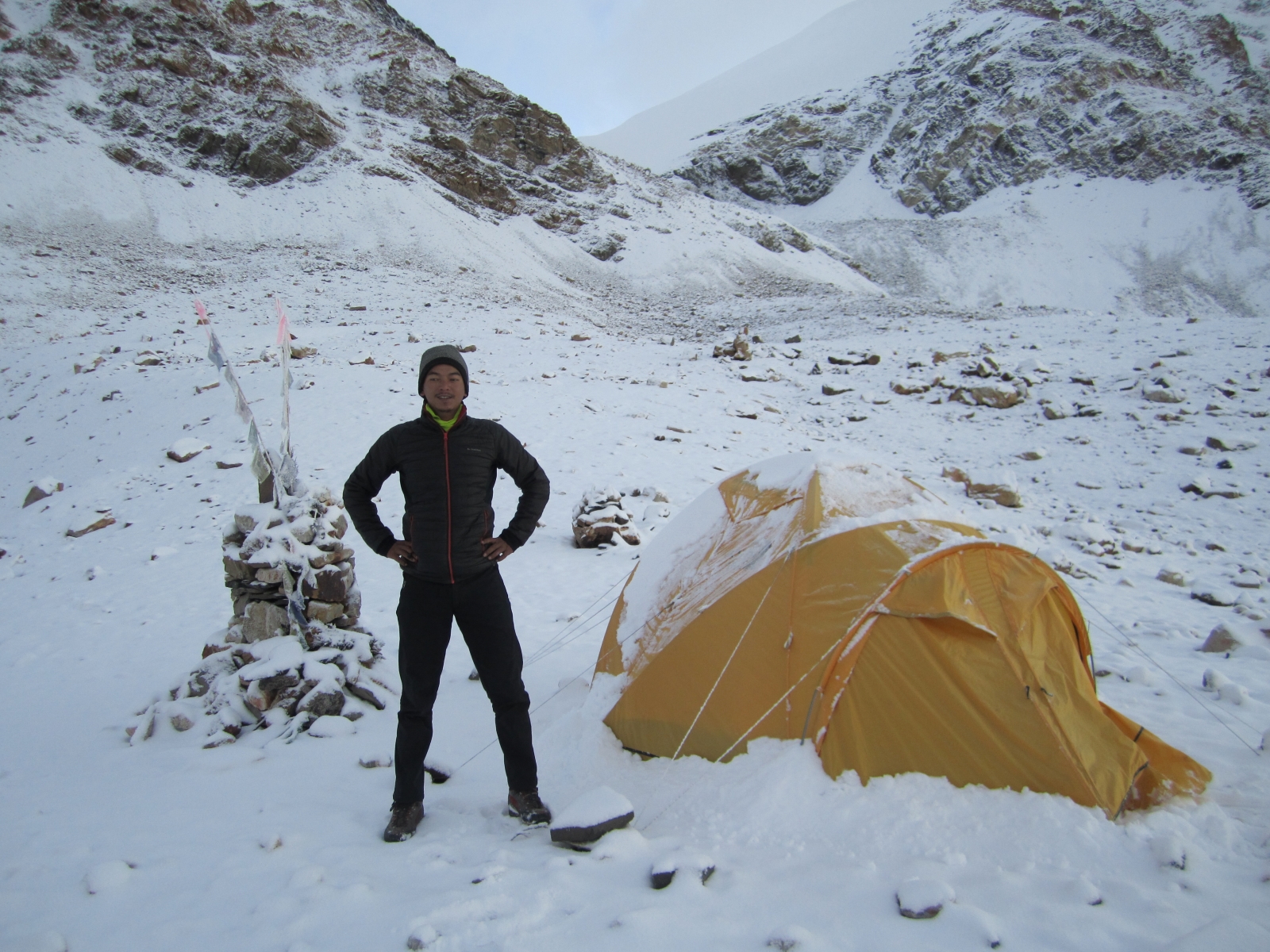
The trail passes grazing areas, moraine and rocky slopes as we approach Chulu East. Upon reaching Base Camp, our support team establishes the tented camp.
The remainder of the day is used for rest and hydration.
Walking: Approx. 5–6 hours
Altitude: Approx. 4,800 m
Meals: Breakfast, Lunch & Dinner
Accommodation: Tented Camp
This is an important preparation day.
Your climbing guide will inspect personal equipment and conduct practical training according to the conditions expected on the mountain. Training may include crampon technique, ice-axe use, rope movement, jumaring, rappelling and safety procedures.
A short acclimatization climb may also be made before returning to Base Camp.
Altitude: Approx. 4,800 m
Meals: Breakfast, Lunch & Dinner
Accommodation: Tented Camp
After breakfast, we begin climbing toward High Camp.
The terrain becomes steeper as we move through moraine and onto snow or glacier terrain depending on seasonal conditions. The climbing team establishes High Camp and prepares equipment for the summit attempt.
The afternoon is spent resting, eating and preparing for an early start.
Walking/Climbing: Approx. 4–6 hours
Altitude: Approx. 5,500 m
Meals: Breakfast, Lunch & Dinner
Accommodation: High-Altitude Tent
Today we move higher from High Camp to Camp I, the final camp before the summit attempt.
The climbing becomes more technical as we move onto steeper snow and glacier terrain. Climbers may use crampons, harnesses, ascenders and fixed ropes depending on the condition of the mountain.
Our climbing Sherpa and guide team will establish Camp I and make final preparations for the summit route.
After reaching camp, we rest, hydrate and prepare our clothing, climbing equipment, headlamps and food for the early-morning summit attempt.
Climbing: Approx. 3–5 hours
Altitude: Approx. 5,790 m
Meals: Breakfast, Lunch & Dinner
Accommodation: High-Altitude Tented Camp
Today is the most important and demanding day of the expedition.
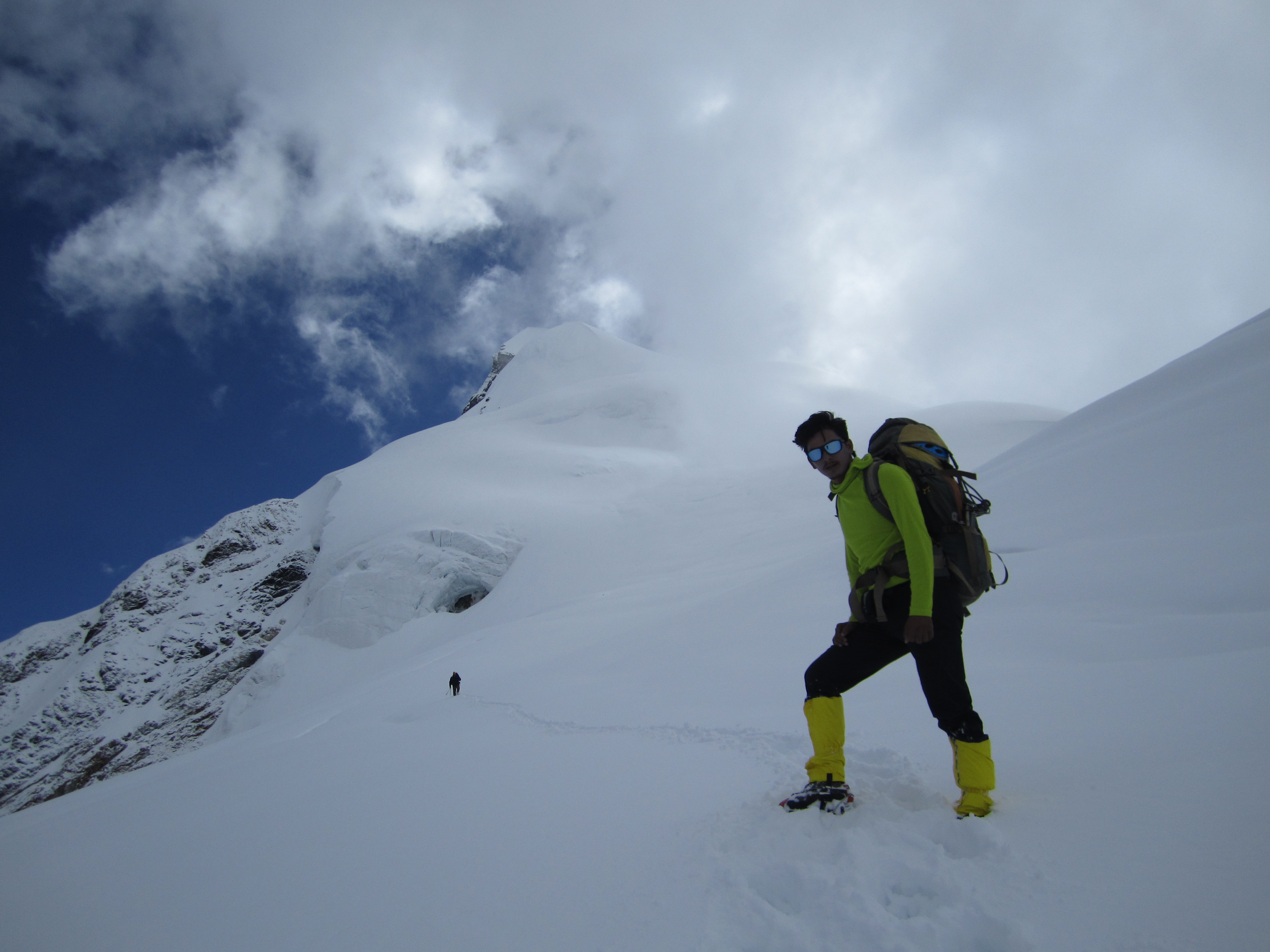
The summit climb normally begins very early, often around midnight or in the early hours of the morning. Wearing full climbing equipment, we leave Camp I and move carefully over snow and glacier terrain toward the summit ridge.
The route can involve steep snow, ice, crevasses and exposed sections. Fixed ropes may be used where necessary, and climbers follow the instructions of the climbing guide throughout the ascent.
After several hours of climbing, we reach the summit of Chulu East at 6,584 m.
From the summit, weather permitting, there are magnificent views of Annapurna II, Annapurna III, Annapurna IV, Gangapurna, Tilicho Peak, Manaslu and the surrounding Damodar Himal.
After a short time on the summit, we begin the long descent.
We descend back to Camp I, continue through High Camp and finally return to Chulu East Base Camp for a well-earned rest.
This is a very long climbing day and may take 10–14 hours or longer, depending on conditions and the pace of the team.
Starting Altitude: Approx. 5,790 m
Maximum Altitude: 6,584 m
Overnight Altitude: Base Camp – Approx. 4,800 m
Climbing: Approx. 10–14+ hours
Meals: Breakfast, Packed Lunch/Snacks & Dinner
Accommodation: Tented Camp
This day is reserved for poor weather, snow conditions, route preparation, acclimatization or any other circumstances that may delay the summit attempt.
If the summit has already been completed successfully, the day can be used for rest and recovery at Base Camp.
High-altitude climbing schedules must remain flexible. The expedition leader and climbing guide will make the final decision according to weather, mountain conditions and the health of the team.
Altitude: Approx. 4,800 m
Meals: Breakfast, Lunch & Dinner
Accommodation: Tented Camp
After completing the climbing section, we descend from Base Camp into the Manang Valley.
The return to lower altitude usually feels welcome after several nights in high camps. We pass alpine grazing areas and eventually reconnect with the main trail near Braga before reaching Manang.
Walking: Approx. 5–6 hours
Altitude: Approx. 3,540 m
Meals: Breakfast, Lunch & Dinner
Accommodation: Lodge
We leave the traditional Annapurna Circuit and follow the route toward Khangsar and Tilicho Lake.
The trail gradually gains altitude across dry Himalayan slopes before reaching Tilicho Base Camp. Some sections of this trail can be exposed and may be affected by rockfall, snow or landslides.
Walking: Approx. 6–7 hours
Altitude: Approx. 4,150 m
Meals: Breakfast, Lunch & Dinner
Accommodation: Lodge
We start early and climb toward Tilicho Lake.
Surrounded by Tilicho Peak and the high mountains of the Annapurna region, the lake is one of the most impressive locations on the journey.
From the lake area, we continue into remote high-altitude terrain toward our Eastern Pass Camp. From this point, accommodation changes back to expedition-style camping.
Walking: Approx. 7 hours
Altitude: Approx. 5,020 m
Meals: Breakfast, Lunch & Dinner
Accommodation: Tented Camp
Another demanding high-altitude day takes us across the Mesokanto La area.
Conditions here vary greatly with season and snowfall, and sections can require careful movement over snow or frozen terrain. From the high point, views extend toward the Kali Gandaki Valley, Dhaulagiri, Tukuche Peak and the mountains bordering Mustang.
After crossing the pass, we make a long descent toward Chauri Kharka.
Walking: Approx. 6–8 hours
Highest Altitude: Above 5,000 m
Overnight Altitude: Approx. 4,200 m
Meals: Breakfast, Lunch & Dinner
Accommodation: Tented Camp
Today we make a major descent from the high alpine landscape into the Kali Gandaki Valley.
Vegetation gradually returns as we descend toward Thini and continue to Marpha, one of the best-known traditional villages in Mustang.
After many days at altitude, the warmer air and comfortable lodge provide a welcome change.
Walking: Approx. 6 hours
Altitude: Approx. 2,670 m
Meals: Breakfast, Lunch & Dinner
Accommodation: Lodge
After breakfast, we follow the Kali Gandaki corridor south toward Beni and continue to Pokhara.
The journey passes through dramatically changing landscapes before reaching the lakeside city.
After arrival, the remainder of the day is free for rest.
Meals: Breakfast & Lunch
Accommodation: Hotel
After breakfast, we transfer to Pokhara Airport for the short domestic flight to Kathmandu.
Upon arrival, our vehicle will transfer you to your hotel. The remainder of the day is free.
Altitude: Approx. 1,350 m
Meals: Breakfast
Accommodation: Hotel
This additional day provides flexibility in case the mountain itinerary, road journey or domestic flight has been delayed.
If the program has operated on schedule, the day is free for rest, shopping or exploring Kathmandu.
A farewell dinner may be arranged in the evening.
Altitude: Approx. 1,350 m
Meals: Breakfast & Farewell Dinner
Accommodation: Hotel
Your Chulu East, Nar Phu and Tilicho journey comes to an end today.
According to your international flight schedule, our representative will transfer you from the hotel to Tribhuvan International Airport for your departure.
Meals: Breakfast
 Note:
Note:
If you have a private group and prefer a personalized experience, we can organize a custom trip tailored to your requirements and group size, running it any day you choose.
Plan a Private TripYour Nepalese Team may include several members, each with specific responsibilities:
Each trekker is allowed a maximum weight limit: 15 kg for lodge (tea house) accommodations, 22 kg for tent camping, and 27 kg for expeditions or summit ascents. Porters receive a premium wage for carrying loads over 30 kg. Additionally, the Nepal Alpinist Club ensures that guides and porters have insurance. They are also provided with specific equipment for high-altitude pass crossings, though many porters prefer not to wear certain gear due to lack of habit.
Kathmandu and Pokhara
Accommodation is provided in comfortable hotels on a bed-and-breakfast basis. Hotel selection may vary depending on availability and the package category confirmed at booking.
During the Trek
Teahouses and mountain lodges are used in villages where they are available. Facilities become simpler as we travel deeper into Nar Phu and higher into the mountains.
Rooms are generally twin-sharing. Bathrooms may be private at lower elevations but are usually shared in more remote areas.
Chulu East Base Camp and High Camp
Tented accommodation is used during the climbing section. Base Camp high High Camp includes sleeping tents, a dining/mess tent, kitchen facilities and toilet arrangements. camp Camp I is more basic because all equipment must be transported higher on the mountain.
Mesokanto La Section
Camping is required after Tilicho Lake where permanent teahouse accommodation is unavailable.
Upon arrival in Kathmandu, a welcome dinner is provided on the first evening. Similarly, upon return from the expedition, a farewell meal is provided. In the cities, many small (or large) restaurants allow us to discover the typical local cuisine.
During the Trekking in Lodge
Evening Meals and Breakfast are prepared by the lodge cooks and are taken in the lodge dining room or under the mess tent. Depending on the profile of the stages (length of the day's walk and/or presence of water), midday Lunch will be served hot in the Lodge
chulu East Base Camp Meal
All meals are prepared by the kitchen team using local ingredients including rice, pasta, lentils, potatoes, vegetables, eggs, a little meat, etc. They are served to you in a Dining tent. Non-alcoholic hot drinks such as tea or coffee are offered to you at will. We recommend that you stay constantly hydrated.
Chulu High Altitude Camps Meal
At high altitudes, eating can be challenging, and freeze-dried food is often necessary. It may taste fine at lower elevations but can become unappealing in high camps. We provide freeze-dried meals and consider your preferences based on availability. You can also bring your favorite foods. Each tent in higher camps has a stove to melt snow for water, prepare meals, and make hot drinks. Gas cartridges will be supplied.
Here is a typical one-day menu for the trekking and Base camp for example:
This program requires mountaineering equipment like crampons, harnesses, ice axes, and ropes. The route may include small challenges, such as steeper glacier sections or continuous effort. It is designed for beginners with some mountaineering experience who have completed similar or slightly easier routes
Preparation for the chulu east Peak climbing
Preparing for the trek requires several months of preparation with 4 to 6-hour walks every weekend for stamina and participating in a sport that requires short periods of high exertion.
Medical check-up Before going Peak climbing
Being in good health is essential to enjoy your Alpinist Club trip fully. If your last medical visit was more than four years ago, please get another general physical exam and tell your doctor the nature of your trip (climate, altitude, difficulty, etc.). The altitude also has the effect of reviving dental problems or other chronic pain, so getting a dental checkup is also prudent. If you are undertaking a high-altitude expedition, we advise you to consult a mountain medicine specialist.
Acute Mountain Sickness
This trip takes place at high altitudes so that some people may experience altitude-related discomforts like headaches, loss of appetite, and swelling of limbs. Most of these symptoms usually go away within a few days, but sometimes they can develop into a serious illness: pulmonary or cerebral edema. There are no preventive drugs for AMS. Diamox diuretic is often effective for symptomatic relief, but you should first check with your doctor to verify that it is not contraindicated for you. Think about it before you go.
Acclimatization and Altitude
This itinerary has been designed to gain altitude gradually through Nar Phu before the Chulu East climbing section. However, altitude affects every person differently. Headache, loss of appetite, unusual tiredness and disturbed sleep can be signs of altitude-related illness.
Participants must inform the guide immediately if they feel unwell. The guide has the authority to modify the itinerary, delay a climb or require a participant to descend when safety demands it.
Transfers/ Transport During Trip
All transfers are provided in private vehicles.
Group size for the This Trip
The group is composed of 1 to 10 participants maximum. The number of participants is voluntarily limited to allow a better immersion, to not embarrass our hosts, to develop spaces of freedom and to allow a great flexibility of operation. However, the maximum number can be exceeded in the case where the last person who registers wishes to travel with another or several other people. The services will not be modified and the conditions of the trip will be identical as a result.
Camping Equipment for Trekking Peak climbing
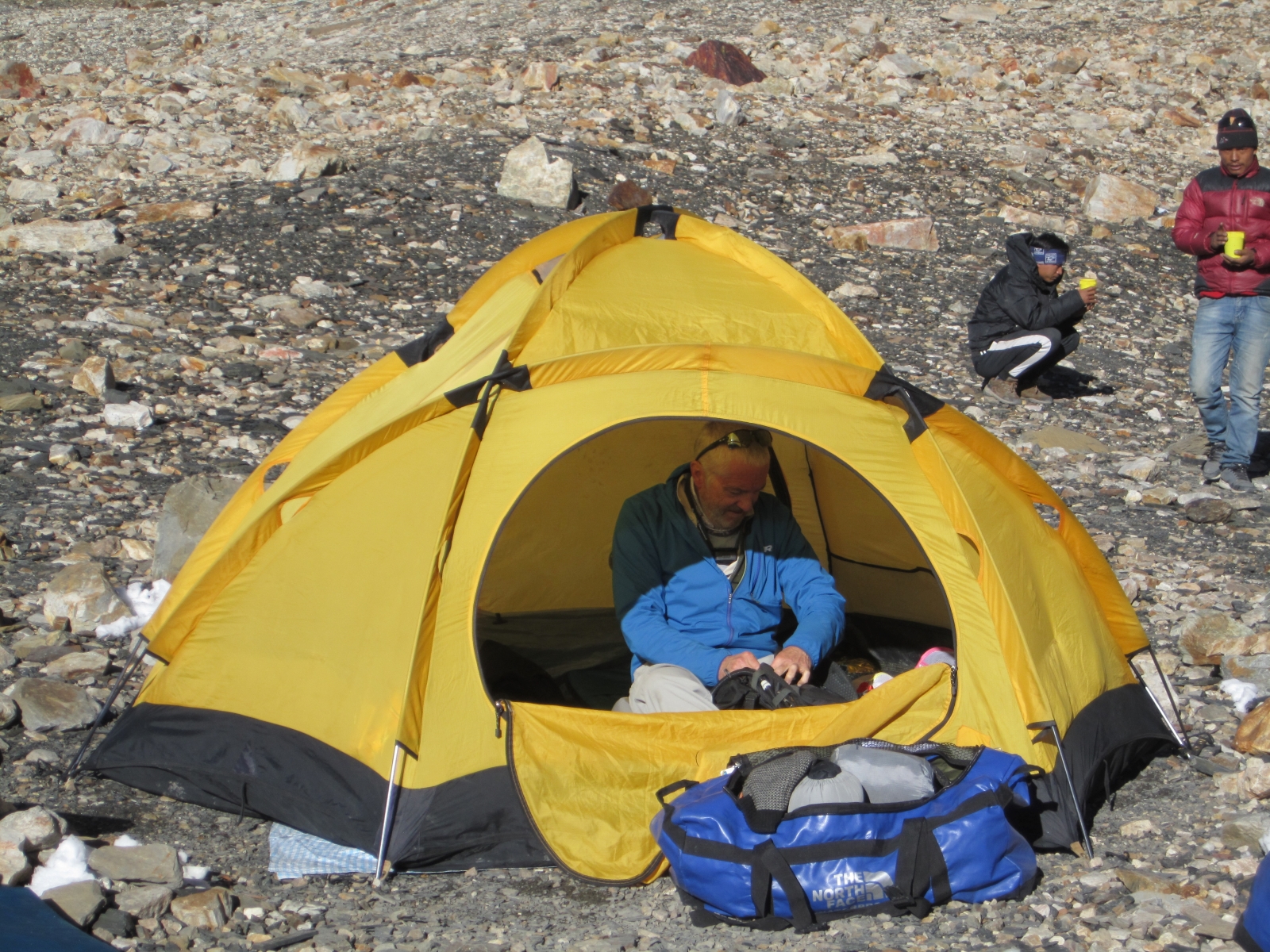
All logistical equipment is provided, including individual tents at the base camp with mattresses, mess tent, shower tent and toilet tent, as well as all collective and individual cooking equipment. At altitude, tents, stoves with gas cartridges, ropes and anchors.
Personal Equipment
Personal equipment is not provided, but a complete list will be shared later. We will refine the list with you during the preparation days and up until departure based on your questions.
High-altitude sleeping bags, full suits, and quality down jackets are costly items you may not use often. We offer these specific items for rent during the expedition. You must return the equipment clean and in good condition, with a deposit required.
Travel Insurance
Comprehensive travel insurance is mandatory. Your insurance policy should specifically cover high-altitude trekking and mountaineering to the altitude reached on this trip, as well as helicopter evacuation, medical treatment, trip cancellation, interruption and repatriation. Clients should confirm the altitude and mountaineering coverage directly with their insurer before travelling to Nepal.
Safety and Summit Decisions
Reaching the summit is never guaranteed. Weather, snow conditions, glacier conditions, individual health, acclimatization and other mountain hazards can affect the climbing schedule.
The climbing guide makes the final decision regarding route safety, turnaround time and whether a summit attempt can proceed. The safety of the climbers and staff always takes priority over reaching the summit.
Security And Communication
We have at least one Iridium satellite phone for logistics, weather updates, and security. Participants may use it under certain conditions—please contact us for private use. All camps are connected by radio, with access for the expedition leader, participants, and high-altitude Sherpas. A hyperbaric chamber will be available at base camp, and a lighter, essential pharmacy will be stocked at higher camps.
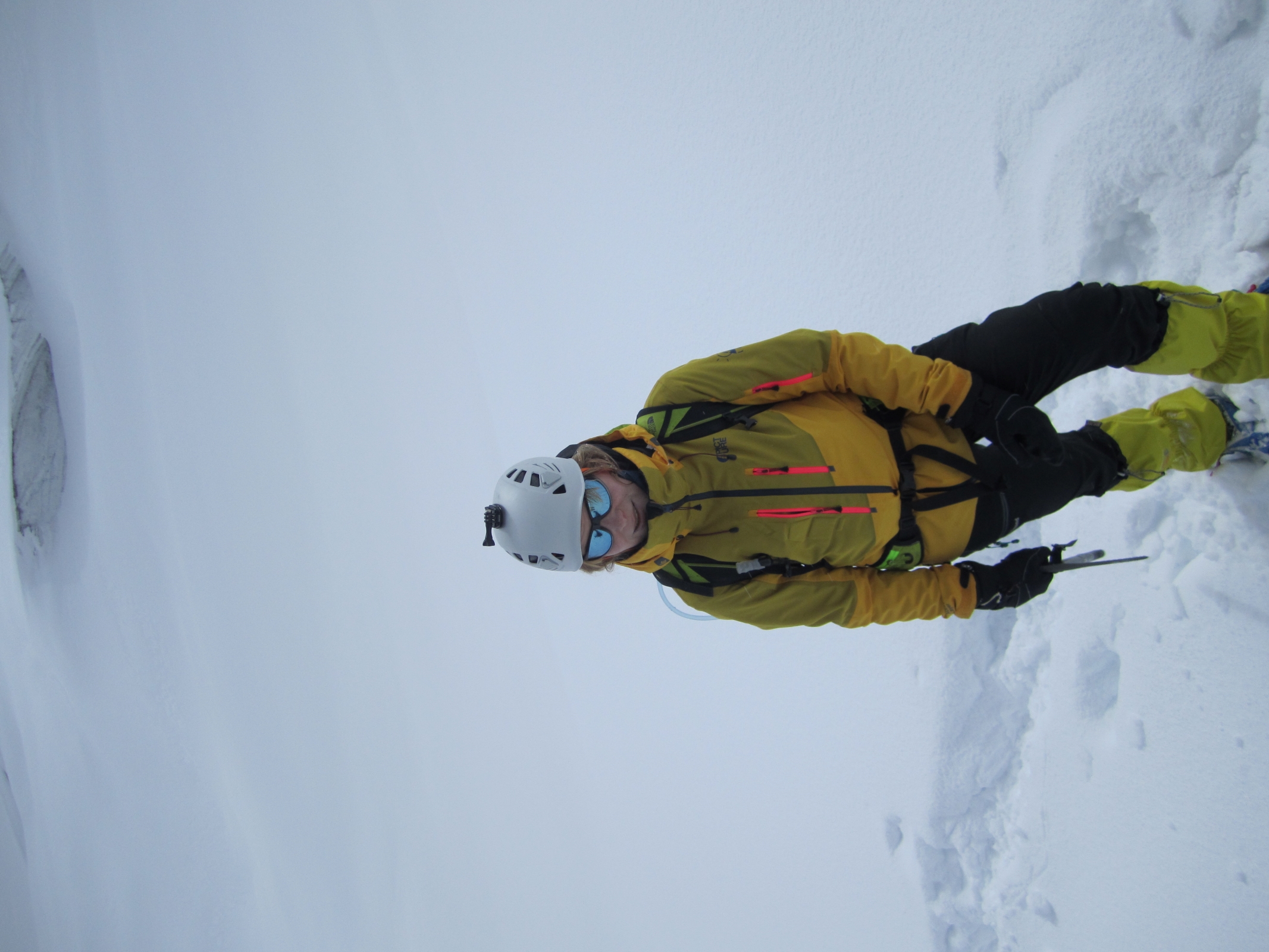
Chulu East is a technical high-altitude climb and is not recommended for complete beginners without preparation. Previous trekking at altitude and basic experience using crampons, an ice axe, harness, ascender and fixed ropes are highly recommended.
The trip is graded Challenging / Technical. Climbers must deal with high altitude, long trekking days, glacier terrain, steep snow or ice, fixed ropes and changing mountain weather.
The best climbing periods are generally spring (March–May) and autumn (September–November), when weather and mountain conditions are usually more suitable for trekking and climbing.
The program requires a Chulu East climbing permit, Nar Phu Restricted Area Permit and Annapurna Conservation Area Permit (ACAP), together with other required trekking documentation.
The climbing section uses Base Camp, High Camp and Camp I. Climbers progress gradually through these camps before making the final summit attempt.
The planned climbing progression is:
Base Camp → High Camp → Camp I → Chulu East Summit (6,584m) → Camp I → High Camp → Base Camp.
The exact schedule can change depending on weather, snow conditions, acclimatization and the condition of the climbing team.
Yes. The itinerary includes a contingency/weather day around the climbing period. This can be used if poor weather, snow conditions or other circumstances delay the summit attempt.
Group climbing and expedition equipment such as ropes and camp equipment is provided according to the program. Climbers normally need their own personal equipment, including mountaineering boots, crampons, harness, helmet, ice axe, ascender, descender and appropriate high-altitude clothing
Yes. The climbing section is supported by an experienced licensed climbing guide/Sherpa, together with trekking guides, porters, cooks and other support staff according to the group size and confirmed package.
Good physical fitness and endurance are essential. Participants should be comfortable trekking for 6–8 hours on consecutive days, while summit day may involve 10–14 hours or more of climbing at high altitude.
No. No Himalayan summit can be guaranteed. Weather, snow and glacier conditions, altitude, personal health and other safety factors may affect the summit attempt. The climbing guide makes the final decision based on conditions and team safety.


