
Max. Elevation







The Gokyo Ri, Cho La Pass and Everest Base Camp Trek – 17 Days is a remarkable journey through the heart of Nepal’s Everest region, bringing together high mountain passes, turquoise glacial lakes, traditional Sherpa villages, and some of the most spectacular Himalayan views.
Starting with the classic Everest trail, the trek follows the Dudh Koshi River through pine forests, suspension bridges, and traditional mountain settlements before reaching Namche Bazaar, the vibrant centre of Sherpa culture. As the trail climbs higher, the scenery becomes increasingly dramatic, with magnificent views of Everest, Ama Dablam, Lhotse, and the surrounding Himalayan peaks.
One of the major highlights is reaching Everest Base Camp at approximately 5,364 m, followed by an early-morning hike to Kala Patthar at approximately 5,545 m. From this famous viewpoint, you can enjoy an incredible panorama of Mount Everest and the vast Khumbu Glacier.
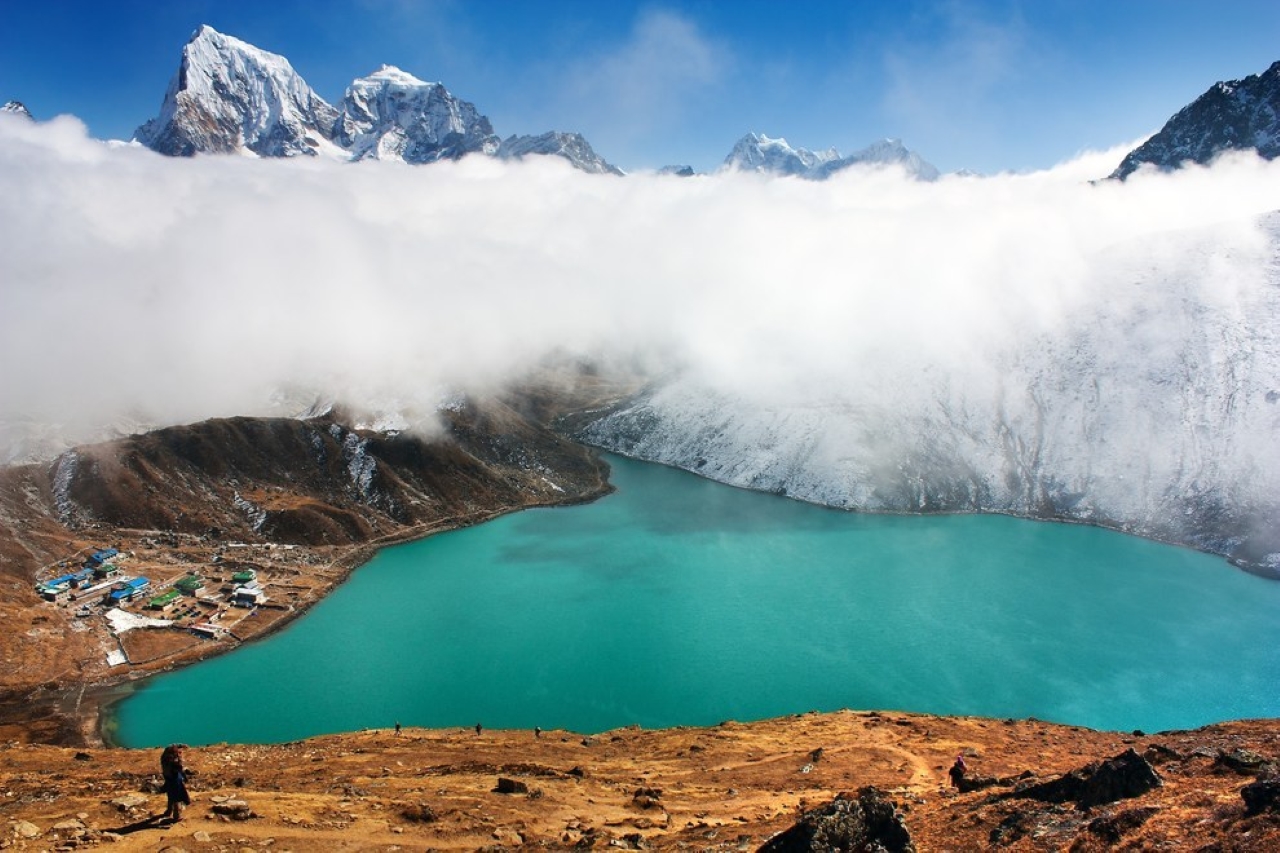
The adventure continues across Cho La Pass at approximately 5,420 m, a demanding high-altitude crossing that leads into the beautiful Gokyo Valley. Here, a series of turquoise lakes rests beneath snow-covered mountains and rugged glacial terrain. The ascent to Gokyo Ri at approximately 5,357 m rewards you with sweeping views of Everest, Lhotse, Makalu, Cho Oyu, and the immense Ngozumpa Glacier.
Combining challenging trekking, rich Sherpa culture, and extraordinary mountain scenery, this 17-day journey offers much more than a standard Everest Base Camp trek. It is an excellent choice for adventurous trekkers who want to experience Everest Base Camp and the quieter beauty of Gokyo Valley in one unforgettable Himalayan expedition.
Upon arrival at Tribhuvan International Airport, our local team will welcome you and transfer you to your hotel in Kathmandu. Later, we meet for a trek briefing to discuss the route, equipment, altitude, weather conditions, and other important details for the journey ahead. If you arrive early, the rest of the day is free to relax or explore the streets of Thamel.
Our Himalayan journey begins with a flight to Lukla. Depending on seasonal flight arrangements, the flight may operate directly from Kathmandu or from Ramechhap Airport after an early drive from Kathmandu.
After landing in Lukla, we meet our porter team and begin walking into the Khumbu Valley. The first day is relatively gentle, following a trail through Sherpa villages, mani walls, suspension bridges, and forests above the Dudh Koshi River. We reach Phakding in the afternoon and spend our first night in the mountains.
Today we follow the Dudh Koshi River deeper into the Everest region. The trail crosses several suspension bridges and passes through villages before entering Sagarmatha National Park at Monjo.
After crossing the famous high suspension bridge, we begin the long uphill climb toward Namche Bazaar. On a clear day, we may catch our first distant view of Mount Everest along the way. Namche Bazaar sits naturally in the mountainside and has been an important trading center of the Khumbu for generations.
We spend another night in Namche to allow our bodies to adjust gradually to the altitude. Instead of resting all day, we take an acclimatization walk toward Everest View Hotel, Khumjung, or Kunde. Weather permitting, the trail offers our first clear views of Everest, Lhotse, Ama Dablam, Thamserku, and other peaks of the Khumbu. We return to Namche in the afternoon and prepare for the higher mountains ahead.
Leaving Namche, we follow a beautiful hillside trail with views toward Everest, Lhotse, Nuptse, and Ama Dablam. The trail gradually descends to the Dudh Koshi River before climbing through rhododendron and pine forest toward Tengboche. Tengboche is home to one of the most important monasteries in the Khumbu. Its location, surrounded by high Himalayan peaks, makes it one of the memorable stops on the Everest trail.
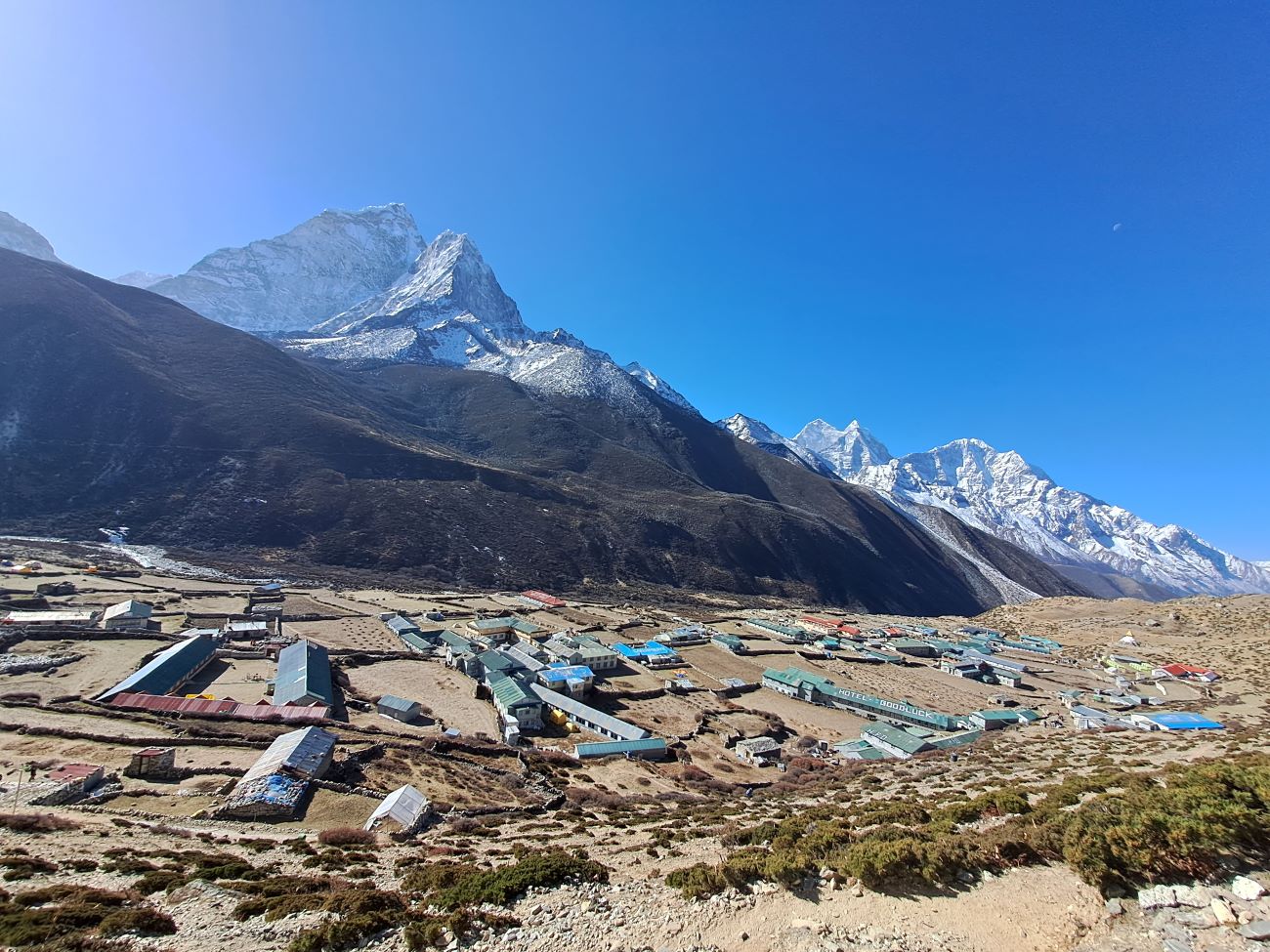
We descend through the forest toward Deboche before crossing the river and continuing through Pangboche. As we move higher, the landscape becomes more open and alpine. Ama Dablam remains close throughout much of the day, while the mountains around the upper Khumbu begin to dominate the horizon. We gradually reach Dingboche, a traditional high-altitude settlement surrounded by stone-walled fields.
We spend another night at Dingboche before continuing toward Everest Base Camp. Depending on weather and the condition of the group, we make an acclimatization hike above the village, gaining altitude during the day before returning to sleep lower. From higher ground, there are beautiful views toward Ama Dablam, Makalu, Island Peak, and the surrounding mountains. This extra day helps prepare the body for the higher elevations ahead.
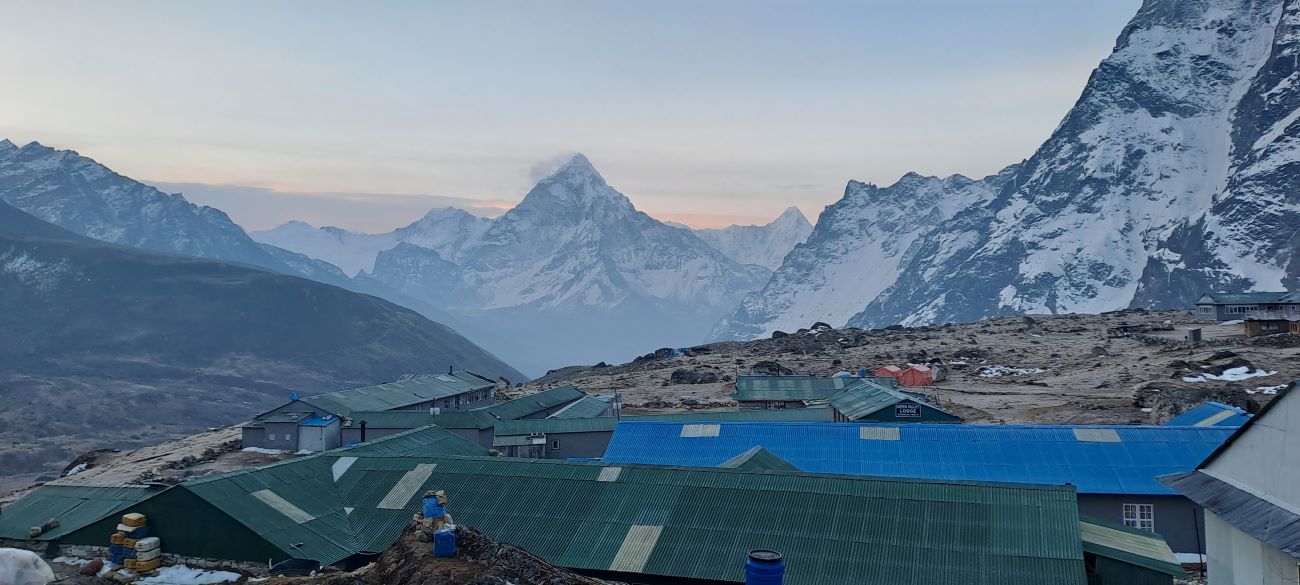
Leaving Dingboche, we walk across the broad valley toward Thukla. From Thukla, the trail climbs more steeply toward the memorials dedicated to climbers who lost their lives on Everest and other Himalayan mountains. Beyond the memorials, the trail becomes gentler as we continue through a rugged high-altitude landscape toward Lobuche. By now, we are surrounded almost entirely by rock, glacier, and high mountain walls.
Today we reach the first major goal of our journey: Everest Base Camp. We leave Lobuche and follow the rocky trail beside the Khumbu Glacier toward Gorak Shep, the final settlement on the Everest Base Camp route.
After a short rest and lunch, we continue across glacial moraine toward Base Camp. The landscape becomes increasingly dramatic, with Nuptse, Pumori, the Khumbu Glacier, and the surrounding Himalayan peaks filling the horizon. We eventually reach Everest Base Camp at 5,364 m. After spending time here, we return to Gorak Shep for the night.
We wake early and begin climbing toward Kala Patthar. The ascent is steep, but the reward is one of the finest mountain views of the entire journey. Everest rises behind Nuptse, while Pumori and the Khumbu Glacier dominate the surrounding landscape. After reaching approximately 5,545 m, we spend some time taking in the panorama before returning to Gorak Shep for breakfast.
We then descend past Lobuche and leave the main Everest Base Camp trail behind, turning toward the quieter route to Dzongla. From this point, the journey changes character as we prepare to cross Cho La Pass.
Today is one of the longest and most demanding days of the journey. We leave Dzongla early and gradually climb through rocky terrain toward Cho La Pass.
The route can include snow, ice, loose rocks, and steep sections depending on recent weather and trail conditions. We move carefully and steadily under the guidance of our trekking team. Reaching Cho La Pass at 5,420 m is one of the great moments of the trek. From the pass, we begin a careful descent toward the quieter valley on the Gokyo side, eventually reaching Thagnak for a well-earned rest.
After the long Cho La crossing, today's walk is shorter but takes us through another remarkable Himalayan landscape. We cross the rough moraine of the Ngozumpa Glacier, one of the largest glaciers in Nepal. The route winds between rocks, ice, and glacial terrain before finally reaching the other side of the valley.
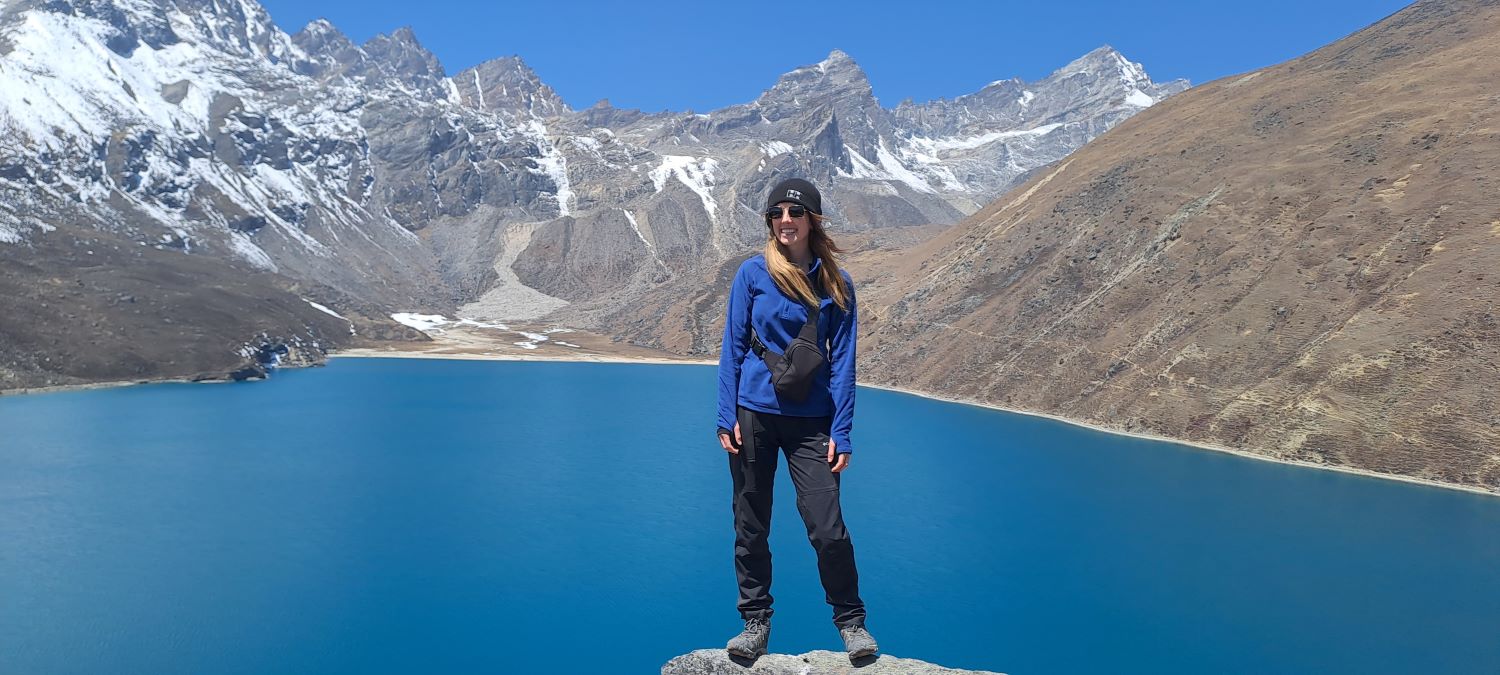
As we approach Gokyo, the landscape suddenly opens, and the turquoise waters of the Gokyo Lakes appear beneath the surrounding mountains. We spend the night in the peaceful settlement of Gokyo beside the lake.
We start early for the climb to Gokyo Ri at 5,357 m. The trail climbs steeply above the lake, and with every step the view becomes wider. From the top, the turquoise Gokyo Lakes and Ngozumpa Glacier lie below us, while Everest, Lhotse, Makalu, and Cho Oyu rise across the Himalayan skyline. It is a fitting final high point of the journey after Everest Base Camp and Cho La Pass. We descend back to Gokyo, have breakfast, and then begin the long journey down the Gokyo Valley toward Dole.
Today we continue descending through the Gokyo Valley. The barren high-altitude landscape gradually gives way to juniper, rhododendron, and pine forest as we return to lower elevations. We pass small settlements and yak pastures before eventually rejoining the main Everest trail. By afternoon, we arrive back in Namche Bazaar, where warmer air, bakeries, cafés, and busy streets feel very different after several days in the high mountains.
Our final day on the trail begins with a long descent from Namche. We cross familiar suspension bridges and pass through Monjo, Phakding, and other villages along the Dudh Koshi River. The air becomes warmer as we descend, and the green landscape feels almost completely different from the glaciers and rocky terrain we left behind.
The final section climbs gradually toward Lukla, where we spend our last evening with the trekking team.m It is time to look back on a journey that brought together Everest Base Camp, Kala Patthar, Cho La Pass, and Gokyo Lakes in one complete Himalayan experience.
Weather permitting, we take an early flight from Lukla. Depending on seasonal flight arrangements, we may fly directly to Kathmandu or land at Ramechhap Airport and continue to Kathmandu by road. After arriving at the hotel, the rest of the day is free to relax, explore Thamel, enjoy a good meal, or do some last-minute shopping. Flight schedules in Lukla are always dependent on weather and visibility, so delays can occasionally occur.
Your journey through the Everest region comes to an end today. Depending on your international flight time, you will have some free time in Kathmandu before our representative transfers you to Tribhuvan International Airport for your departure.
You leave Nepal with memories of Sherpa villages, Everest Base Camp, Kala Patthar, the crossing of Cho La, the turquoise Gokyo Lakes, and some of the highest mountains on Earth.
 Note:
If you have a private group and prefer a personalized experience, we can organize a custom trip tailored to your requirements and group size, running it any day you choose.
Plan a Private TripThe Gokyo Ri, Cho La Pass and Everest Base Camp Trek combines breathtaking Himalayan scenery, turquoise Gokyo Lakes, challenging high-altitude trails, and iconic Everest views. This trip information covers essential details about accommodation, meals, trekking difficulty, physical preparation, acclimatization, equipment, safety, and travel insurance to help you prepare for a safe and memorable adventure with Alpinist Club.
Read MoreAlpinist Club provides experienced trekking guides and support staff throughout your journey. Your guide will coordinate daily activities, monitor weather and trail conditions, and help ensure your safety. The team will assist you while crossing Cho La Pass and trekking to Gokyo Ri, Everest Base Camp, and Kala Patthar. Follow your guide's instructions and report any health concerns promptly.
Depending on the group size, your team may include a lead guide, assistant guide, and porters. Porters carry the main luggage, allowing you to walk comfortably with a lighter daypack. Each trekker can give up to 15 kg of luggage to the porter, subject to the confirmed package. Carry water, snacks, warm clothing, personal medication, and other essentials in your daypack.
Flights to Lukla are weather-dependent and may operate from Kathmandu or Ramechhap, depending on the season and flight schedules. If your flight departs from Ramechhap, a road transfer from Kathmandu will be required. Alpinist Club will confirm the flight and transportation arrangements before departure.
Weather conditions may cause flight delays or cancellations. We recommend arriving in Kathmandu at least one day before the trek and allowing one or two extra days after the trek for possible disruptions. Additional accommodation, meals, and transportation costs due to delays depend on your booking terms.
You will stay in a comfortable hotel in Kathmandu, generally in a twin-sharing room, according to your confirmed package. Breakfast is included as specified in your booking, and a welcome dinner is provided. Kathmandu offers a variety of restaurants serving Nepali, international, and vegetarian dishes. Meals not included in your package are at your own expense.
Accommodation is primarily in local teahouses and mountain lodges along the Everest and Gokyo trekking routes. Rooms are generally simple and twin-sharing, with shared bathrooms in many locations. Some lodges in lower-altitude villages may offer attached bathrooms, subject to availability.
Facilities become more basic at higher elevations, particularly around Gokyo, Dragnag, Lobuche, and Gorak Shep. During peak trekking seasons, rooms may be limited, so flexibility is important.
Breakfast, lunch, and dinner are included during trekking days according to your confirmed package. Teahouses offer a range of meals, including dal bhat, noodles, fried rice, soups, pasta, potatoes, eggs, pancakes, porridge, and Tibetan bread.
Food choices become more limited at higher elevations. Vegetarian meals are generally available, but please inform the Alpinist Club in advance about food allergies or special dietary requirements. Bottled drinks, snacks, alcoholic beverages, and additional hot drinks are generally at your own expense unless specified otherwise.
Staying hydrated is important during high-altitude trekking. Carry reusable water bottles and use treated drinking water. Water purification tablets or other suitable treatment methods are recommended. Teahouses may provide boiled or treated water for an additional charge. Avoid drinking untreated stream or tap water.
The Gokyo Ri, Cho La Pass and Everest Base Camp Trek is a challenging high-altitude adventure involving steep ascents, rocky trails, long walking days, and a high mountain pass. The route also includes hikes to Gokyo Ri and Kala Patthar, both of which require good stamina and endurance.
Trekkers typically walk for 5–8 hours a day, although some days may be longer depending on the route and weather. Previous experience with multi-day trekking is recommended, and good cardiovascular fitness is essential.
Begin training at least 8–12 weeks before departure. Regular hiking, cycling, running, swimming, and stair climbing can help improve your endurance. Practise walking on hilly terrain with a daypack, strengthen your leg and core muscles, and break in your trekking boots before arriving in Nepal. Prepare suitable clothing for cold, windy, and snowy conditions, and follow the planned acclimatization schedule.
A medical consultation before departure is recommended because the trek reaches elevations above 5,000 metres. Discuss your fitness, medications, and any existing health concerns with a qualified healthcare professional. If you have previously experienced altitude-related problems, consider seeking advice from a healthcare professional experienced in mountain medicine. Bring your personal medication and inform your guide about important medical requirements.
Acute Mountain Sickness (AMS) can affect anyone at high altitude, regardless of fitness or trekking experience. Common symptoms include headache, nausea, dizziness, fatigue, and loss of appetite.
To reduce the risk, ascend gradually, follow the acclimatization schedule, stay hydrated, and inform your guide immediately if you feel unwell. Never continue ascending when experiencing symptoms of altitude sickness. Severe symptoms, such as breathlessness at rest, confusion, or difficulty walking straight, require urgent medical attention and descent when appropriate.
Medication such as acetazolamide (Diamox) may be suitable for some trekkers, but consult a qualified healthcare professional before use.
Alpinist Club organizes small-group and private departures for the Gokyo Ri, Cho La Pass and Everest Base Camp Trek. Group sizes and guide-to-trekker arrangements depend on the confirmed booking and support requirements.
Private treks can be arranged for individuals, couples, families, and groups of friends. Please share your preferred travel dates and group size when booking so that the appropriate arrangements can be made.
Personal trekking equipment is generally not included in the package. Essential items include trekking boots, warm layers, a down jacket, waterproof clothing, gloves, a hat, sunglasses, a daypack, reusable water bottles, water purification supplies, a headlamp, personal medication, and a suitable sleeping bag if required.
Sleeping bags and down jackets may be available for rent through Alpinist Club, subject to availability and additional charges. A detailed packing list will help you prepare for the altitude and weather conditions.
Safety is a priority throughout the journey. Your guide will monitor weather forecasts, trail conditions, and the group's well-being, particularly before crossing Cho La Pass and ascending Gokyo Ri or Kala Patthar.
Snow, ice, strong winds, and poor visibility may require a delayed crossing or a change of route. Completing every planned destination cannot be guaranteed if conditions become unsafe. The trekking team carries appropriate first-aid supplies and communication equipment according to the confirmed arrangements, although rescue services and medical facilities are limited in remote areas.
Follow your guide's instructions and report any health concerns promptly. Safety always takes priority over the planned itinerary.
Comprehensive travel insurance is strongly recommended. Your policy should cover high-altitude trekking to the maximum elevation of your itinerary, emergency medical treatment, helicopter evacuation, and trip interruption where applicable.
Check that your policy specifically covers trekking above 5,000 metres and helicopter rescue. Keep your insurance details and emergency contact information accessible throughout the trek. Confirm coverage limits, exclusions, and payment procedures before departure.
Spring and autumn are generally the preferred seasons for trekking in the Everest region. However, weather can change quickly, particularly around Gokyo, Cho La Pass, and Everest Base Camp.
Snowfall, ice, strong winds, and poor visibility can affect trail conditions and make Cho La Pass difficult or temporarily inaccessible. Your guide will assess the conditions and determine whether it is safe to proceed. Bring suitable clothing and equipment and allow flexibility in your itinerary for possible weather-related delays.
The Everest region is a fragile mountain environment. Help protect its natural beauty by carrying reusable water bottles, minimising plastic waste, and disposing of rubbish responsibly. Respect local customs, monasteries, and religious sites, and ask permission before photographing local people.
Treat guides, porters, lodge owners, and local communities with respect. Supporting local businesses and following responsible trekking practices helps preserve the region for future generations.
Before starting your trek, confirm your Lukla flights, airport transfers, trekking permits, accommodation, meals, guide and porter arrangements, baggage allowance, equipment requirements, and package inclusions with Alpinist Club.
Allow extra time for possible flight delays, prepare physically for high-altitude trekking, and ensure your travel insurance covers the full itinerary. With proper preparation, gradual acclimatization, and support from an experienced guide, you can enjoy a rewarding journey through Gokyo Valley, across Cho La Pass, and to Everest Base Camp.
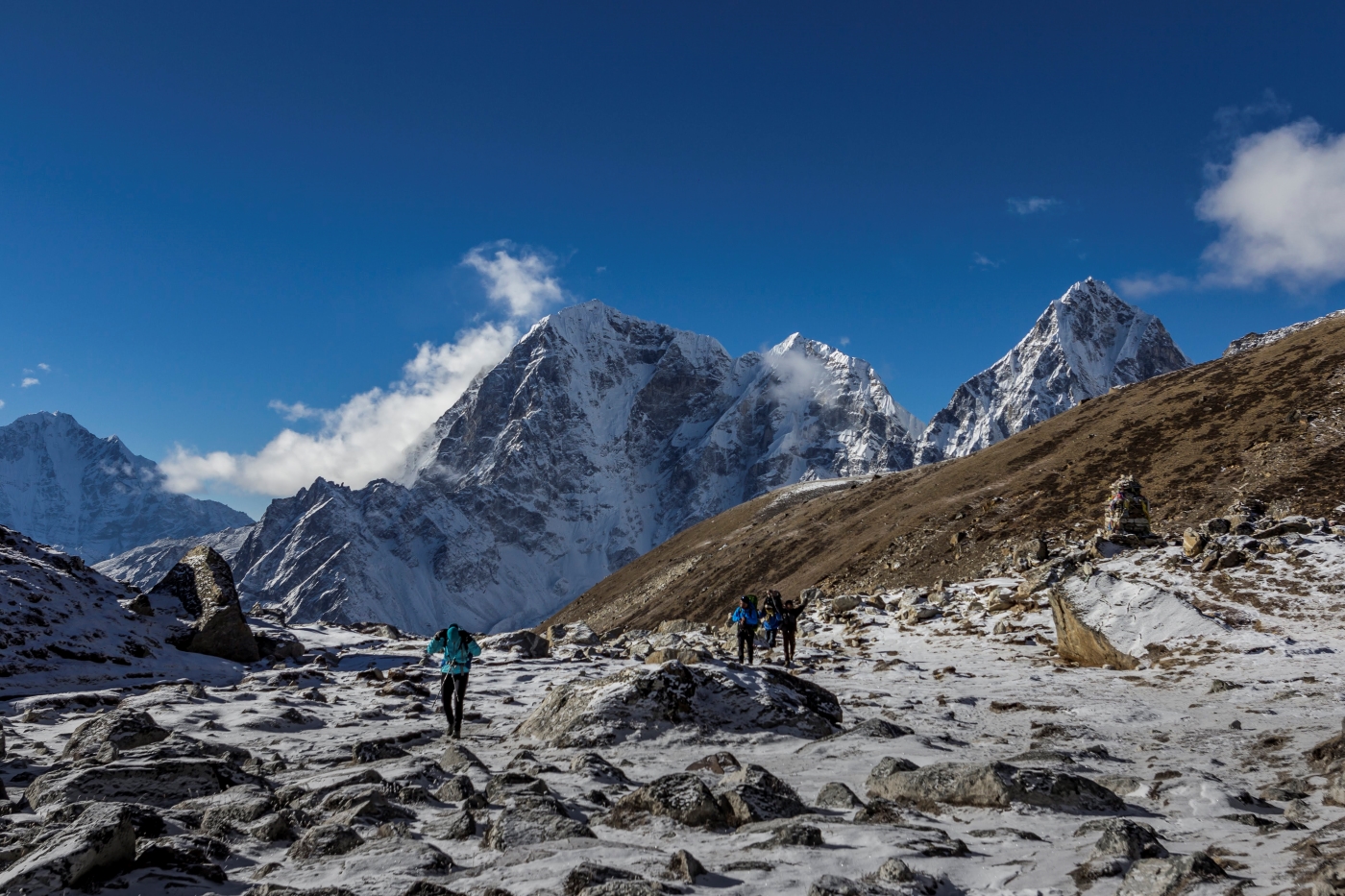
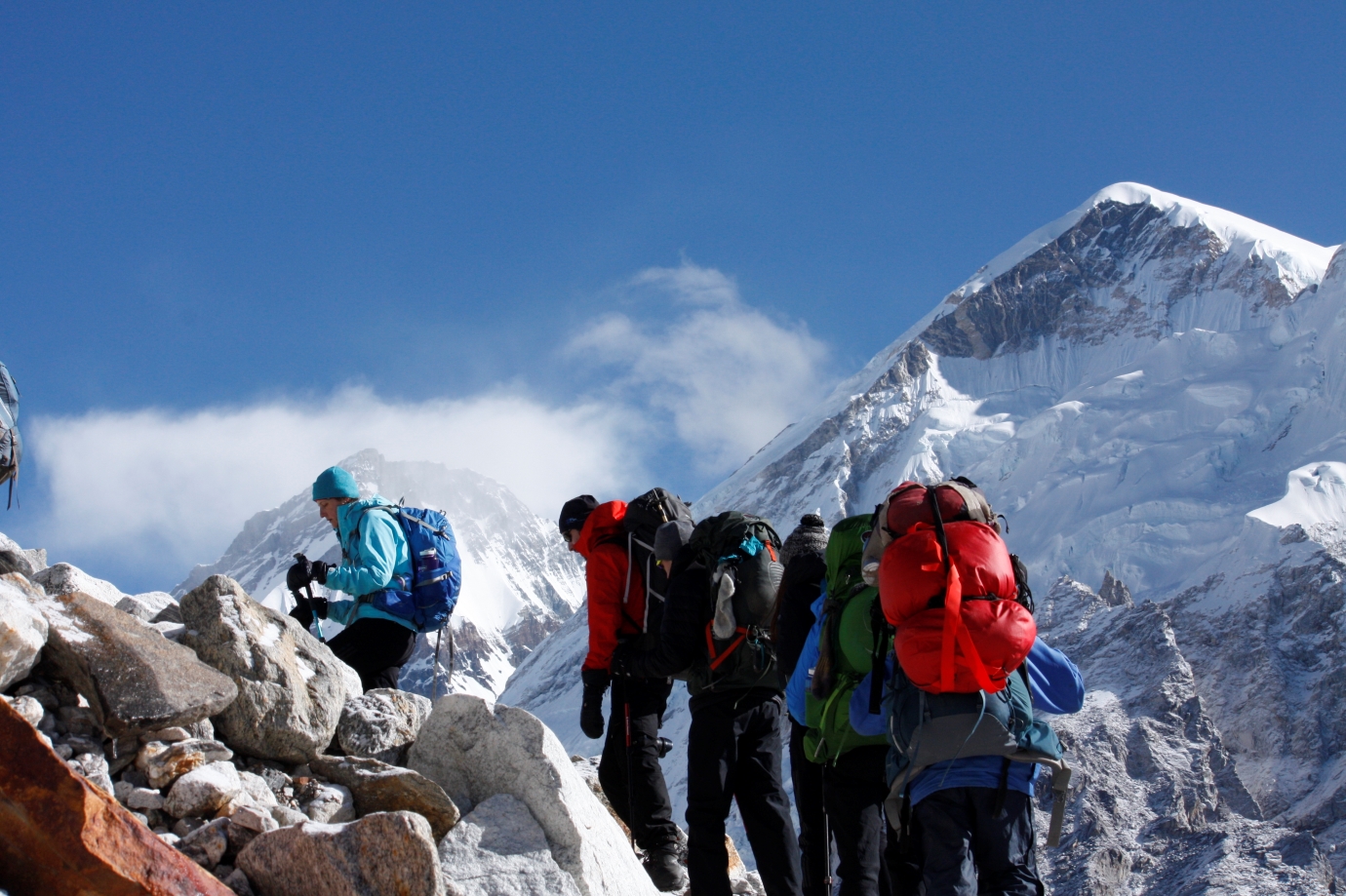
This is a challenging high-altitude trek. The route includes long walking days, several nights above 4,000 m, Everest Base Camp, Kala Patthar, Cho La Pass and Gokyo Ri. Good physical fitness and previous multi-day trekking experience are strongly recommended.
The highest point is Kala Patthar at approximately 5,545 m. The trek also reaches Cho La Pass at 5,420 m, Gokyo Ri at 5,357 m, and Everest Base Camp at 5,364 m.
Yes. This itinerary first follows the classic Everest Base Camp route. After visiting Everest Base Camp and Kala Patthar, the trail turns toward Dzongla, crosses Cho La Pass, and continues to Gokyo Lakes.
Weather and snow conditions can sometimes make Cho La unsafe. In this situation, your guide will adjust the itinerary and choose the safest possible alternative. Mountain safety always comes before completing the planned route.
Most days involve approximately 5–7 hours of trekking. Longer days, such as the Cho La Pass crossing or Everest Base Camp section, may take 7–9 hours depending on the group, weather and trail conditions.
A very fit beginner with good preparation may be able to complete the trek, but it is not the easiest choice for a first Himalayan trek. Previous trekking experience and good endurance are strongly recommended.
The best seasons are generally spring from March to May and autumn from September to November. These periods usually offer more stable weather and better mountain visibility.
During the trek, accommodation is provided in local mountain lodges or tea houses. Facilities are comfortable at lower elevations but become simpler in higher places such as Lobuche, Gorak Shep, Dzongla and Thagnak
Flights to and from Lukla depend heavily on weather and visibility. Delays or cancellations are possible. We recommend keeping at least one flexible day between the end of your trek and your international departure.
The trek requires the necessary Everest-region trekking and protected-area permits. Alpinist Club arranges the required permits when they are included in your package.
Yes. Porter support is provided according to the package. Normally, one porter carries the main luggage for two trekkers, with a recommended maximum of approximately 15 kg per trekker.
Yes. Sleeping bags and down jackets can be rented in Kathmandu if required. Please let us know before the trek so the correct equipment can be arranged.
Yes. Water is available at lodges along the route. We recommend carrying a reusable bottle and using purification tablets or another suitable purification method.
Yes. The trek can be organized as a private journey for individuals, couples, families or groups. The itinerary can also be adjusted depending on your available dates and previous trekking experience.
Yes. Charging facilities are available in most lodges, although an additional fee may be charged, especially at higher elevations. Carrying a power bank is recommended.
Wi-Fi or mobile internet is available in many villages, but connections may be slow or unavailable at higher elevations or during bad weather.
This route offers much more variety. You experience the classic Everest Base Camp trail, climb Kala Patthar, cross the challenging Cho La Pass, visit the turquoise Gokyo Lakes and climb Gokyo Ri. It combines two of the most beautiful areas of the Khumbu in one complete Himalayan journey.
