Max. Elevation








The Technical Mountaineering Course in Nepal is a 20-day practical training program in the Langtang Himalaya. It is designed for people who want to build a strong foundation in alpine climbing before progressing to more technical or higher-altitude mountains.
The journey begins with a gradual trek through the Langtang Valley, giving participants time to acclimatize before moving into the mountain training area. Under the instruction of an IFMGA Mountain Guide, you will practice essential skills on snow, ice, rock, and glacier terrain.
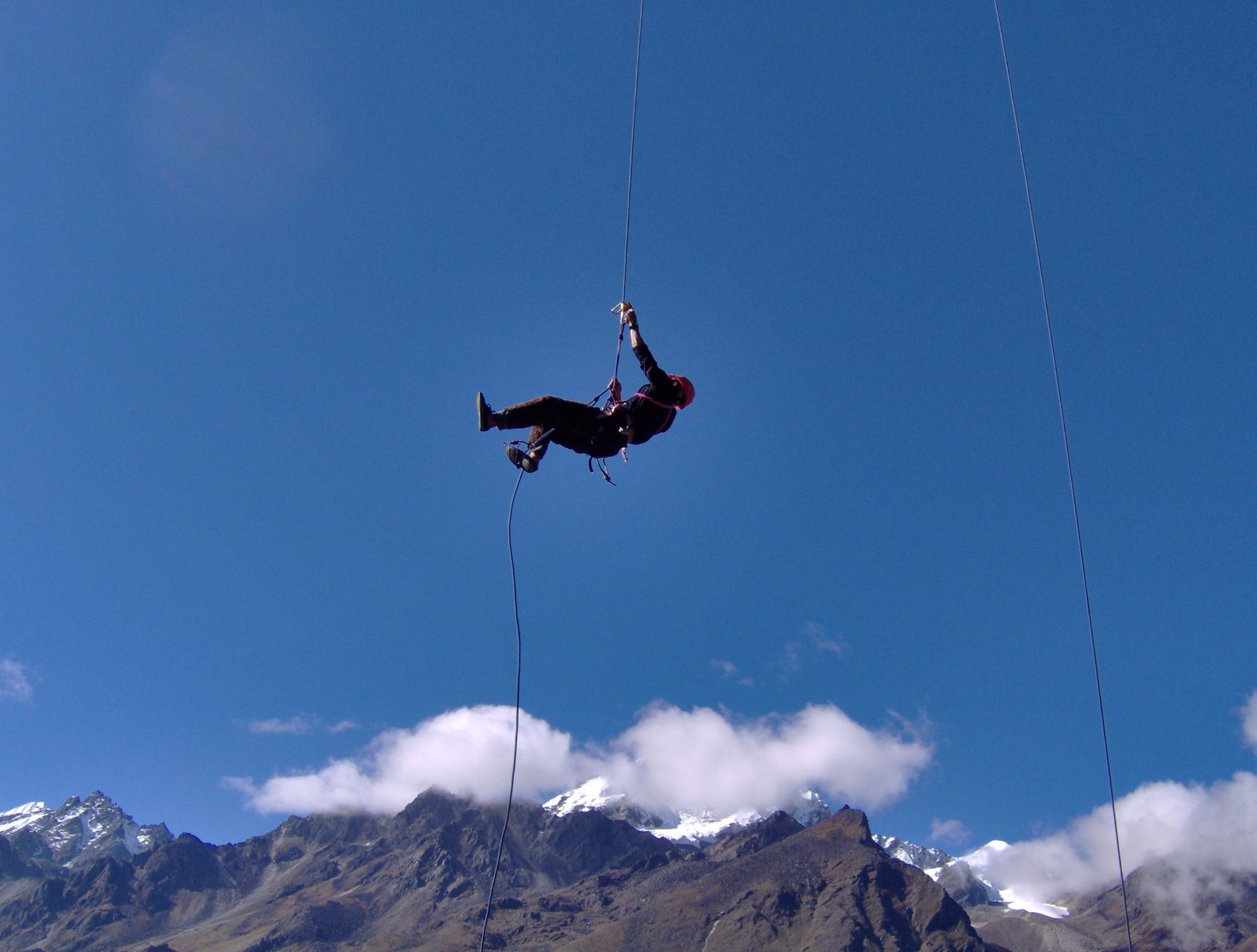
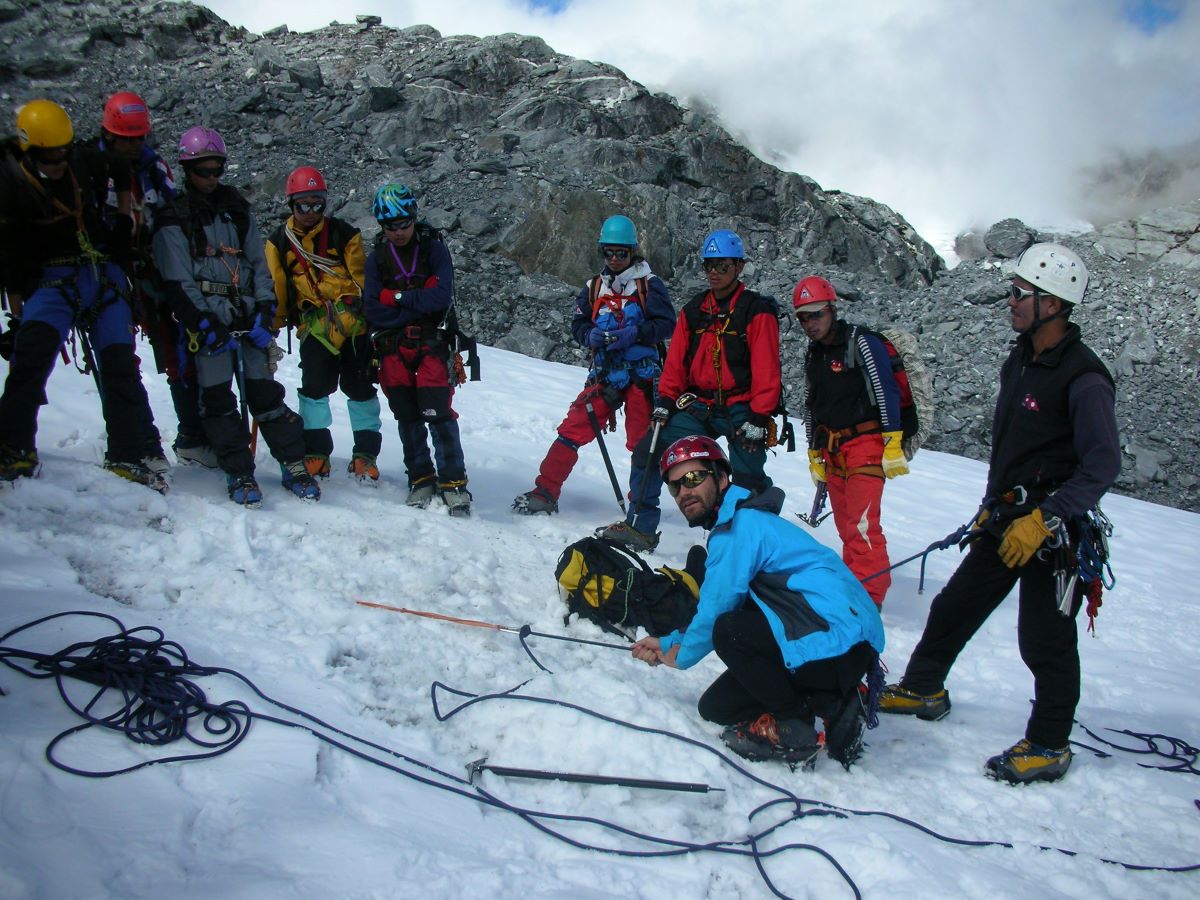
Training includes crampon movement, ice-axe techniques, self-arrest, rope handling, belaying, rappelling, fixed-rope systems, glacier travel, crevasse rescue, snow and ice anchors, navigation, and avalanche awareness.
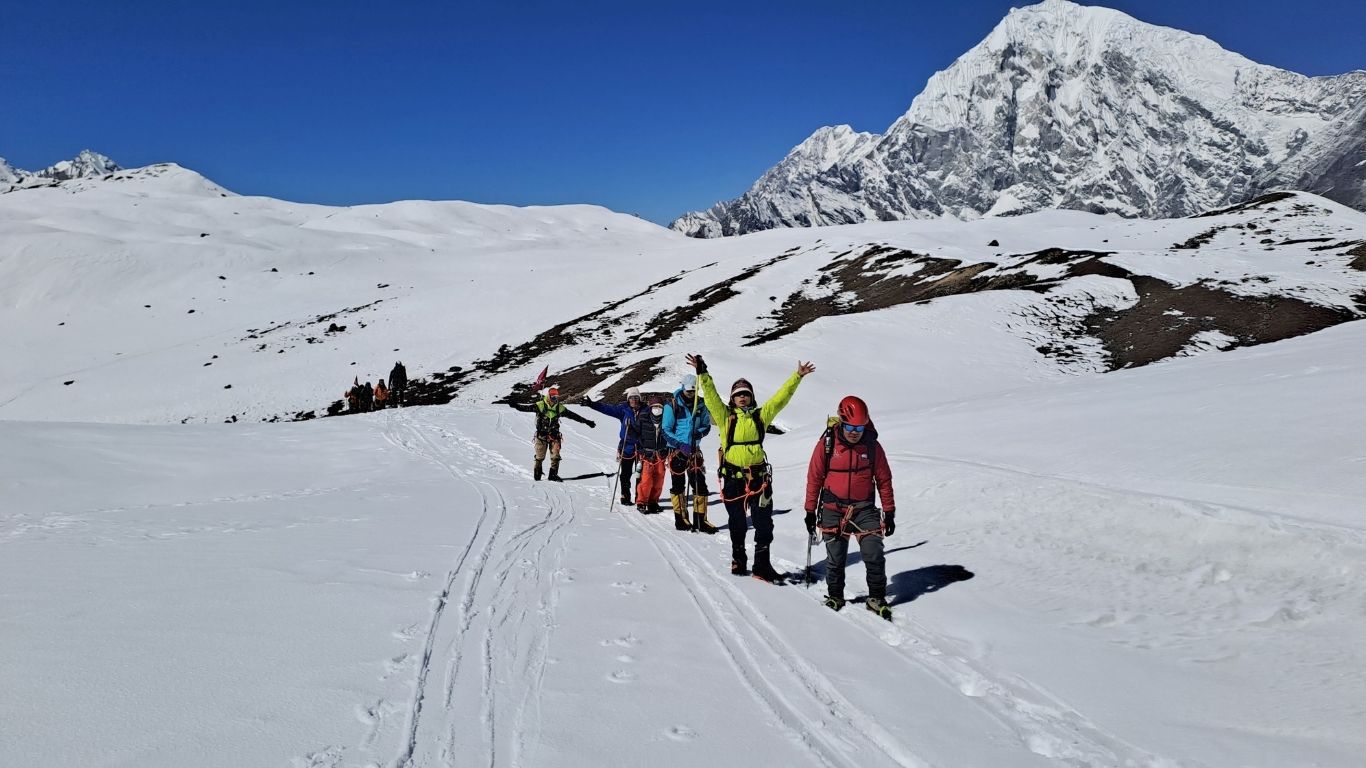
After several days of practical training, the course leads toward a guided ascent of Tsorku Peak (approximately 5,780 m). The summit is not the only objective; it gives participants an opportunity to apply their training in a real Himalayan environment.
This course is suitable for physically fit beginners with trekking experience as well as climbers who want to improve their technical mountain skills.
Upon arrival at Tribhuvan International Airport, our representative will welcome you and transfer you to your hotel. After check-in, you can rest and recover from your journey.
Accommodation: Hotel
After breakfast, meet your mountain guide for a detailed course briefing. We will review the itinerary, discuss safety procedures, and check your personal trekking and climbing equipment.
If any equipment is missing, there will be time to arrange rental or purchase in Kathmandu. The rest of the day is free for preparation or exploring the city.
Accommodation: Hotel
Meals: Breakfas
After breakfast, drive northwest from Kathmandu toward Syabrubesi, the gateway to the Langtang Valley.
The journey passes through hills, terraced farmland, mountain villages, and river valleys, with views of the surrounding Himalayan landscape.
Accommodation: Mountain Lodge
Meals: Breakfast, Lunch & Dinner
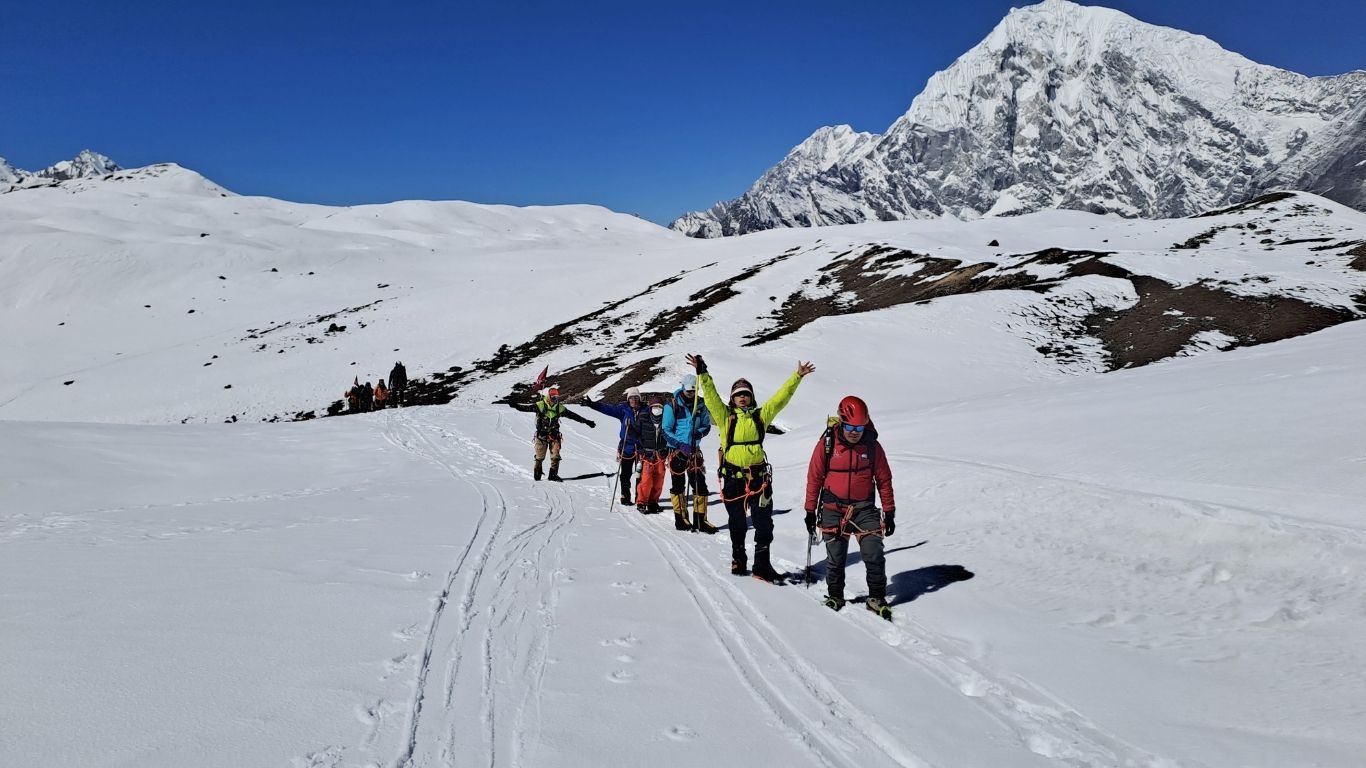
Today the trek begins. Follow the Langtang River through dense forest, crossing suspension bridges and passing small tea houses along the way.
After reaching Lama Hotel, the guide will introduce basic altitude awareness and explain how to reduce the risk of altitude sickness.
Accommodation: Mountain Lodge
Meals: Breakfast, Lunch & Dinner
Continue gradually upward through forests and along the Langtang River toward Langtang Village.
Along the trail, you will pass traditional Mani walls, chortens, and mountain settlements. After reaching the village, the guide will introduce basic skills such as:
Accommodation: Mountain Lodge
Meals: Breakfast, Lunch & Dinner
After breakfast, continue toward Kyanjin Gompa, a small mountain settlement surrounded by the Langtang Himal.
After arrival, you can rest and explore the area while enjoying views of glaciers and surrounding peaks including Yubra, Langshisa Ri, Naya Kanga, and Gangchenpo.
Accommodation: Mountain Lodge
Meals: Breakfast, Lunch & Dinner
Today is dedicated to acclimatization and technical preparation.
In the morning, hike toward Kyanjin Ri at approximately 4,773 m. The hike normally takes around 3–5 hours depending on the group and conditions.
After returning to Kyanjin Gompa for lunch, begin the first technical training session.
Training includes:
Accommodation: Mountain Lodge
Meals: Breakfast, Lunch & Dinner
Leave Kyanjin Gompa and trek toward Tsorku Peak Lower Base Camp. During the approach, participants will practice basic navigation and route-finding techniques learned earlier.
After reaching camp, the team will set up tents and prepare for the technical training days ahead.
Accommodation: Tent
Meals: Breakfast, Lunch & Dinner
Today, continue from Lower Base Camp to Higher Base Camp.
After setting up camp, begin practical training on snow and glacier terrain.
Training includes:
Accommodation: Tent
Meals: Breakfast, Lunch & Dinner
Training includes:
After training, return to camp.
Accommodation: Tent
Meals: Breakfast, Lunch & Dinner
Return to the glacier for another full technical training day. Today the focus is on climbing technique, belaying, and anchor systems.
Training includes:
After training, return to camp.
Accommodation: Tent
Meals: Breakfast, Lunch & Dinner
Today combines several important mountaineering skills.
Training includes:
After the training session, the guide will review the route, weather, equipment, and plan for the Tsorku Peak summit attempt.
Accommodation: Tent
Meals: Breakfast, Lunch & Dinner
Begin early in the morning for the planned ascent of Tsorku Peak. During the climb, participants will apply the skills learned during the course, including crampon movement, ice-axe use, glacier travel, rope systems, and teamwork.
After reaching the summit or the highest safe point, descend back to Base Camp. The final decision to continue toward the summit will always depend on weather, snow conditions, route safety, and the condition of the group.
Accommodation: Tent
Meals: Breakfast, Lunch & Dinner
This day is reserved in case bad weather or unsafe mountain conditions prevent the summit attempt on Day 13.
If the summit has already been completed, the day may be used for additional technical training, recovery, or further practice on the glacier.
Accommodation: Tent
Meals: Breakfast, Lunch & Dinner
After completing the mountain training section, pack the camp and descend back to Kyanjin Gompa.
After several nights in tents, return to the comfort of a mountain lodge. In the evening, the team can relax and reflect on the climbing experience.
Accommodation: Mountain Lodge
Meals: Breakfast, Lunch & Dinner
After breakfast, head to a nearby climbing area for another practical training day.
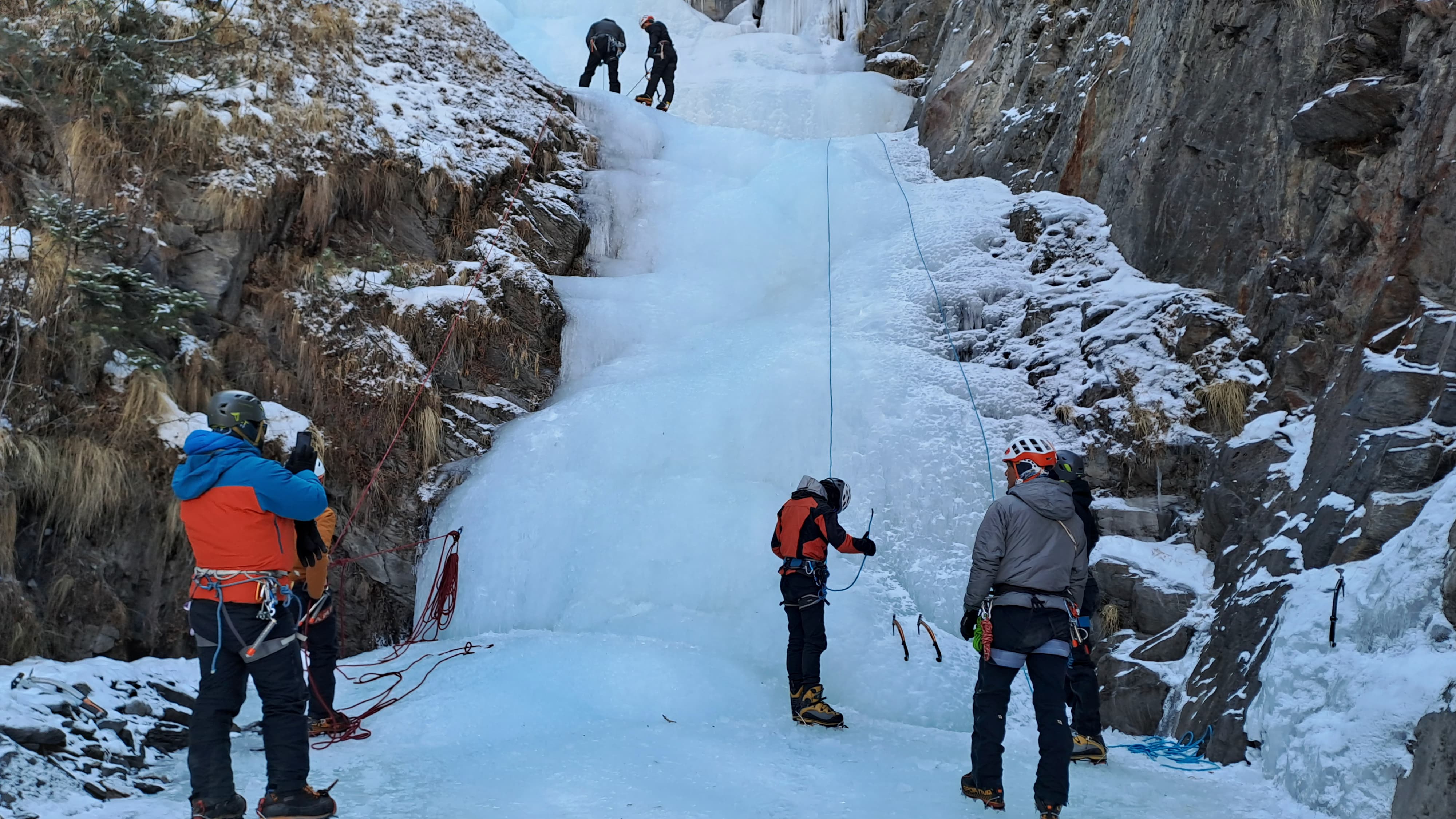
During winter, the focus will be on waterfall ice climbing, depending on ice conditions.
Training may include:
Seasonal Note: Outside the winter season, when suitable waterfall ice is unavailable, this day will focus on alpine rock climbing, rope rescue, and technical rock skills.
Accommodation: Mountain Lodge
Meals: Breakfast, Lunch & Dinner
Begin the return journey down the Langtang Valley. Follow the familiar trail through Langtang Village, forests, river crossings, and mountain settlements before reaching Lama Hotel.
Accommodation: Mountain Lodge
Meals: Breakfast, Lunch & Dinner
Continue descending through forest and along the Langtang River until reaching Syabrubesi. This is the final trekking day of the course.
Accommodation: Mountain Lodge
Meals: Breakfast, Lunch & Dinner
After breakfast, drive back to Kathmandu. The journey follows mountain roads through river valleys and hillside villages, with final views of the Langtang and Ganesh Himal ranges along the way.
Upon arrival in Kathmandu, transfer to your hotel.
Accommodation: Hotel
Meals: Breakfast
Depending on your international flight schedule, you will have some free time in Kathmandu. Our representative will transfer you to Tribhuvan International Airport for your departure. This marks the end of your Technical Mountaineering Course in Nepal.
Meals: Breakfas
 Note:
Note:
If you have a private group and prefer a personalized experience, we can organize a custom trip tailored to your requirements and group size, running it any day you choose.
Plan a Private TripThe Technical Mountaineering Course in Nepal is a practical training program designed to develop the essential skills needed for alpine and Himalayan climbing. Training takes place in the Langtang region, where participants progress from trekking and acclimatization to snow, ice, glacier, and rope-based technical training.
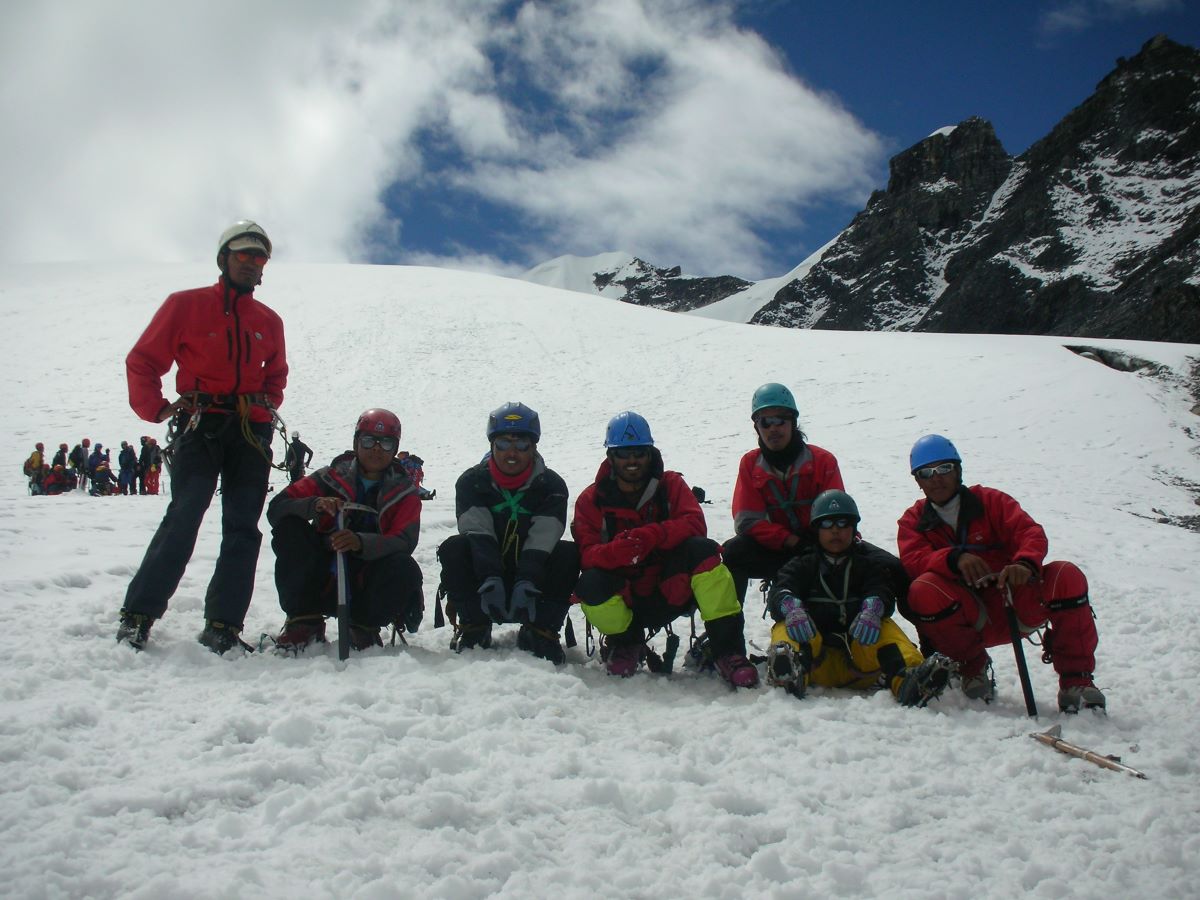
The course is led by an IFMGA Mountain Guide and includes practical training around Kyanjin Gompa, Tsorku Glacier, and the surrounding alpine terrain.
Read MoreThis course is suitable for physically fit beginners, experienced trekkers who want to move into mountaineering, and climbers who want to improve their technical skills.
Previous technical climbing experience is not compulsory, but participants should be comfortable with multi-day trekking and spending several days in cold mountain conditions.
The course combines instruction with repeated practical training. Depending on mountain and weather conditions, participants will learn:
The aim is not simply to demonstrate these techniques but to give participants enough practice to understand when and how they are used in the mountains.
Technical training is conducted under the supervision of a qualified IFMGA Mountain Guide.
The guide is responsible for technical instruction, route assessment, training safety, and decisions during the summit section. Participants are expected to follow the guide's instructions, particularly on glaciers, steep terrain, and during changing weather conditions.
Proper acclimatization is an important part of the course. The itinerary gradually moves from Kathmandu to the Langtang Valley before reaching Kyanjin Gompa and the higher training camps.
An acclimatization hike toward Kyanjin Ri is included before participants move into the glacier training area. The guide will monitor the group throughout the course and adjust the program if required.
The course includes a planned ascent of Tsorku Peak, approximately 5,780 m.
The climb provides an opportunity to use the techniques learned during training in a real mountain environment. Reaching the summit is not guaranteed and is not considered more important than safety or learning.
The guide may change or cancel the summit attempt because of weather, snow conditions, glacier conditions, participant health, or other safety concerns.
Participants should arrive with good cardiovascular fitness, leg strength, endurance, and the ability to walk for several hours at altitude while carrying a daypack.
Preparation before the course should ideally include:
Good preparation will allow you to concentrate more effectively on the technical training.
Accommodation varies according to the location:
Kathmandu: Hotel accommodation as specified in the package.
Langtang Trek: Local mountain lodges or teahouses, normally on a twin-sharing basis.
Training & High Camp: Tented accommodation during the glacier and high-altitude training section.
Mountain accommodation becomes simpler as the course moves into more remote areas.
Breakfast, lunch, and dinner are provided during the trekking, training, and camping sections.
During the camping section, meals are prepared by the expedition cook and kitchen team. Food is planned to provide enough energy for long training and climbing days.
Lunch and dinner in Kathmandu are normally not included unless specifically stated.
Safe drinking water is available throughout the trek using boiled or properly treated water where necessary. Participants should carry reusable water bottles or a hydration system.
Using reusable bottles also helps reduce plastic waste in the mountain environment.
Participants are responsible for suitable personal trekking and climbing equipment.
Typical technical equipment includes:
A detailed equipment list should be provided before arrival. Some equipment may be available for rental in Kathmandu.
Necessary group equipment for technical training and camping is provided according to the program. This may include ropes, technical protection equipment, tents, kitchen equipment, cooking equipment, and other shared expedition items.
Porters and support staff are used to transport group equipment, camping supplies, food, and other expedition materials.
During the camping section, a cook and kitchen team support the group so participants can concentrate on training, acclimatization, and climbing.
Weather in the Himalayas can change quickly. Snowfall, strong winds, low temperatures, poor visibility, glacier conditions, or other natural factors may affect the planned program.
For this reason, the itinerary should be considered flexible. The mountain guide may change training locations, timing, camps, or climbing plans when required for safety.
Snow, glacier, and ice conditions vary throughout the year.
During winter, suitable frozen waterfalls around Kyanjin Gompa may allow additional waterfall ice-climbing training.
Outside winter, when waterfall ice is unavailable, this training may be replaced with alpine rock climbing, rope rescue, anchor work, or other technical skills appropriate to the conditions.
Comprehensive travel insurance is required for this course.
Your policy should specifically cover:
Participants should check carefully with their insurance provider that activities up to the maximum altitude of the course are covered.
Participants should inform us before the course about any medical condition, allergies, regular medication, previous altitude problems, or other health concerns that could affect participation.
A basic group medical kit is carried, but participants must bring their own prescription medication and personal medical supplies.
A satellite phone will be available during the remote mountain section for emergency communication where conditions and network coverage require it.
Personal satellite phone calls, where possible, may involve an additional charge.
Ground transportation is arranged between Kathmandu and Syabrubesi according to the itinerary.
Mountain roads in Nepal can occasionally be affected by weather, landslides, traffic, or road conditions, so driving times may vary.
The package includes the necessary permits for the Langtang region, including the Langtang National Park entry permit, TIMS Card, and other required local permissions according to current regulations.
Participants are expected to respect local communities, mountain culture, wildlife, and the natural environment.
We encourage responsible waste management, reusable water bottles, minimum use of single-use plastics, and leaving camps and training areas clean.
The published itinerary is the planned program, but Himalayan conditions require flexibility.
Weather, trail conditions, snowfall, glacier conditions, participant health, or other circumstances may require changes. The mountain guide and Alpinist Club team will make adjustments when necessary, with safety and effective training as the main priorities.
Less More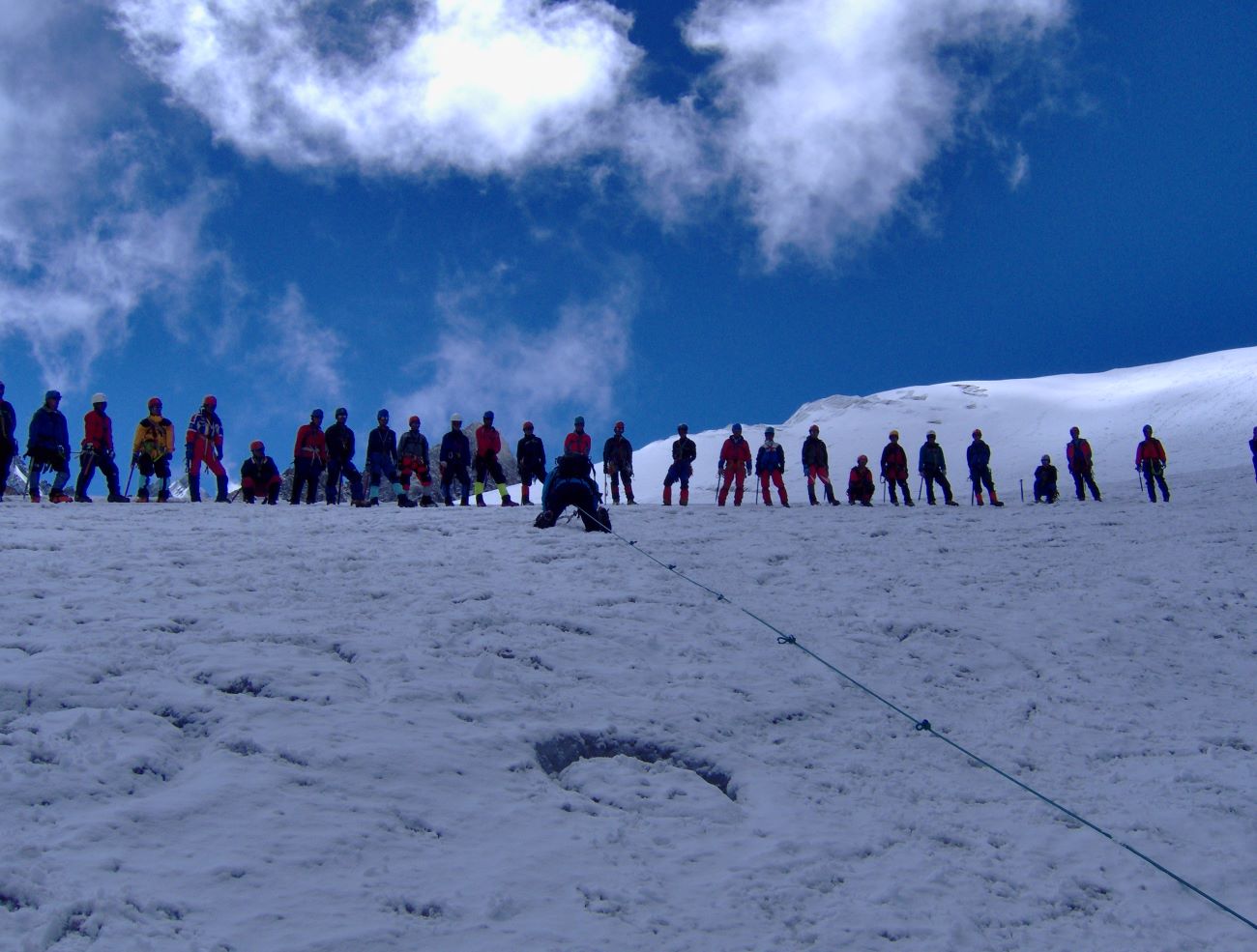
No previous technical mountaineering experience is required. The course starts with fundamental skills and gradually progresses to glacier travel, ice climbing, rope systems, rescue techniques, and alpine climbing. Previous trekking experience and good physical fitness are recommended.
The course is suitable for fit beginners, trekkers moving into mountaineering, and climbers who want to improve their technical skills before attempting more challenging Himalayan peaks
The technical training is led by an experienced IFMGA Mountain Guide, with additional support staff depending on the group size and course requirements.
The planned highest point is Tsorku Peak at approximately 5,780 m. The itinerary includes gradual acclimatization before moving to the high camps and summit section.
No. The summit attempt depends on weather, snow and glacier conditions, participant fitness, acclimatization, and the mountain guide's safety assessment. The main purpose of the course is technical learning rather than reaching the summit at any cost.
Participants should bring their personal clothing and essential mountaineering equipment. Some technical and group equipment may be provided or available for rent in Kathmandu. A detailed equipment list will be sent before the course.
You will stay in a hotel in Kathmandu, mountain lodges while trekking through the Langtang Valley, and tents during the high-altitude glacier training and summit section.
Waterfall ice climbing is normally possible during winter when suitable ice has formed around Kyanjin Gompa. In other seasons, this training day may be replaced with alpine rock climbing, rope rescue, or additional technical mountaineering practice.
Yes. You should have comprehensive travel insurance that covers high-altitude trekking, technical mountaineering, medical treatment, emergency evacuation, and helicopter rescue up to the maximum altitude of the course.