
Max. Elevation








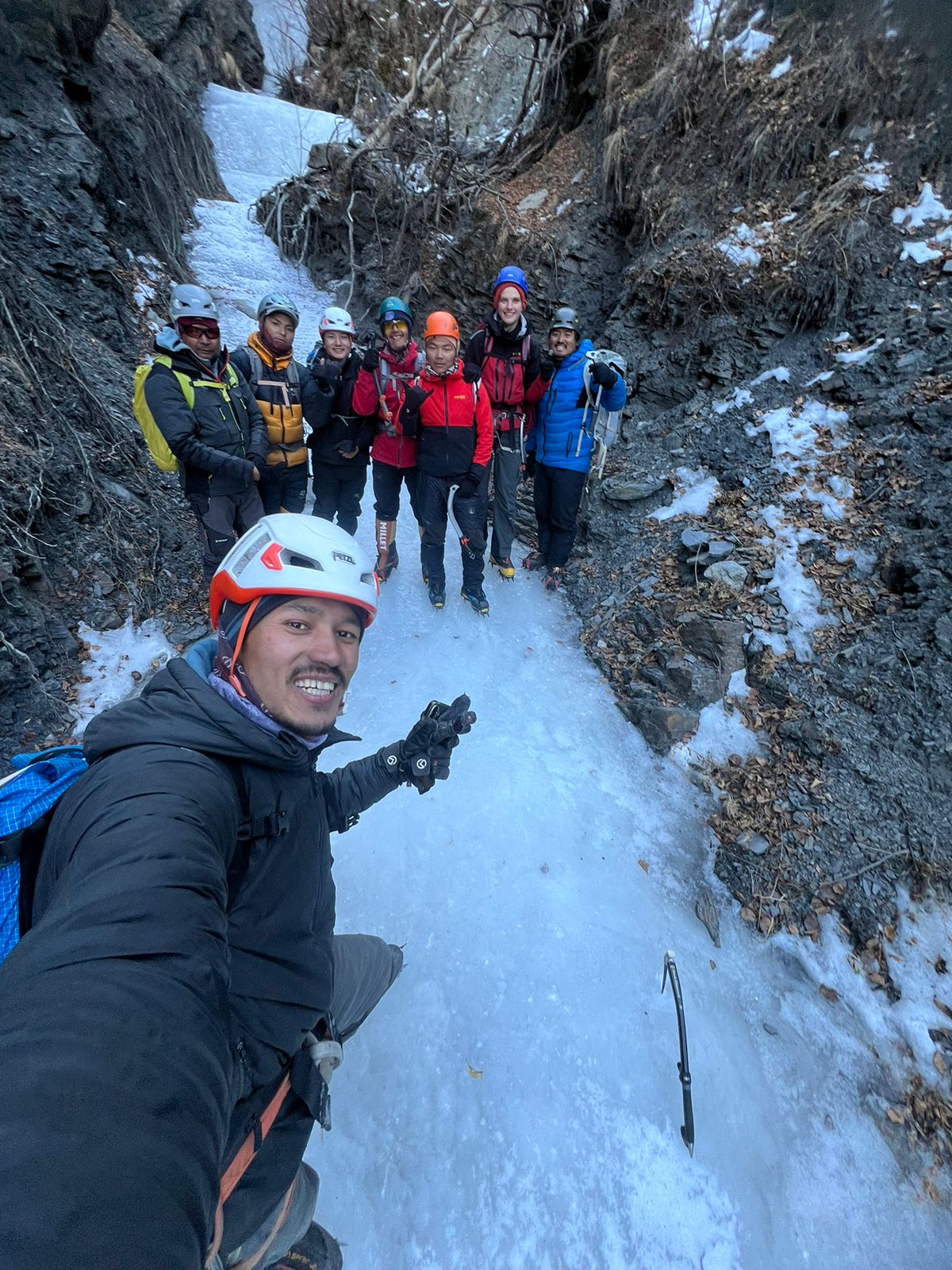
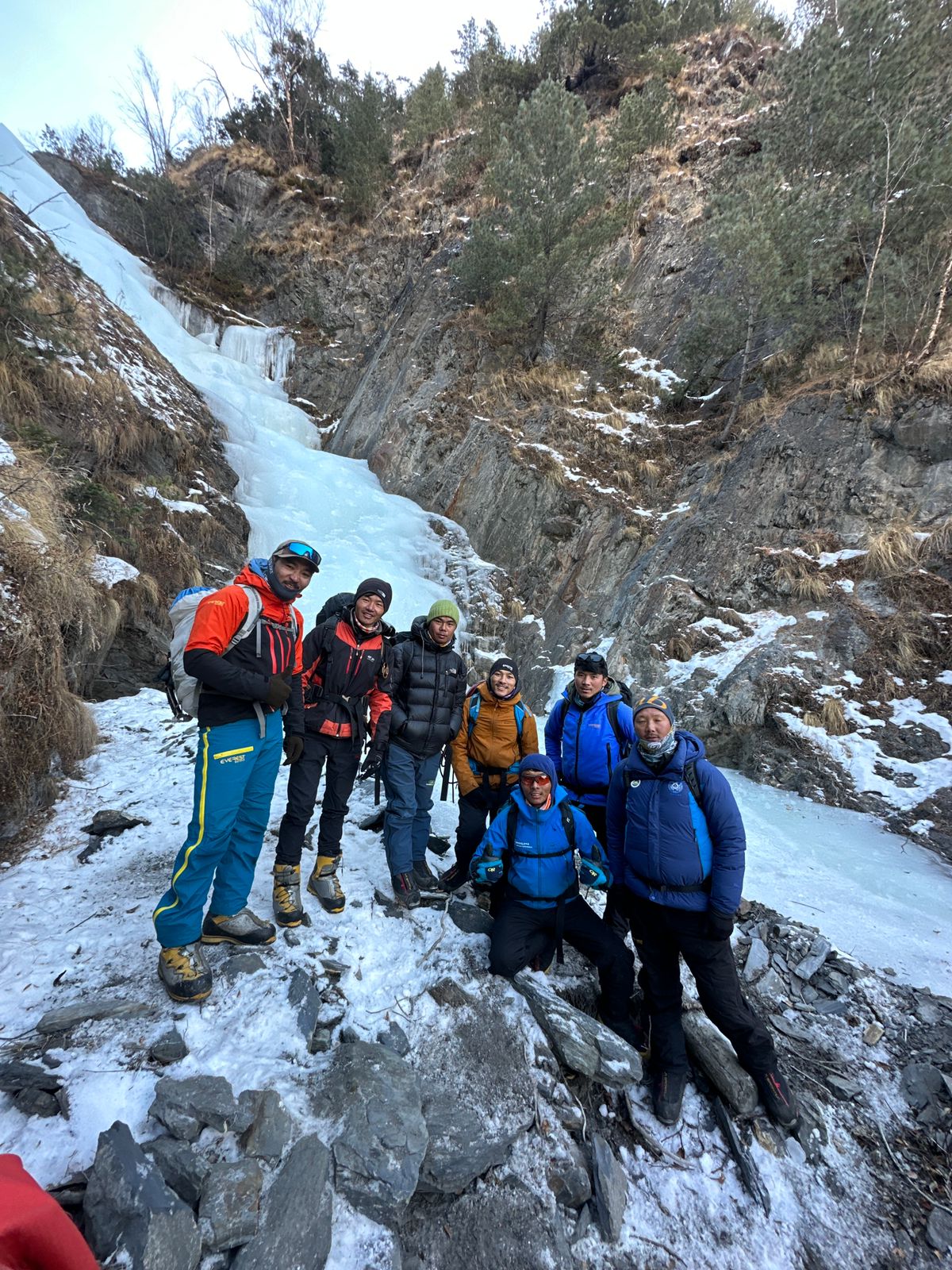
The 14-Day Advanced Ice Climbing Course in Manang, Nepal is based in Humde, where winter creates natural frozen waterfalls and technical ice routes.
The journey begins in Kathmandu and continues by road through Dharapani to Humde. After arrival, participants have time to acclimatize before starting the technical sessions.
Led by an IFMGA Mountain Guide, the course focuses on advanced movement, steep ice, ice screw placement, lead climbing, anchor systems, V-threads, multi-pitch climbing, rappelling, rope management, retreat techniques, and basic self-rescue.
The program is designed for climbers who already understand basic crampon use, belaying, knots, top-rope climbing, and rope handling. Previous lead-climbing experience is helpful.
Training progresses gradually from technique improvement to more complete climbing systems. When conditions allow, participants practice on longer and more technical routes to develop confidence, efficiency, and better decision-making.
Ice conditions, weather, participant ability, and safety determine the final training location and route selection. The IFMGA guide may adjust the program whenever necessary.
Upon arrival at Tribhuvan International Airport, our team will welcome you and transfer you to your hotel. Later, you will meet the climbing team for a course briefing covering the journey to Manang, winter conditions, technical objectives, equipment, and safety procedures.
Altitude: 1,350 m
Accommodation: Hotel
Meals: Welcome Dinner
After an early breakfast, we leave Kathmandu and begin the overland journey toward the Manang region.
The drive follows the highway toward Besisahar before continuing along the Marsyangdi Valley toward Dharapani. As the road enters the mountains, the landscape changes from lowland hills and farmland to deep valleys, waterfalls, forests, and traditional mountain settlements.
We arrive in Dharapani in the evening and stay overnight before continuing toward Humde the following day.
Driving: Approx. 9–11 hours, depending on road conditions
Altitude: Approx. 1,860 m
Accommodation: Mountain Lodge
Meals: Breakfast, Lunch and Dinner
After breakfast, we continue deeper into the Manang Valley. The road passes through mountain settlements such as Chame and Pisang while the scenery opens toward the Annapurna and Manang Himalaya.
The gradual journey from Dharapani to Humde also provides a more comfortable transition to higher altitude. After reaching Humde, we check into the lodge and rest. No demanding climbing activity is planned today so the body can begin adjusting to the elevation.
Driving: Approx. 5–7 hours, depending on road and weather conditions
Altitude: Approx. 3,300 m
Accommodation: Mountain Lodge
Meals: Breakfast, Lunch and Dinner
Today is kept relatively light for acclimatization. We take a short walk around Humde and inspect possible ice-climbing areas. The IFMGA guide will assess current ice conditions and select suitable routes. A practical skills assessment includes:
The assessment helps the guide adjust the technical program to each participant's ability.
Accommodation: Mountain Lodge
Meals: Breakfast, Lunch and Dinner
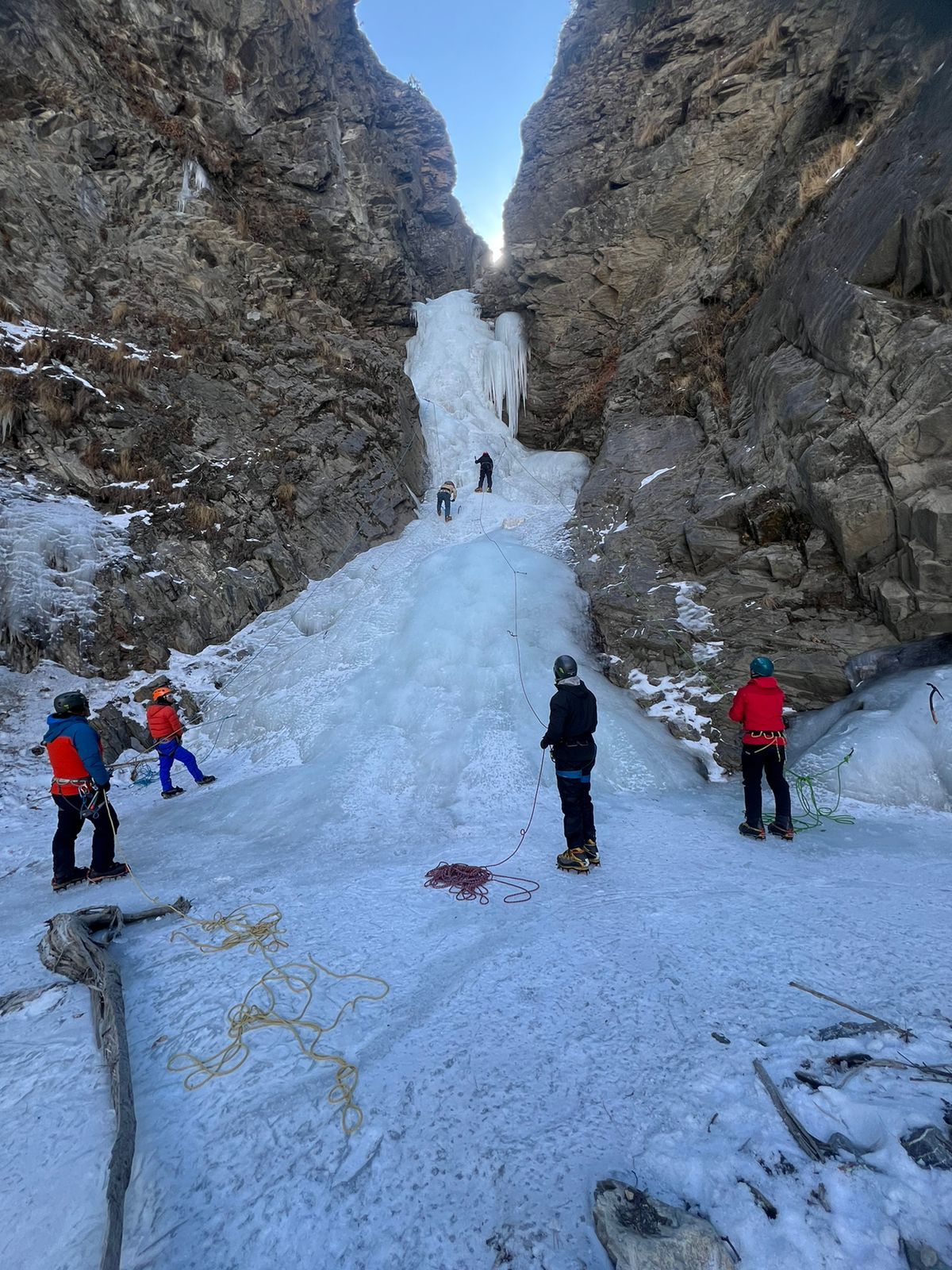
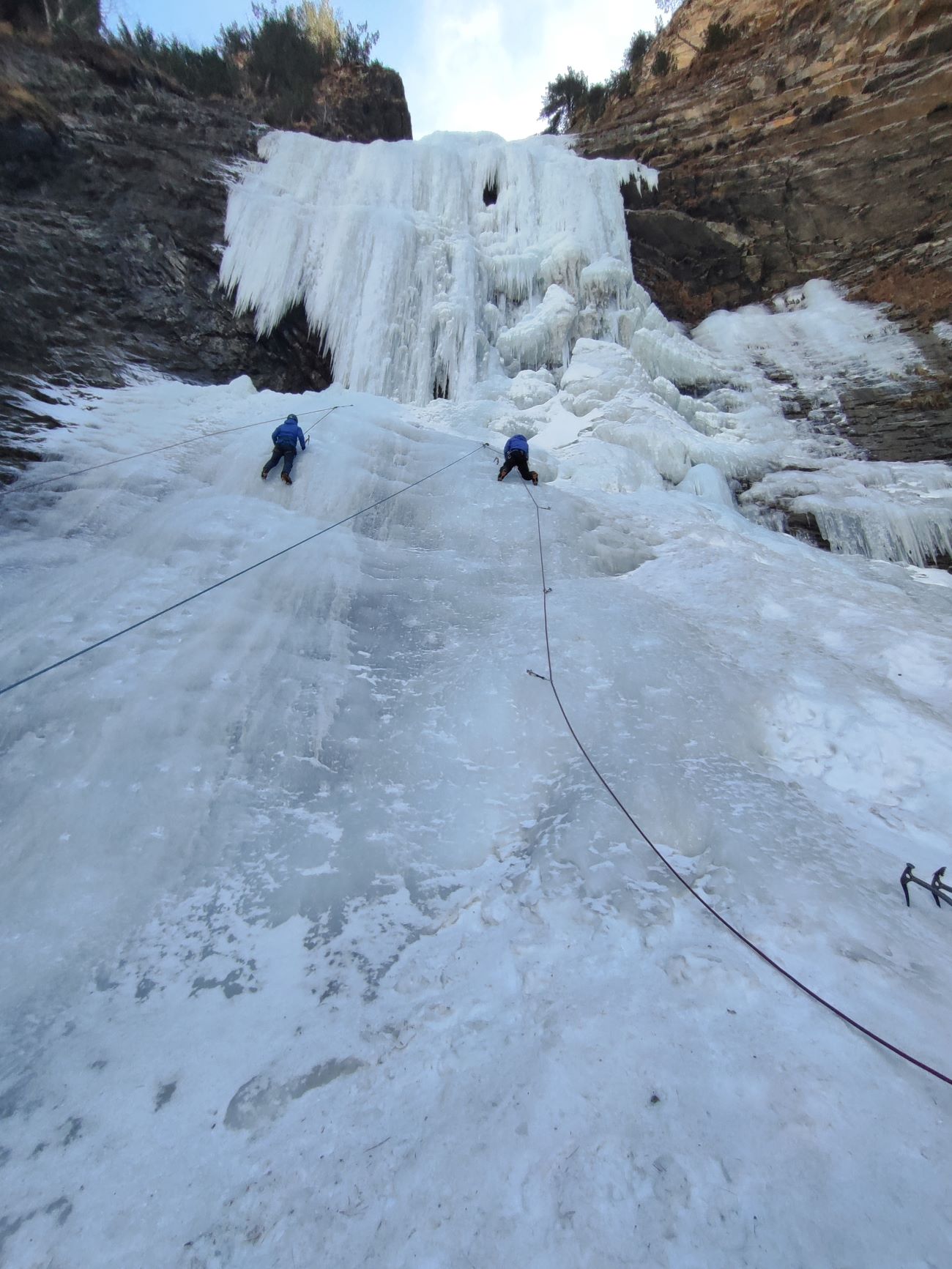
The first full technical training day focuses on efficient movement on steeper ice. Training includes advanced crampon technique, front-pointing, precise foot placement, efficient ice-tool placement, body positioning, weight transfer, resting positions, and controlled movement on vertical terrain.
Participants complete several supervised climbs while the guide works on individual technique.
Technical Training: Approx. 5–7 hours
Accommodation: Mountain Lodge
Meals: Breakfast, Lunch and Dinner
Today's training concentrates on building reliable ice anchors.
Topics include:
Participants practice building and checking different anchor systems under guide supervision.
Technical Training: Approx. 5–7 hours
Accommodation: Mountain Lodge
Meals: Breakfast, Lunch and Dinner
Today we focus on placing protection and developing the skills required for lead climbing.
Training covers:
Supervised lead climbing may be introduced depending on participant ability and ice conditions.
Technical Training: Approx. 5–7 hours
Accommodation: Mountain Lodge
Meals: Breakfast, Lunch and Dinner
Today we bring together climbing, protection, anchors, and rope management in a multi-pitch environment.
Training includes:
When conditions permit, participants complete a supervised multi-pitch ice climb.
Technical Training: Approx. 5–7 hours
Accommodation: Mountain Lodge
Meals: Breakfast, Lunch and Dinner
Today's session focuses on improving climbing performance on more demanding terrain.
Training may include:
The guide selects the difficulty according to participant ability and ice conditions.
Technical Training: Approx. 5–7 hours
Accommodation: Mountain Lodge
Meals: Breakfast, Lunch and Dinner
Knowing how to retreat safely is an important part of advanced ice climbing.
Training includes:
Technical Training: Approx. 5–7 hours
Accommodation: Mountain Lodge
Meals: Breakfast, Lunch and Dinner
The final technical day brings together the skills practiced throughout the course.
Depending on weather, ice conditions, and participant ability, the group completes a longer supervised climbing objective.
The day may include:
At the end of the session, the IFMGA guide provides individual feedback and recommendations for further development.
Technical Training: Approx. 5–7 hours
Accommodation: Mountain Lodge
Meals: Breakfast, Lunch and Dinner
After completing the technical training program, we leave Humde and descend through the Manang Valley toward Dharapani.
The drive passes through Pisang, Chame, and other settlements along the Marsyangdi Valley.
Upon arrival in Dharapani, we check into the lodge and enjoy a relaxed evening after the climbing program.
Driving: Approx. 5–7 hours
Accommodation: Mountain Lodge
Meals: Breakfast, Lunch and Dinner
After breakfast, we begin the long drive back to Kathmandu.
The journey follows the mountain road toward Besisahar before reconnecting with the highway to Kathmandu.
Upon arrival, transfer to the hotel. The evening is free for rest, shopping, or exploring Kathmandu.
Driving: Approx. 9–11 hours
Accommodation: Hotel
Meals: Breakfast and Lunch
According to your international flight schedule, our team will transfer you from the hotel to Tribhuvan International Airport for your departure.
Meals: Breakfast
 Note:
Note:
If you have a private group and prefer a personalized experience, we can organize a custom trip tailored to your requirements and group size, running it any day you choose.
Plan a Private TripThe 14-Day Advanced Ice Climbing Course takes place around Humde in the Manang Valley, one of Nepal's best winter locations for natural ice climbing. The course is designed for climbers who already understand basic climbing techniques and want to develop stronger technical skills under the supervision of an IFMGA Mountain Guide.
Read MoreThis is an advanced training program rather than a beginner course. Participants should already be comfortable with basic crampon use, belaying, climbing knots, top-rope climbing, and rope handling.
Previous lead-climbing experience is helpful but not compulsory. The guide will assess each participant before introducing lead climbing or more demanding routes.
The course includes 7 full technical training days, normally around 5–7 hours per day.
Training may include:
The exact training program depends on ice conditions, weather, and participant ability.
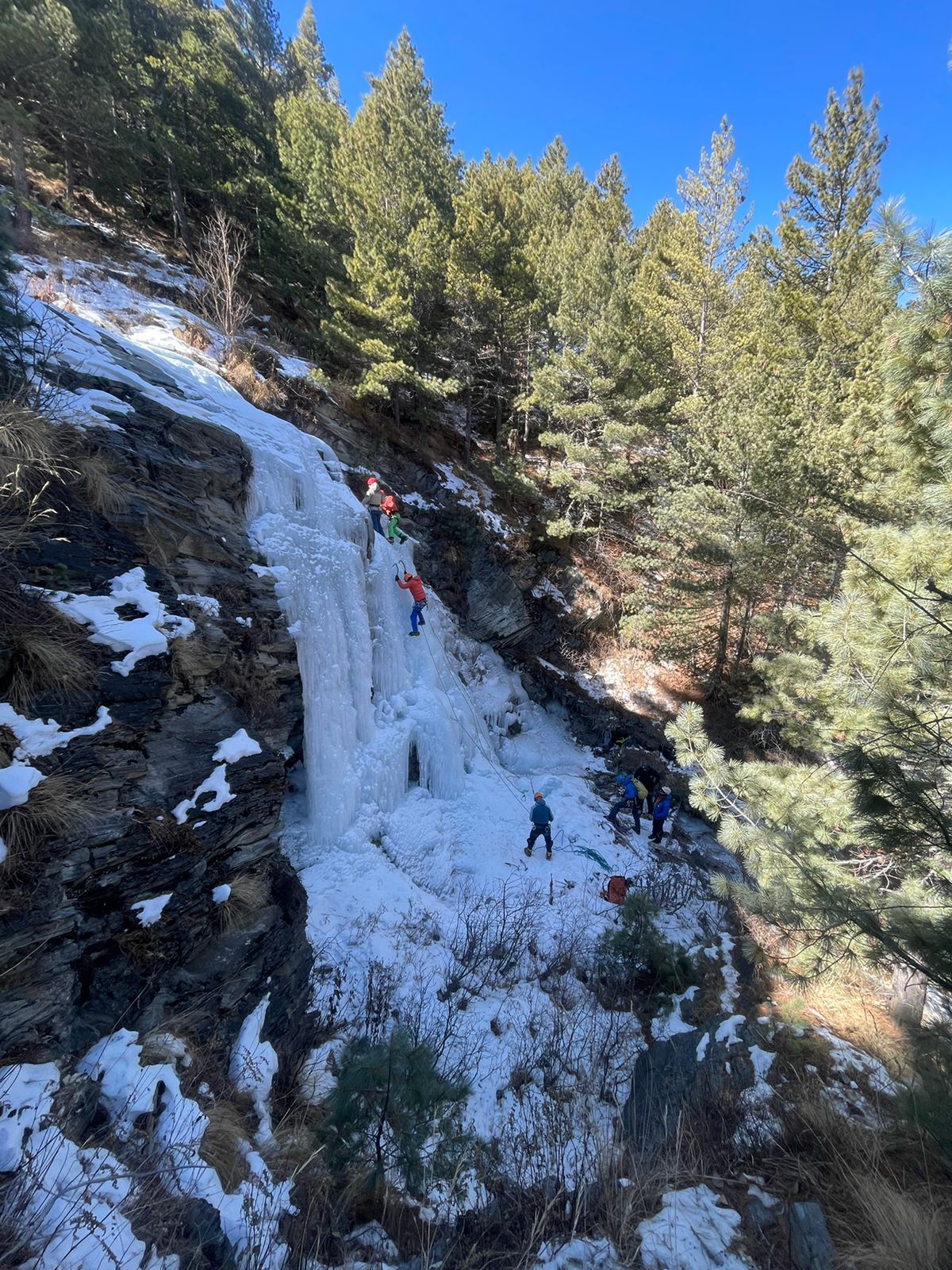
The main training area is around Humde, Manang, at approximately 3,300 m. During winter, natural waterfalls and watercourses freeze and create different types of ice formations suitable for technical practice.
The exact climbing site may change according to ice quality and safety.
The best period for ice climbing in Manang is generally December to February, when temperatures are cold enough for reliable ice formation.
Winter conditions vary each year, so route selection is confirmed after the guide inspects the ice.
Accommodation is provided in:
Mountain lodges are comfortable but simple, especially during winter. Heating, hot water, and electricity may be limited in some places.
Breakfast, lunch, and dinner are provided during the mountain portion of the program.
Meals are normally prepared at local lodges. Options may include rice, noodles, pasta, potatoes, soups, eggs, vegetables, and traditional Nepali dishes.
The course uses overland transportation:
Kathmandu → Dharapani → Humde
and on return:
Humde → Dharapani → Kathmandu
Mountain roads can be rough, and driving times may change because of snow, road conditions, landslides, or local traffic.
Technical training is supervised by an IFMGA Mountain Guide.
The guide is responsible for selecting suitable routes, assessing conditions, adjusting the training level, and making safety decisions throughout the course.
Participants need proper winter climbing clothing and technical equipment, including mountaineering boots, crampons, helmet, harness, ice tools, gloves, and suitable cold-weather layers.
Technical group equipment such as ropes, ice screws, and anchor equipment is arranged according to the program.
Rental equipment can be discussed before departure if required.
Humde lies at approximately 3,300 m, so acclimatization is included before intensive training begins.
Participants should drink enough water, rest properly, and inform the guide immediately if they experience unusual headaches, dizziness, nausea, or other symptoms related to altitude.
Ice climbing depends heavily on temperature and weather. Warm periods, snowfall, strong sun, or changing water flow can affect the quality of frozen waterfalls.
For this reason, a specific route can never be guaranteed in advance. The IFMGA guide may change the climbing area or training plan whenever necessary.
Participants should have travel insurance covering:
It is important to confirm that ice climbing is specifically covered by the insurance policy.
Safety takes priority over completing a particular route or training objective.
Weather, ice quality, road conditions, participant fitness, and technical ability are considered before every climbing session. The guide has final authority to change, shorten, or cancel an activity when conditions are unsuitable.
The purpose of the course is not simply to climb harder ice. It is to help participants become more efficient, technically aware, and confident when dealing with real ice-climbing situations.
By the end of the program, participants should have a stronger understanding of movement, protection, anchors, multi-pitch systems, rope management, retreat techniques, and decision-making on ice.
Less More



Sheford
(14 Dec 2024)Dãte please