
Max. Elevation









Climb Mount Manaslu (8,163m) in Nepal with expert guides, Sherpa support, safe acclimatization, and full expedition services. Take on an iconic 8,000m peak and aim for the summit with a trusted team.
Duration: 35 Days
Maximum Elevation: 8,163 m
Best Season: Autumn – September to October
Trip Grade: Extreme / High-Altitude Expedition
Activity: 8,000m Mountaineering Expedition
Accommodation: Hotel, Lodge & Expedition Tents
Transportation: Private Vehicle & Trekking Support
Departure: Kathmandu
Climbing an 8,000-meter mountain is a serious step in any mountaineer's journey. Rising to 8,163 meters, Mount Manaslu is the eighth-highest mountain in the world and offers climbers a complete Himalayan expedition experience involving glacier travel, fixed ropes, high camps, extreme altitude and a demanding summit push.
Our Manaslu Expedition is designed around careful acclimatization, experienced leadership and strong logistical support. Each climber receives 1:1 high-altitude Sherpa support, together with established Base Camp services, high-altitude camps, supplemental oxygen and regular weather forecasting.
Although Manaslu is often considered a suitable progression toward other 8,000-meter objectives, it should never be considered an easy mountain. Previous high-altitude experience, excellent physical conditioning, technical mountaineering skills and good judgment are essential.
| 1:1 Climbing Sherpa Support – One experienced high-altitude Sherpa for each climber. |
| Complete Base Camp Service – Individual member tents, dining facilities, kitchen team, communications and expedition support |
| Structured Acclimatization – Trekking approach, rotation climbs and recovery periods before the summit attempt. |
| Professional Expedition Logistics – Permits, climbing support, oxygen, weather forecasts, communications and high-camp infrastructure. |
 High-Altitude Safety
Climbing above 8,000 meters exposes the body to extreme altitude, cold, fatigue and significantly reduced oxygen levels. Every climber responds differently, regardless of fitness or previous experience.
Read MoreOur expedition strategy therefore emphasizes gradual acclimatization, regular monitoring, hydration, sufficient recovery and conservative decision-making.
Climbers should never continue ascending when experiencing worsening symptoms of altitude illness. Headache, nausea, unusual fatigue, loss of coordination, confusion, breathing difficulty at rest or significant changes in behavior must be taken seriously.
Decisions regarding ascent, descent, supplemental oxygen and medication will depend on the climber's condition, mountain conditions and professional medical or expedition advice.
Before joining the expedition, every participant should consult a doctor, preferably one familiar with high-altitude medicine. Medications such as acetazolamide may be recommended for some climbers, but medication should only be used after appropriate medical advice.
Reaching the summit is important, but returning safely remains the priority.
Our Manaslu Expedition is organized for climbers who already have high-altitude and technical mountaineering experience and want to progress to an 8,000-meter peak.
The journey begins in Kathmandu before following a gradual trekking approach toward Manaslu Base Camp. This allows the team to adapt progressively to altitude while preparing physically and mentally for the climbing phase.
At Base Camp, climbers complete technical preparation and begin acclimatization rotations through the higher camps. Depending on weather, health, route conditions and individual acclimatization, the expedition leader determines the appropriate rotation and summit strategy.
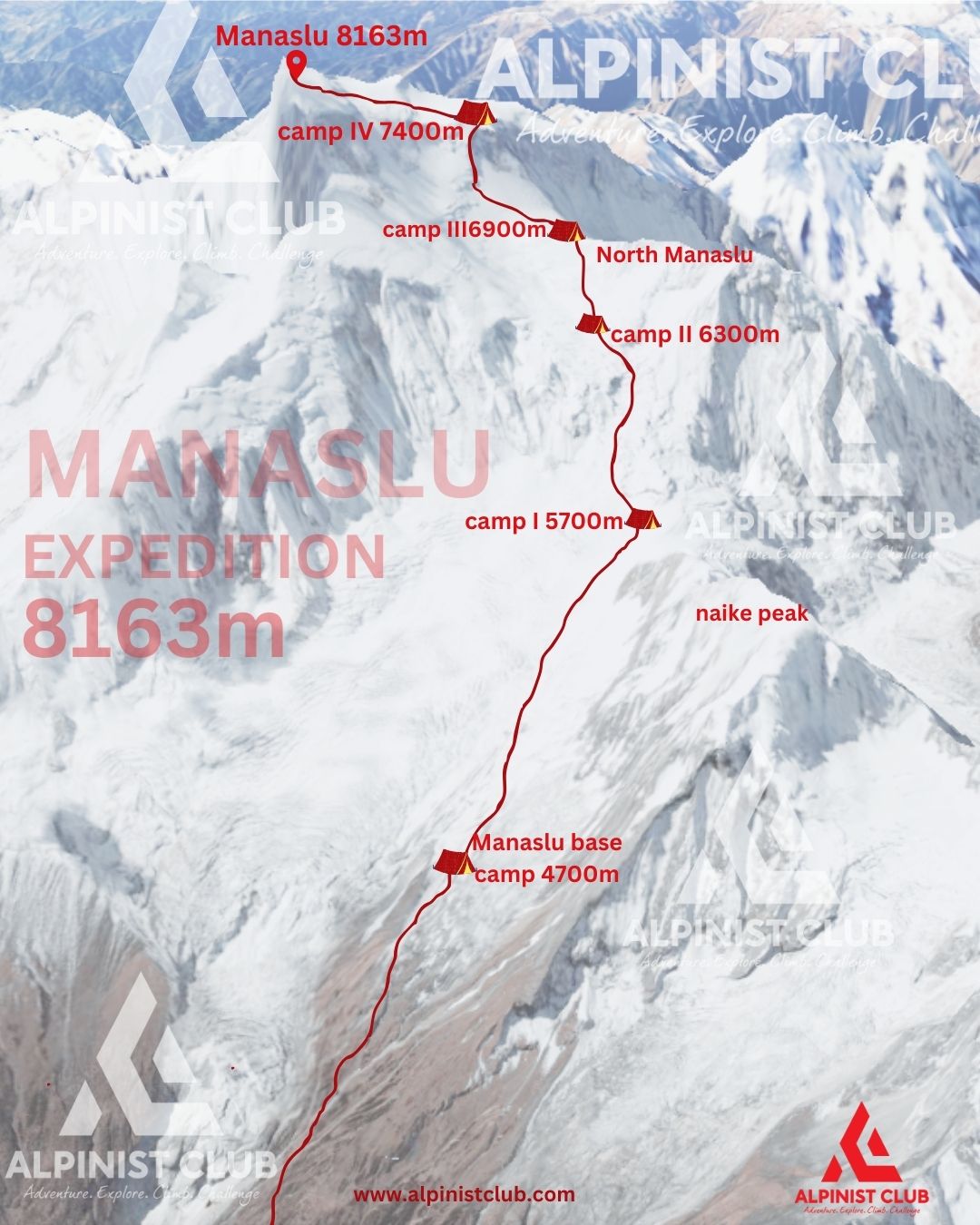
The mountain normally uses four high camps. Exact camp locations and elevations can change slightly from season to season because of glacier and snow conditions.
Upon arrival in Kathmandu, our local team will warmly welcome you at the airport and escort you to your hotel. After check-in, take some time to relax and recover from your journey. Later, attend a detailed trek briefing and presentation to prepare for the adventure ahead.
If you arrive in the morning, you’ll have the rest of the day free to explore Kathmandu at your own pace — stroll through vibrant streets, visit cultural landmarks, or sample delicious local cuisine. It’s the perfect introduction to the charm and hospitality of Nepal.
Meet your expedition manager for a detailed briefing and equipment check. We will review your personal trekking and climbing gear and make sure everything is ready for the expedition.
Our team will also complete the necessary permits, documentation, and logistical preparations.
Start the day early for a scenic two-day journey by bus and jeep through Nepal’s beautiful countryside. The drive offers glimpses of rural life, terraced fields, and distant mountain vistas. After reaching the end of the drivable road, a short walk of around three hours will lead you to your lodge.
Continue by private jeep through the mountain valleys toward Dharapani.
From Dharapani, begin the trekking section with a pleasant walk toward Tiliche. The trail passes through traditional villages and forested landscapes as we gradually enter the higher mountain region.
Enjoy a smooth and gradual start to the trek as you make your way toward higher altitudes. The trail leads through a beautiful alpine valley, surrounded by lush forests and mountain scenery that grows more striking with every step.
After about four hours of walking, you’ll reach Chauli Kharka, a peaceful clearing where your lodge for the night is located — the perfect place to rest before approaching the higher passes ahead.
Continue your ascent along the glacial “Milk River”, following a scenic trail that offers occasional breathtaking views of the Manaslu Himal peaks and the Bhimthang Valley. The landscape becomes increasingly rugged and alpine, setting the tone for the high mountain days ahead.
After about five hours of steady walking, you’ll arrive at Bhimthang, a beautiful settlement surrounded by dramatic Himalayan scenery — an ideal spot to rest and acclimatize.
Today we leave Bimthang and move into much higher alpine terrain toward Larkya Phedi.
The route becomes more rugged as we climb through glacial landscapes, rocky moraine, and high mountain terrain. The surrounding views of Himlung Himal, Cheo Himal, Nemjung, and other Himalayan peaks make this one of the most impressive sections of the approach.
We spend the night at Larkya Phedi, giving the team time to rest before crossing the high pass.
An early start is essential today as we cross the highest point of our trekking approach.
From Larkya Phedi, climb gradually through rocky and glacial terrain toward Larkya La Pass. At approximately 5,106m, the pass offers spectacular views across the surrounding Himalayan ranges.
After crossing the pass, begin the long descent toward the upper Nubri Valley and continue to Samdo for the night.
This is a long and physically demanding day, but also one of the most memorable days of the entire approach.
After the demanding pass crossing, enjoy a relatively comfortable descent toward Sama Gaun.
The trail follows the beautiful upper Nubri Valley with views of Manaslu and the surrounding peaks. Buddhist mani walls, prayer flags, and traditional stone houses reflect the strong Tibetan cultural influence of the region.
Begin the day early for a long and steady ascent — a challenging but rewarding climb that brings you ever closer to the heart of the Himalayas. The trail above the lake is especially beautiful, offering stunning alpine views throughout the journey.
After approximately eight hours of trekking, you’ll reach Manaslu Base Camp (4,850 m), where our kitchen and logistics team will already be waiting to welcome you. From this point onward, you are truly “at home” in the high mountains — ready to begin the mountaineering stage of your expedition.
The next 17 days are reserved for acclimatization rotations, rest, technical preparation, weather monitoring, and the summit attempt.
There is no fixed day-by-day schedule during this part of the expedition. Our climbing plan will depend on weather, snow conditions, route conditions, individual acclimatization, and the team's health.
Base Camp is the main centre of expedition operations. Between rotations, climbers return here to rest, recover, monitor weather forecasts, and prepare equipment.
The route from Base Camp crosses moraine and glacier terrain before reaching Camp I.
Climbers become familiar with fixed ropes, crampons, and movement across the glacier during the first acclimatization rotations.
The section between Camp I and Camp II is generally one of the more technical parts of the route.
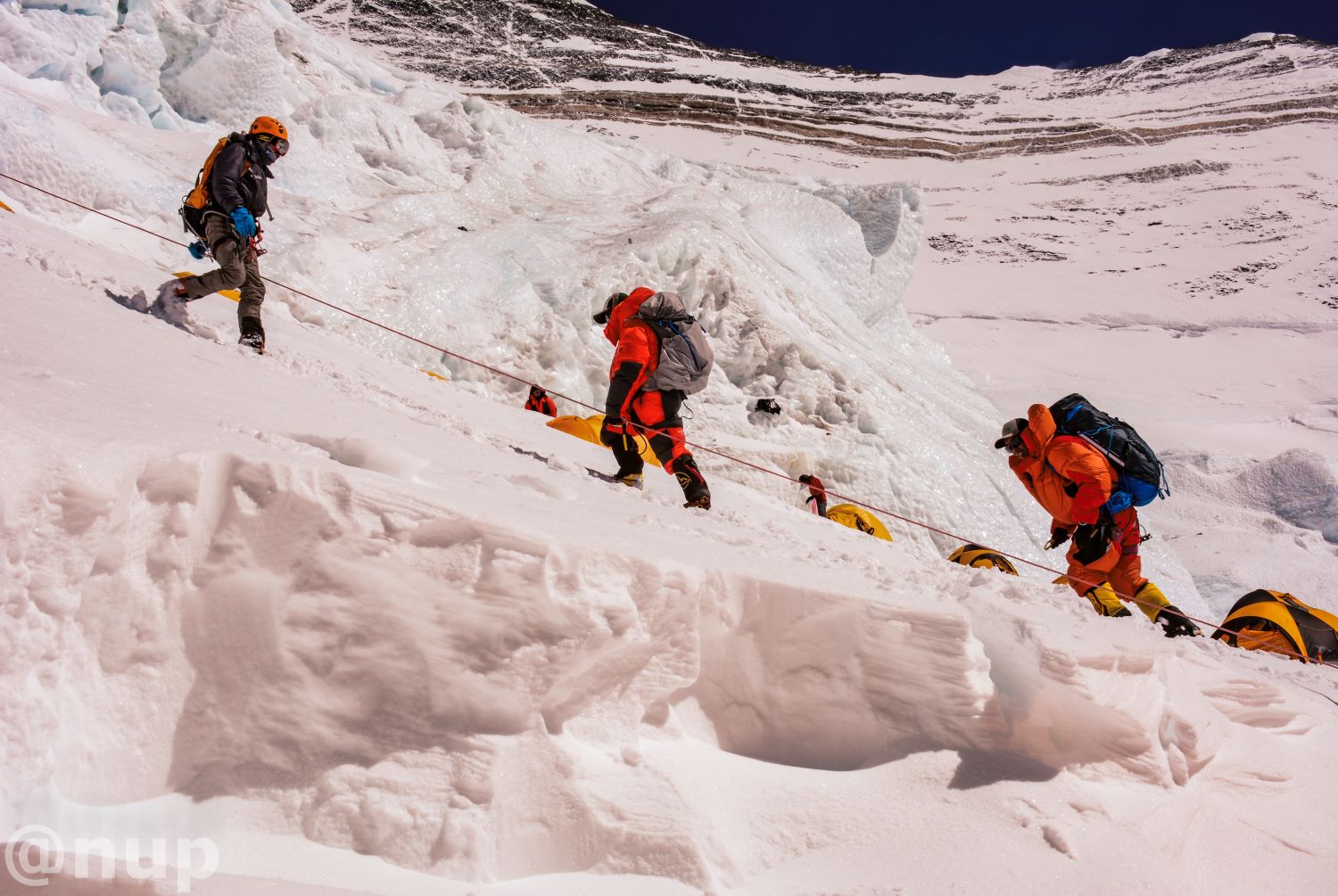
The climb involves crevassed glacier terrain, steeper snow and ice sections, and extensive fixed-rope travel.
Above Camp II, the terrain generally becomes more open, although snow and glacier conditions vary from season to season.
Camp III forms an important stage in the team's acclimatization and summit preparation.
Camp IV is the final high camp before the summit attempt.
After reaching camp, climbers rest, hydrate, prepare climbing equipment, and organize their oxygen systems before departing for the summit.
The summit push normally begins late at night or shortly after midnight.
Climbers move steadily upward using fixed ropes and supplemental oxygen according to the expedition plan.
Weather, wind, snow conditions, climbing speed, and individual health will determine whether the summit attempt continues.
After reaching the summit, the priority is a safe descent back through the high camps toward Base Camp.
Maximum Elevation: 8,163m
Accommodation: Base Camp & High-Altitude Tents
Meals: Full expedition meals
Begin a long but scenic descent from Base Camp toward the village of Sama, enjoying the striking alpine landscapes along the way. The trail winds through high valleys, offering breathtaking views and a peaceful atmosphere after the intensity of the high-altitude trek.
After approximately six hours of walking, you will arrive in Sama, where a comfortable lodge awaits — the perfect place to rest and recover.
Continue your trek through the high Himalayan valleys, passing the impressive long mani wall of Kermo Manan. The trail offers both cultural and natural highlights, as you pass through traditional villages and enjoy panoramic views of the surrounding peaks.
After approximately six hours of walking, you will reach the villages of Shyala-Lho-Lhi and Namrung, where a comfortable lodge awaits for an overnight stay.
Begin your descent from Namrung toward Philim, passing through lush valleys and terraced landscapes that showcase the rich culture and natural beauty of the region. The trail gradually descends, offering a change from the high alpine terrain to more forested and cultivated areas.
After approximately six hours of walking, you will arrive in Philim, where a comfortable lodge awaits for an overnight stay.
Depart Philim and continue your trek through diverse landscapes, from forested valleys to terraced farmlands, gradually approaching higher altitudes. The trail offers scenic views and a chance to experience local village life along the way.
After approximately seven hours of walking, you will reach Machha Khola, where a comfortable lodge awaits for your overnight stay.
After breakfast, begin a scenic drive from Machhakhola, passing through Arughat, then onward to Kathmandu. The journey takes approximately 10 hours, winding through picturesque valleys, riverside villages, and terraced landscapes, offering a final glimpse of rural Nepal.
Enjoy a relaxing day in Kathmandu to unwind after your trek. You can explore the city at your own pace, visit cultural and historical sites, shop for souvenirs in vibrant markets, or relax at your hotel. This is a perfect opportunity to soak in the sights, sounds, and flavors of Nepal’s capital.
Depending on your flight schedule, enjoy some free time in Kathmandu for last-minute shopping or sightseeing. Our representative will then escort you to the airport, marking the end of your unforgettable journey in Nepal. We thank you for traveling with us and wish you a safe and pleasant journey home.
Note:
If you have a private group and prefer a personalized experience, we can organize a custom trip tailored to your requirements and group size, running it any day you choose.
Plan a Private TripFrom your arrival in Kathmandu until the end of the expedition, our team is responsible for coordinating your journey, expedition logistics, and safety.
In the mountains, instructions given by the expedition leader and climbing team must be followed. Conditions at high altitude can change quickly, and decisions may sometimes need to prioritize the safety of the whole team over an individual climber's plans.
Weather, mountain conditions, health, acclimatization, or other unforeseen circumstances may require us to change, delay, or interrupt the program. The expedition leader has the final authority on safety-related decisions.
Read MoreEach participant is supported by one experienced high-altitude Sherpa, giving the expedition a 1:1 climber-to-Sherpa ratio.
Your climbing Sherpa provides support during the most important stages of the ascent, particularly the higher rotations and summit push.
Our high-altitude Sherpas are selected for their experience on major Himalayan expeditions, including previous climbs above 8,000 meters.
Their responsibilities include:
Your Sherpa may not remain beside you during every acclimatization rotation, as he may also be involved in carrying loads and preparing higher camps.
A summit bonus is payable directly to your high-altitude Sherpa in cash.
The bonus becomes due once the climber begins the official summit attempt from the final high camp, regardless of whether the summit is ultimately reached.
The applicable amount will be explained before the expedition.
The expedition leader is responsible for the overall climbing strategy and coordination of the expedition.
Important responsibilities include:
All participants must respect decisions made by the expedition leader regarding weather, route conditions, health, acclimatization, and safety.
A Himalayan expedition requires a large support team working behind the scenes.
Local porters transport expedition equipment, food, tents, kitchen equipment, and supplies during the approach to Manaslu Base Camp.
At Base Camp, our expedition team includes:
Above Base Camp, high-altitude Sherpas assist with establishing camps and transporting collective climbing equipment.
Each climber remains responsible for carrying their personal climbing equipment, clothing, snacks, water, and other personal items.
During climbing rotations, your backpack may normally weigh approximately 10–12 kg, depending on the stage of the expedition.
During the summit push, climbers should normally expect to carry approximately 6–8 kg, which may include an oxygen cylinder.
Climbing Manaslu is an extremely demanding high-altitude expedition.
Although the normal route is considered less technically difficult than some other 8,000-meter peaks, the combination of:
makes Manaslu a serious mountaineering objective.
Participants should already have good mountaineering experience and preferably previous experience on 6,000m or 7,000m mountains.
Climbers must be physically fit, mentally prepared, and capable of operating independently in a high-altitude mountain environment.
Your Sherpa and expedition leader provide support and technical advice, but they cannot physically carry or pull an exhausted or inadequately prepared climber to the summit.
Specific physical preparation should ideally begin 6–8 months before departure.
Recommended activities include:
Training should focus especially on endurance, leg strength, cardiovascular fitness, recovery, and mental resilience.
Altitude is one of the greatest challenges of climbing Manaslu.
Above 8,000 meters, atmospheric oxygen is only a fraction of that available at sea level. The body therefore requires careful and gradual acclimatization.
Our expedition schedule includes trekking to Base Camp and several rotations to higher camps before the summit attempt.
Climbers must:
Headaches, tiredness, reduced appetite, and poor sleep can occur at altitude. Persistent or worsening symptoms must never be ignored.
Participants must already be familiar with basic and intermediate mountaineering techniques.
You should be comfortable using:
The route includes glacier terrain, crevasses, steep snow and ice sections, and fixed ropes.
Technical difficulty can increase significantly following:
Previous practical mountaineering experience is therefore essential.
In Kathmandu, accommodation is provided in a comfortable hotel with a single room, according to the expedition package.
During the approach and return trek, accommodation is normally in local mountain lodges or teahouses.
Facilities become increasingly basic at higher elevations.
Rooms are generally twin or shared rooms, while bathrooms and showers are often shared.
Every participant receives an individual sleeping tent at Base Camp.
Because climbers spend several weeks here, we establish Base Camp to provide a comfortable environment for rest and recovery.
Facilities normally include:
Base Camp facilities may vary slightly according to weather and local conditions.
At higher camps, accommodation is much more basic.
Climbers normally share expedition tents with two people, although three people may occasionally share a tent at upper camps depending on logistics and conditions.
Comfort is limited, and participants must be prepared for cold temperatures and confined living conditions.
Maintaining good hygiene is very important during a long expedition.
Base Camp has designated toilet facilities and toilet paper.
Always use hand sanitizer or wash your hands thoroughly after using the toilet.
At higher camps, climbers are advised to carry a personal urine bottle for use during the night.
Water and soap are available at Base Camp for washing hands and face.
Water provided specifically for washing should not be used for drinking.
Hot water can be requested from the kitchen team.
We recommend showering during warm and sunny conditions to reduce the risk of becoming chilled.
Basic cold water can be provided for washing clothing.
Please use biodegradable soap and environmentally responsible products only.
A welcome dinner is provided after arrival according to the itinerary, and a farewell meal is normally arranged after completing the expedition.
Other meals in Kathmandu will be provided according to the package described in the Cost Includes section.
Breakfast and dinner are normally served in trekking lodges.
A typical daily menu may include:
Special dietary requirements should be communicated before arriving in Nepal.
At Manaslu Base Camp, meals are prepared by our professional kitchen team.
Food normally includes a combination of:
Tea, coffee, and other non-alcoholic hot drinks are available.
Maintaining good nutrition and hydration is an important part of acclimatization and recovery.
At altitude, appetite often decreases, so meals become simpler and lighter.
Where operationally possible, our team provides prepared food at the lower high camps.
At upper camps, climbers normally use:
High-altitude tents are supplied with appropriate stoves and fuel for melting snow and preparing hot drinks and meals.
Climbers are welcome to bring personal snacks and familiar high-energy foods.
Staying well hydrated is extremely important at altitude.
Water is normally obtained from clean local sources or melted snow depending on location.
We recommend bringing:
Your guide will advise when water treatment is necessary. Avoid excessive use of disposable plastic bottles whenever possible.
All planned road transfers are arranged by Alpinist Club according to the itinerary.
We normally approach Manaslu Base Camp by trekking rather than helicopter.
The trek provides several important benefits:
A private helicopter return may sometimes be arranged at additional cost, subject to weather, availability, government regulations, and landing conditions.
Our Manaslu Expedition normally operates with 1–15 international participants.
Keeping expedition groups manageable allows us to provide:
Regardless of group size, each participating climber receives the agreed high-altitude Sherpa support according to the expedition package.
Alpinist Club provides the major collective expedition equipment required for the operation.
This normally includes:
Exact equipment arrangements may change according to route conditions and expedition requirements.
Participants must bring their own personal mountaineering equipment.
A detailed equipment list will be provided before departure.
Typical equipment includes:
Some specialist items such as high-altitude sleeping bags and down clothing may be available for rental in Kathmandu, subject to availability.
Supplemental oxygen strategy is discussed individually with each climber and the expedition leader.
The standard expedition package includes:
Most climbers use supplemental oxygen during the higher stages of the expedition and summit attempt. Additional oxygen requested beyond the package allocation is charged separately. Choosing not to use the oxygen included in the package does not reduce the expedition price.
An oxygen-free ascent of Manaslu is significantly more demanding.
Climbers considering this approach must discuss their plan with the expedition leader well before the summit period.
Previous extreme-altitude experience, exceptional acclimatization, physical fitness, and the ability to operate independently are essential.
Communication facilities at Base Camp may include mobile networks, satellite communication, or internet services depending on current availability.
Power for charging phones, cameras, watches, and other small devices may be available through solar or generator systems.
Connectivity should never be considered guaranteed in the high mountains.
Participants should carry personal power banks for backup.
Excellent health is essential for an 8,000-meter expedition.
Before travelling to Nepal, we strongly recommend undergoing a medical examination and informing your doctor that you plan to climb Manaslu at 8,163 meters.
We also recommend:
Any significant medical condition should be discussed confidentially with the expedition team before departure.
Altitude illness is a serious consideration during the expedition.
Early symptoms of Acute Mountain Sickness can include:
More serious altitude illness may develop into High-Altitude Pulmonary Edema (HAPE) or High-Altitude Cerebral Edema (HACE). Both are medical emergencies requiring immediate action and usually rapid descent.
Never hide symptoms from your guide or expedition leader.
Acetazolamide (Diamox) is sometimes used for the prevention or treatment of altitude illness, but it should only be taken after discussing its suitability, dosage, contraindications, and possible side effects with a qualified medical professional.
Medication is not a substitute for proper acclimatization or descent when required.
Comprehensive insurance is mandatory for the Manaslu Expedition.
Your policy should specifically cover:
Many standard travel insurance policies exclude mountaineering above certain elevations, so climbers must carefully check their policy before travelling.
Alpinist Club reserves the right to request proof of adequate insurance before the expedition begins.
In an emergency, the expedition leader will coordinate the appropriate response based on the climber's condition, location, weather, and available rescue resources.
Possible actions may include:
Helicopter rescue is dependent on weather, visibility, altitude, aircraft availability, and government regulations. Immediate evacuation can therefore never be guaranteed.
An expedition to Manaslu is a team effort, but every climber also has personal responsibilities.
Participants are expected to:
Patience, tolerance, flexibility, and teamwork are extremely important during a long Himalayan expedition.
We aim to minimize the environmental impact of our expeditions.
Participants are expected to:
Our team removes expedition waste from Base Camp and higher camps according to local regulations and practical mountain conditions.
Manaslu is an 8,163-meter Himalayan mountain, and no expedition can guarantee a summit.
Weather, route conditions, avalanches, illness, acclimatization, government restrictions, and other factors can affect the program.
Our priority throughout the expedition is to create the best possible conditions for a successful climb while maintaining one principle above everything else:
The summit is optional. Returning safely is essential.
Less MorePlanning to climb Mt. Manaslu (8,163m) in 2027?
Our expedition includes experienced climbing support, 1:1 high-altitude Sherpa service, Base Camp facilities, supplemental oxygen, high-camp logistics, permits, and full expedition management.
Contact Alpinist Club for the latest Manaslu Expedition 2027 price, available dates, and private or group options.
Tell us about your previous climbing experience and preferred dates, and our team will prepare the most suitable Manaslu Expedition plan for you.
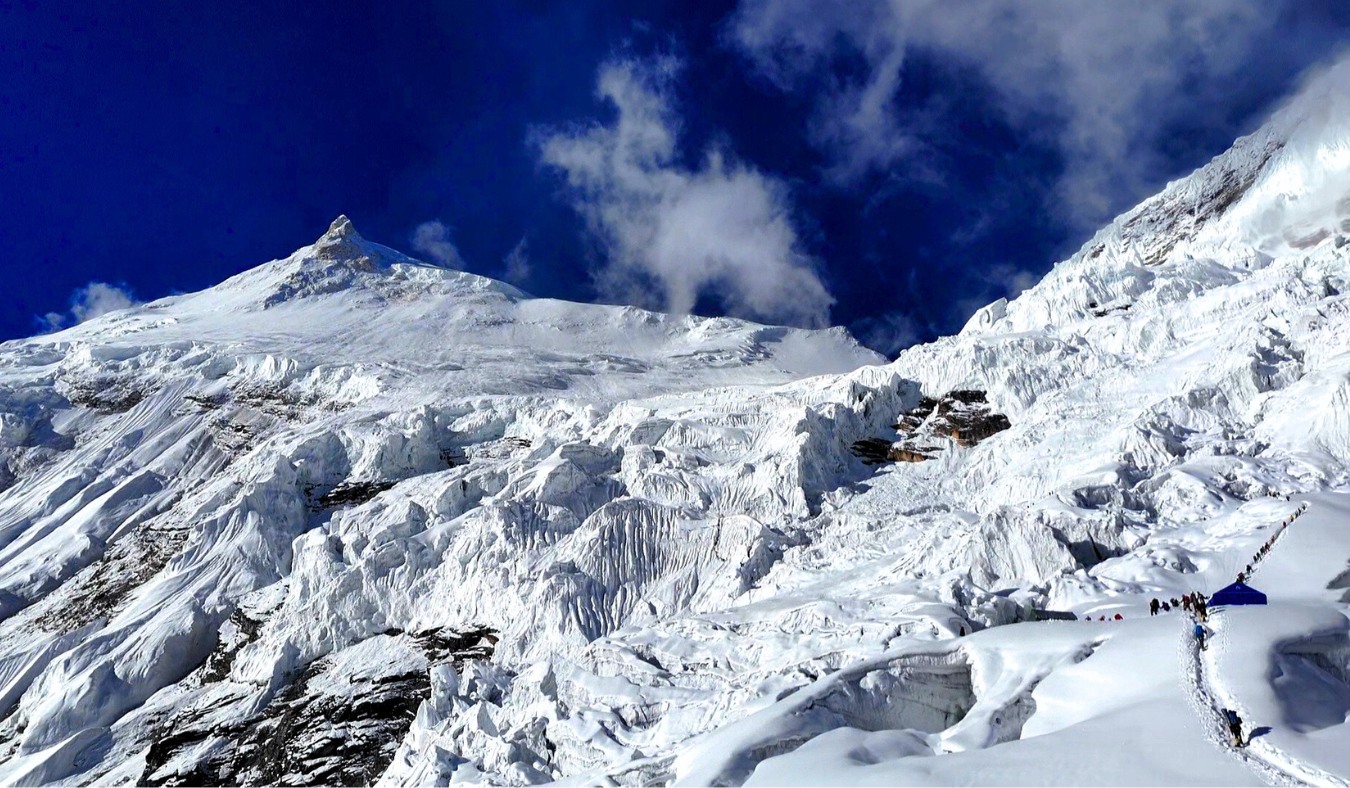
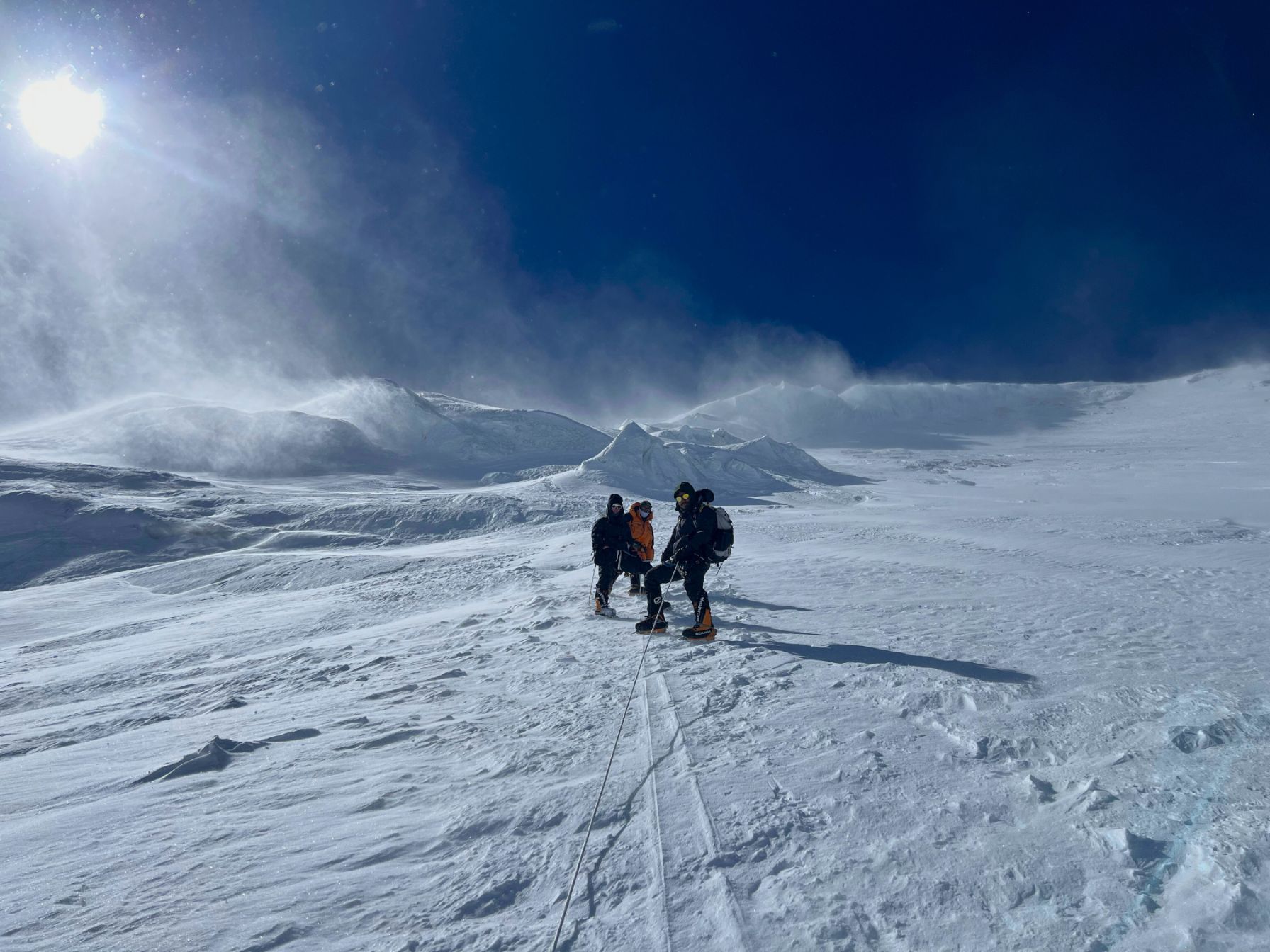
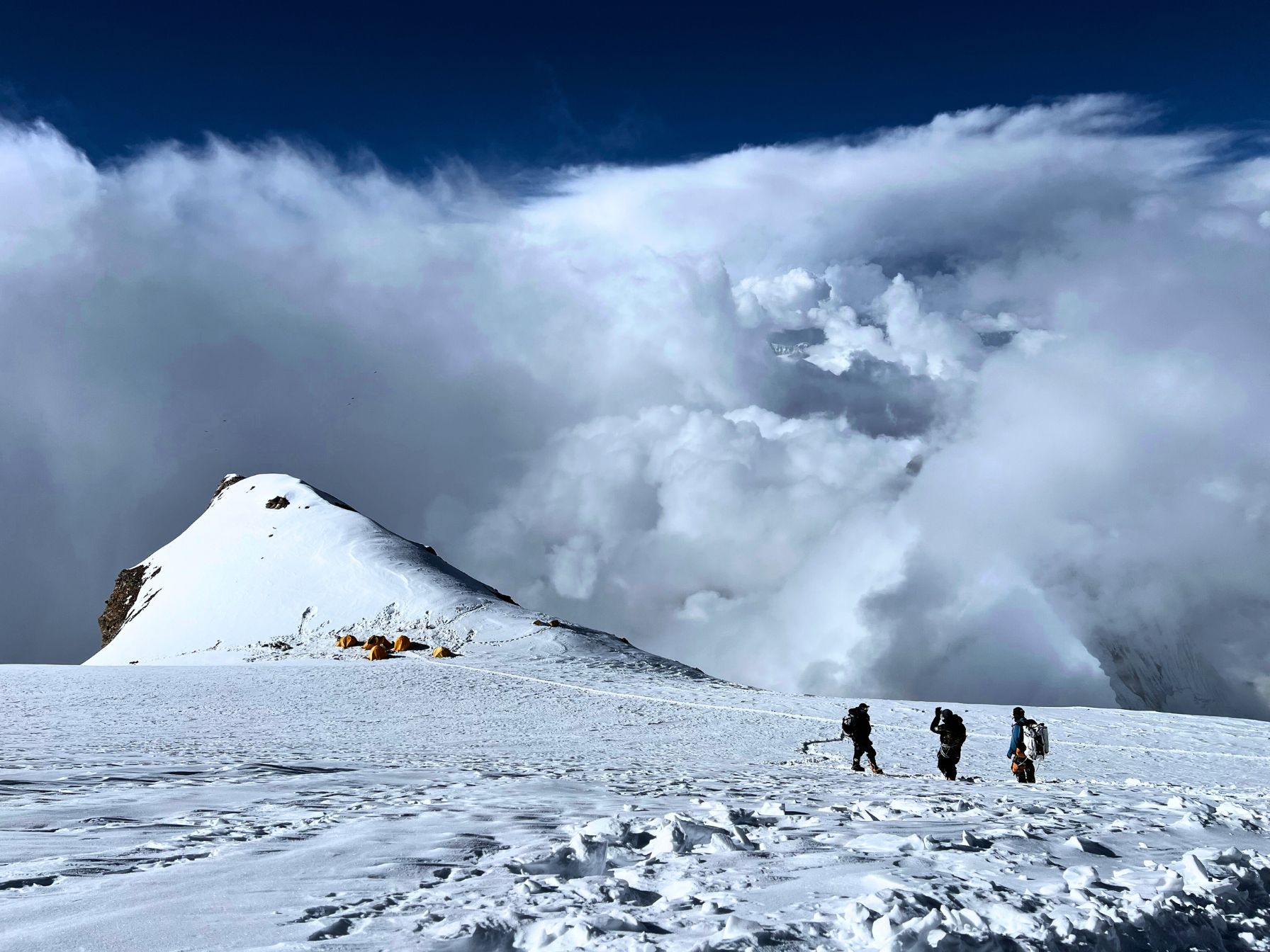
| Image | Trip | Dates | Price | Action |
|---|---|---|---|---|
|
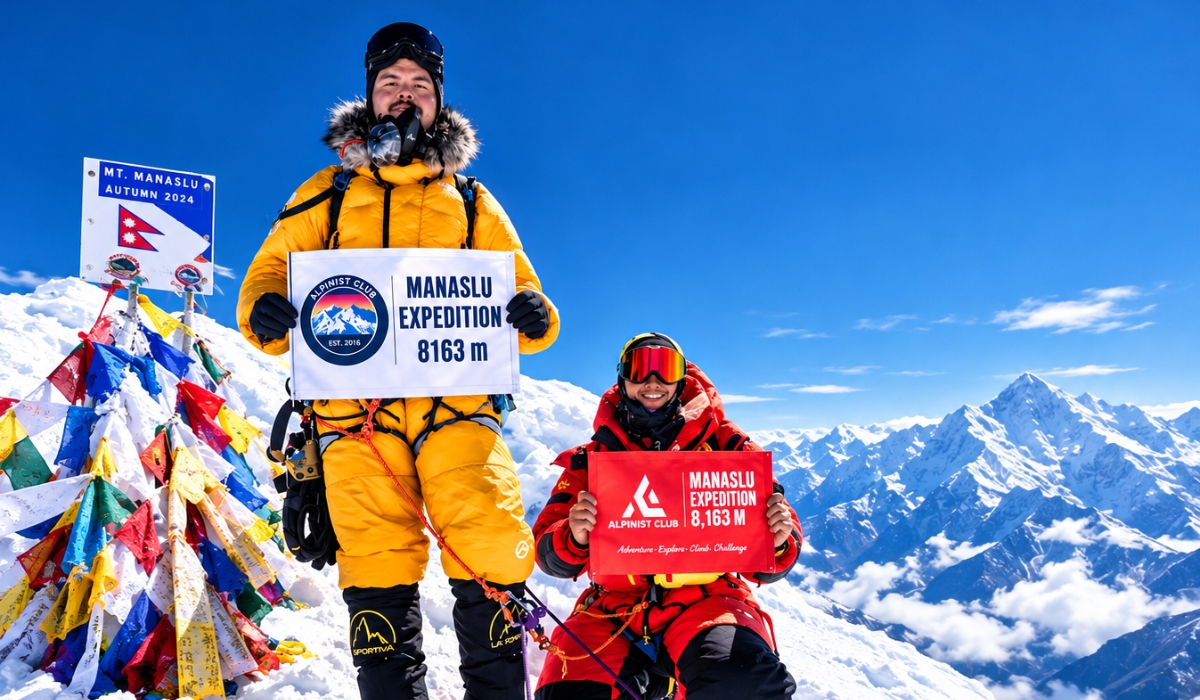
Manaslu Expedition (8163m) 35 Days LeftGroup Joining Available 2027 |
Start:
2027-09-01
End: 2027-10-05 |
$ 13,398.00 | BOOK NOW |
Mount Manaslu is 8,163 meters (26,781 ft) high and is the eighth-highest mountain in the world.
Manaslu is located in the Mansiri Himal of Nepal's Gorkha District.
Our scheduled Manaslu Expedition 2027 is 35 days, including arrival, preparation, trekking approach, acclimatization rotations, summit period, return trek and a contingency day in Kathmandu.
Our primary Manaslu expedition season is Autumn, particularly September and October, when expeditions normally establish Base Camp and prepare for suitable summit windows.
For experienced high-altitude climbers, Manaslu can be a progression toward 8,000-meter mountaineering. However, it remains an extreme-altitude expedition with serious objective hazards and should never be considered an easy mountain.
Participants should ideally have previous experience above 6,000 meters and be comfortable using crampons, an ice axe, harness, ascender, descender and fixed ropes.
Previous expedition experience and good knowledge of how your body responds to altitude are strongly recommended.
Yes. Our standard expedition service provides a 1:1 high-altitude climbing Sherpa-to-member ratio.
The package includes 2 × 4L oxygen cylinders for each member, together with one oxygen mask and regulator set.
One oxygen cylinder is also provided for each high-altitude Sherpa.
Additional oxygen can be arranged at extra cost.
An oxygen-free attempt may be considered by appropriately experienced climbers after discussion with the expedition leader.
The decision should be based on previous high-altitude experience, acclimatization, health, climbing speed and mountain conditions.
The standard route normally uses four high camps above Base Camp.
Approximate elevations are:
Exact locations can vary according to seasonal snow and glacier conditions.
Members receive an individual sleeping tent together with access to dining, kitchen, toilet and shower facilities. Our Base Camp team provides meals, charging support, communications, weather information and expedition logistics.
Yes.
Every participant must have suitable insurance covering high-altitude mountaineering, medical treatment, helicopter evacuation, repatriation, trip interruption and other expedition-related risks.
No.
We recommend budgeting a minimum of USD 400 toward Base Camp and support-staff gratuities.
High-altitude schedules are always flexible.
The expedition leader may change rotations, rest days or the summit schedule according to weather forecasts, route conditions, health and safety considerations.
A summit can never be guaranteed.
There is no refund for unused expedition services if a climber turns around because of weather, health, personal choice, safety concerns or other circumstances after the expedition has begun.
Safety takes priority over summit success
Yes. We encourage climbers to speak with us before confirming their expedition so we can discuss previous experience, training, equipment, oxygen strategy, insurance and expectations.


Jane Doe
(27 Sep 2024)The Manaslu Expedition was nothing short of life-changing. From the breathtaking landscapes to the exhilarating challenges, every moment was an adventure.
Harry
(11 Mar 2025)Climbing Mount Manaslu in 2023 was an unforgettable journey, made possible by Alpinist Club Pvt. Ltd. Their excellent support and delicious food made my climb easier. At Camp 4, my Sherpa fell ill and had to descend, but Mr. Subash Gurung quickly sent another Sherpa to help me. During the summit push, I felt exhausted and almost gave up, but Mr. Subash motivated me to continue. Thanks to their encouragement and support, I reached the top. I am truly grateful to the Alpinist Club team for making my dream come true.
Marcel Müller
(15 Oct 2025)We climbed Manaslu together with Alpinist Club, as well as did an extended trekking tour and safari in Chitwan. Throughout the entire time — and even in the preparation phase — we were completely satisfied with Subash and his team. All our wishes and changes were always responded to immediately, and whenever plans had to change — for example, due to the weather — the team reacted professionally and efficiently. The communication beforehand also went very smoothly, and we always received quick and clear responses to our questions. It’s also worth mentioning the excellent kitchen team, the friendly porters, and the professional guides. We felt very well taken care of the entire time and would definitely book with them again. In conclusion, we can truly say that we didn’t just find an organization — we found new friends with Alpinist Club.
Riikka Keränen
(15 Oct 2025)Climbing Manaslu with Alpinist Club this autumn was an unforgettable experience. Everything was organized with care and professionalism. The guides were safety-minded and always supportive, the warm-hearted base camp crew made sure we had delicious food on the table and just the right dance moves when it was time to celebrate. What made this expedition truly special is how Subash and the team connected us with Nepalese culture and people. I learned about local traditions, kindness, and the deep respect they hold for the Himalayas. By the end of the journey, the whole team felt like family. I returned home with not just summit memories, but with new friends, bai's and dai's and a heart full of gratitude. I highly recommend Alpinist Club to anyone who wants a genuine, safe, and soulful Himalayan experience.