Max. Elevation









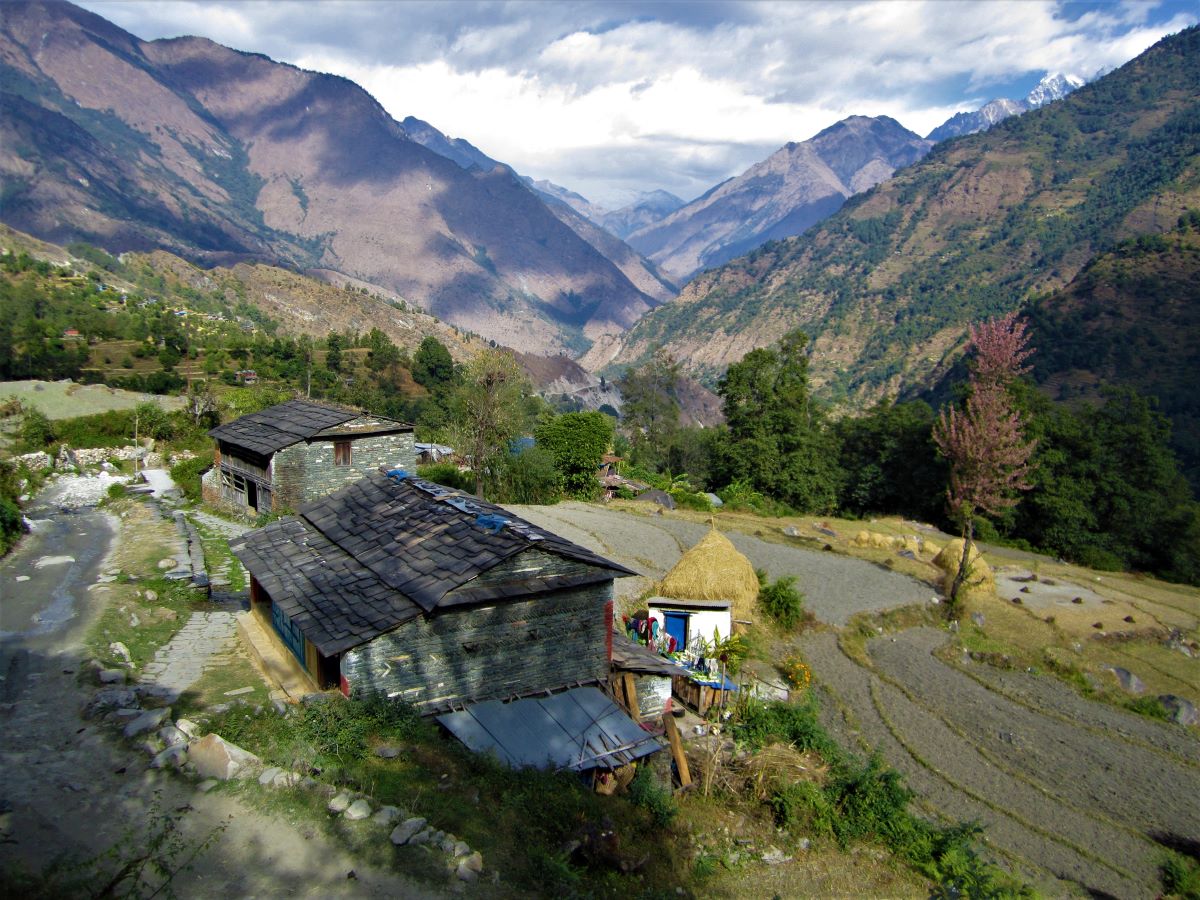
The route follows the renowned “Annapurna Balcony”, celebrated for its exceptional viewpoints and well-preserved villages. Walking through terraced hillsides, rhododendron forests, and traditional settlements, we immerse ourselves in the daily life of the Gurung people. The charming village of Ghandruk, with its stone houses and warm hospitality, marks a highlight of the trek. From here, we leave the classic trail behind and venture onto quieter paths toward two remarkable viewpoints, Khopra ridge, that bring us astonishingly close to the massive faces of Annapurna South, Hiunchuli, Machhapuchhre, and the distant Dhaulagiri range.
This khopra Ridge lesser-traveled section adds a true sense of exploration, offering serene landscapes and unobstructed mountain vistas far from the crowds. The trail then descends toward Poon Hill, the historic and iconic viewpoint of the region. At sunrise, the snow-capped peaks ignite in shades of gold and crimson—an enduring image that has inspired generations of trekkers.
Rather than ending the journey here, we continue onward to the still relatively unknown Mohare Danda. Reached via a fourth panoramic ridge, this community-run lodge sits atop a broad summit, providing sweeping 360-degree views and a peaceful atmosphere. Staying here supports local initiatives while offering an authentic and intimate mountain experience.
A superb introduction to trekking in Nepal, this itinerary combines classic highlights with hidden gems. It is also a wonderful alternative for those wishing to avoid the busier traditional routes, without sacrificing scenery, comfort, or cultural depth.
Upon your arrival in Kathmandu, our local team warmly welcomes you at the airport. You will then be escorted to the hotel, where you can enjoy some well-deserved relaxation.The itinerary includes a briefing about the trek's progress and presentation, followed by leisure time. If you arrive in the morning, you'll have the entire day at your disposal. This can be used for rest or for those interested in exploring the surroundings freely. It's an ideal chance to experience Nepalese culture and indulge in the local culinary delights.
Breakfast and finalization of luggage. Flight to Pokhara in the morning. Once landed, we board local jeeps. On the road to Nayapul, we make a stop at Khare to admire the mountains before following the Modi Khola by a track. A few bends lead us to the village of Chane around 1700 m. Here, the porters load the bags and we start the trek on a beautiful path, with already views of Machhapuchhare, Gangapurna, and Annapurna South. From Chane, the trail climbs up to the village of Gandrung, where we stop to spend the night. Superb views of the Annapurnas and the Machapuchare.
Gandrung is the largest village of the Gurung ethnic group. Each family is proud to have at least one member belonging to the clan of the famous warriors who are the Gurkhas! We take the time to visit the village, its temples, and museums before starting the walk towards Thadapani. Tadapani means “distant water” in Nepali. We resume the climb towards the Komrong Danda pass (2650 m). Very nice views of the Machapuchare. A balcony path leads to the villages of Melanje (2,050 m) and Chiule (2,050 m). The path straightens and crosses a forest of imposing rhododendrons, real trees, in bloom from March. Placed on the ridge, Thadapani (2590 m) offers a plunging view of the steep-sided valley leading to the Annapurna sanctuary. Annapurna III (7555 m) and Gangapurna (7454 m) dominate the scene.
We leave the main path that leads to Ghorepani to follow a path rarely used by people other than locals. The path first climbs through the thick rhododendron forest before arriving at the water buffalo pastures. Short grass is a precious commodity in these villages. The views of the Annapurna Range emerging above the tree line are stunning. We arrive at Dobato after the place called Isharu.
For the more adventurous, the day begins before dawn with an optional sunrise walk to the Muldhai Viewpoint, reached in about 45 minutes from the lodge. This first encounter with Dhaulagiri is nothing short of spectacular. From this outstanding 360-degree panorama, the Himalayan giants unfold in every direction. To the north rise the Nilgiri peaks (North, Central, and South), Annapurna I, Annapurna South, Hiunchuli, Annapurna III, and the iconic Machhapuchhre. To the east, emerging through the morning mist, lie Lamjung Himal and Himalchuli, extending as far as Ganesh Himal. To the south, rolling hills descend endlessly toward the distant Terai plains. Turning west, the view opens toward the remote ranges bordering Dolpo, with Putha Hiunchuli, Gurja Himal, and the vast Dhaulagiri massif dominating the skyline, crowned by Dhaulagiri I. Nearby stand Tukuche Peak and the rugged mountains of western Mustang.
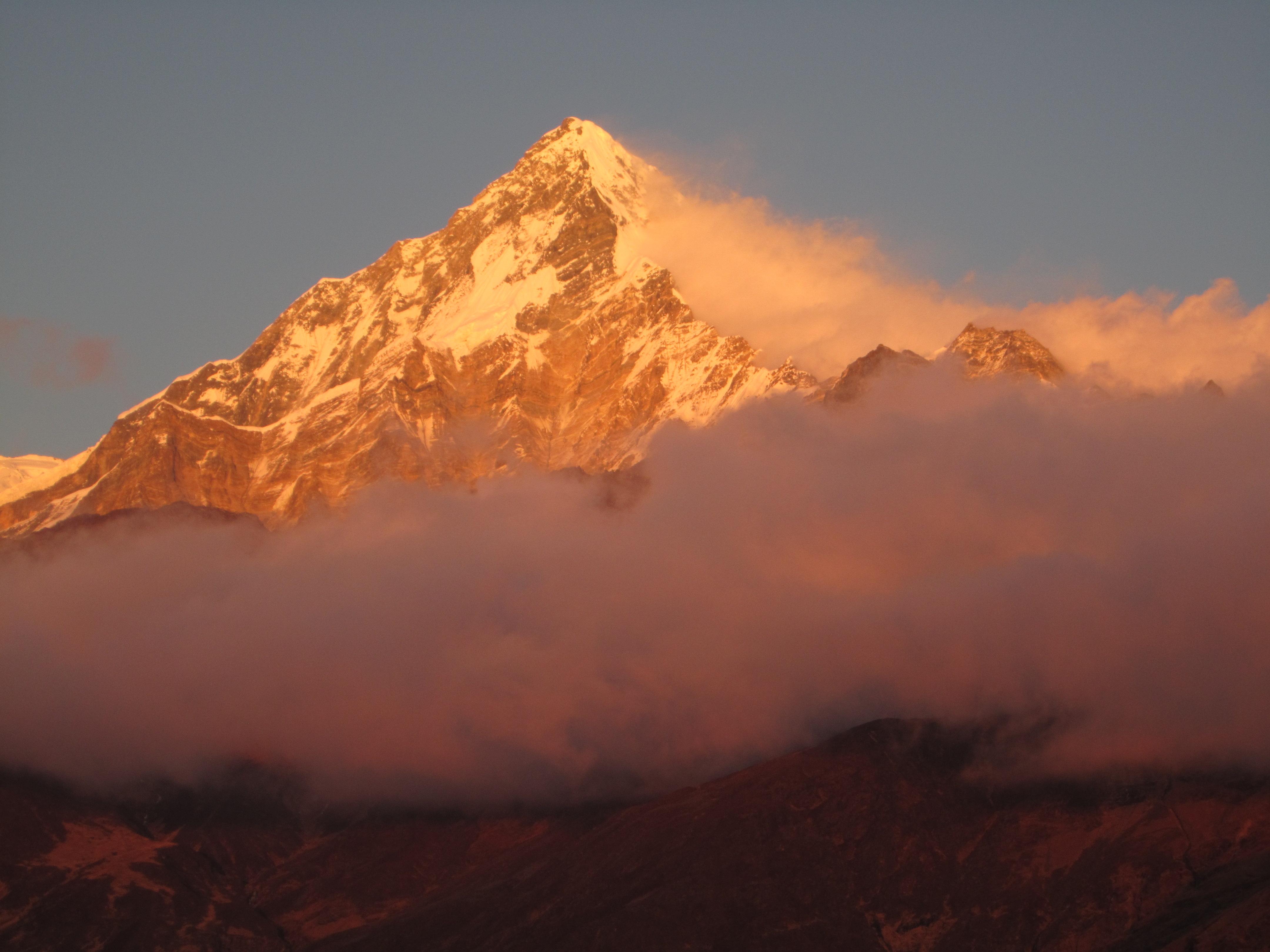
It is the kind of viewpoint where one could linger for hours, captivated by the sheer scale and silence of the high Himalaya. Eventually, we descend back toward the trail and continue along this quieter second balcony route, far removed from the main trekking paths. After a few hours of walking, we reach the alpine pastures of Bayeli, home to a single, remote lodge. If weather conditions allow, the setting sun paints the surrounding peaks in warm evening light, offering another unforgettable moment high above the valley.
From here, the landscape becomes increasingly wild and serene. There are no signposts or famous viewpoints—only yak pastures, rhododendron forests, and wide-open mountain scenery. Surrounded by these magnificent Himalayan giants, we continue our descent to Chistibung, arriving after approximately three hours of downhill walking.
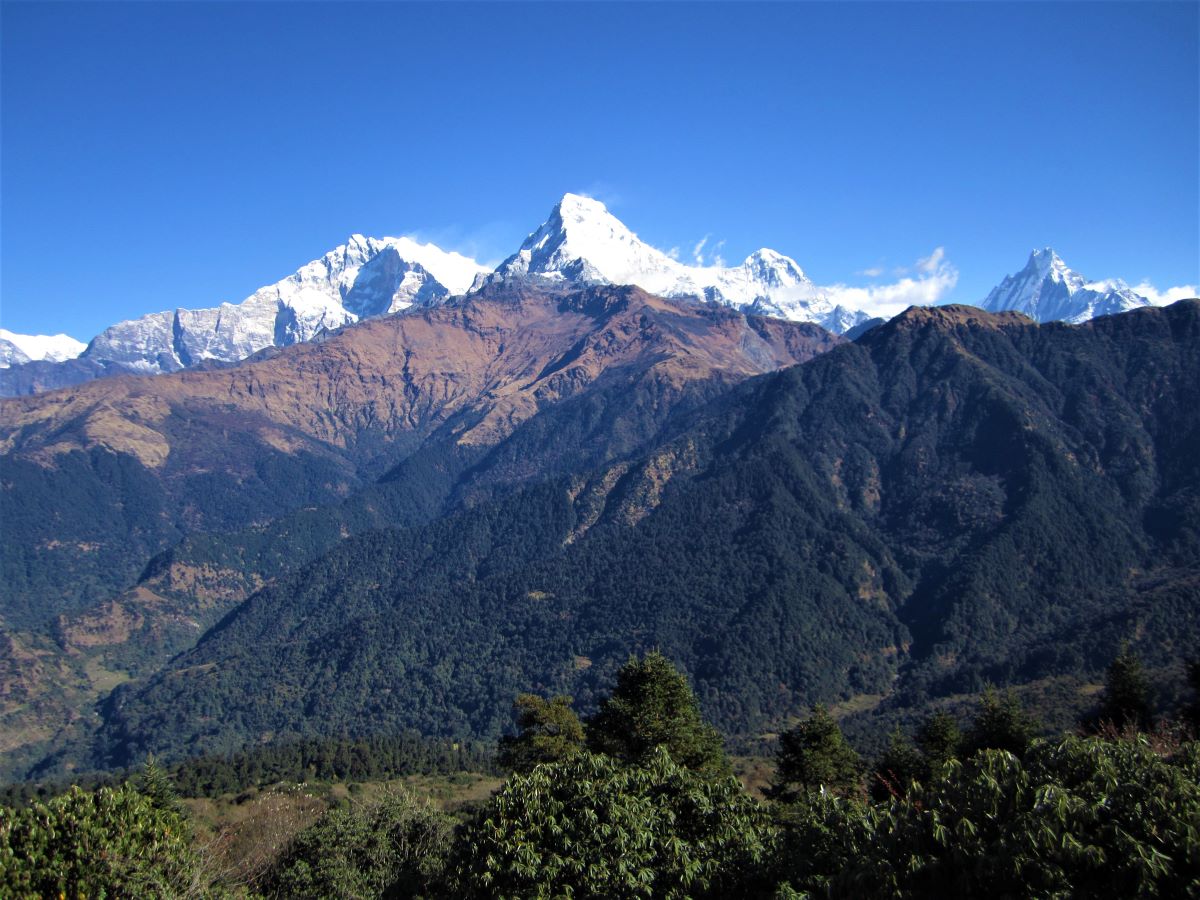
The path crosses a beautiful forest of rhododendrons to a small sacred pond; the view clears; the path winds between the blocks and joins a spur from where the view of the Dhaulagiri is remarkable. Another effort to reach the Kopra community lodge. Magnificent views, extraordinary panorama formed by the Annapurna South, close to a few kilometers (but the ascent of which takes weeks!), and the peaks of Fang and Nilgiri to the north. Beyond the depths of the Kali Gandaki valley, the Dhaulagiri Himal dominates the entire skyline to the west. After lunch, to enjoy this sumptuous landscape even more, a hike on the ridges that dominate Kopra Ridge, towards the sacred lake of Khayar (4025 m), is possible. In summer, a pilgrimage takes place on the shores of the lake; in spring and autumn, the snow does not allow it to be reached. A belvedere located at 4000 meters is already a beautiful objective. Return to the lodge.
NB: Allow 3 to 4 hours of walking for Kopra Ridge and 3 hours of walking for the optional hike to Khayar Lake.
After admiring one last sunrise over the familiar peaks—Annapurna, Dhaulagiri, Machhapuchhre, and Hiunchuli—we begin a long descent toward lower valleys. The trail winds through high alpine pastures, first shared with grazing yaks, then gradually giving way to buffalo herds as we lose altitude. Beyond Chistibung, the landscape changes once more, leading us into rhododendron-covered slopes. Crossing a suspension bridge, we tackle a final short climb before reaching the welcoming village of Swanta.
After leaving the village, we descend to a river and cross it by suspension bridge before rejoining the classic trekking trail. The path then climbs gently through a series of villages toward Ghorepani, whose name—“water of the horses”—recalls its long history as a stop on regional caravan routes. Today, Ghorepani is a lively mountain settlement with numerous lodges and convenient facilities.
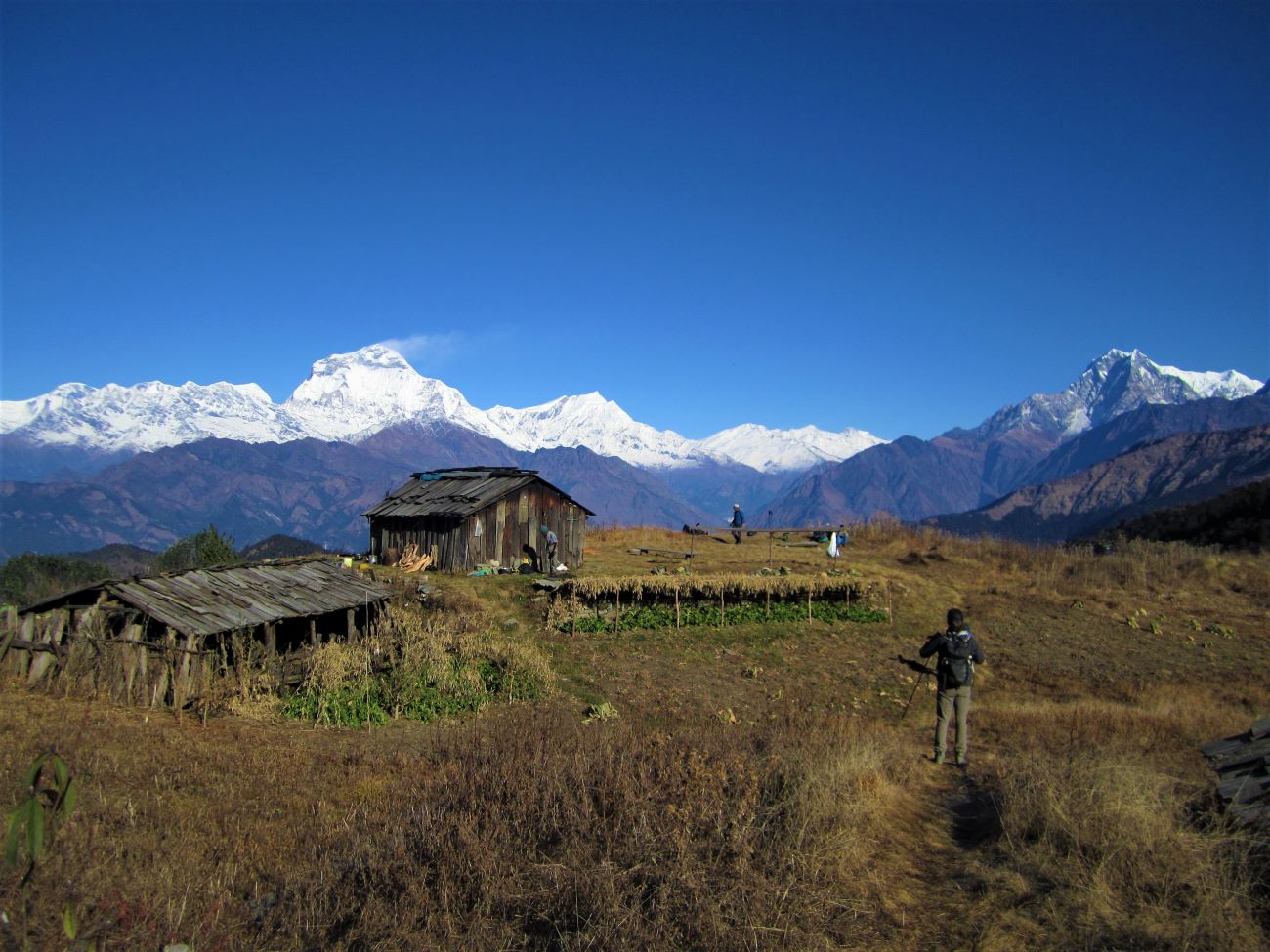
Early departure for Poon Hill (about 45 minutes), the region’s iconic viewpoint. While the sunrise attracts many visitors, once the crowds turn back we continue onward toward our fourth panoramic ridge, heading for the quiet heights of Mohare Danda. The trail becomes increasingly wild, crossing open alpine pastures where yaks and buffalo graze, with the immense face of Dhaulagiri constantly in view.
Reaching Mohare Danda, we spend our final evening in the highlands, surrounded by vast Himalayan scenery. As the light fades, the silhouettes of Lamjung Himal, Mardi Himal, and many other peaks stand out against the sky. With clear conditions, some may even catch a distant glimpse of Phewa Lake far below in Pokhara—a fitting and memorable conclusion to this high-altitude journey.
On this final day of walking, we remain on the ridge with Dhaulagiri still in view. The trail leads us gently toward the Hampal Pass (2,990 m) before descending into the beautiful Gurung and Magar village of Lespar, a fitting and authentic conclusion to our journey through the highlands.
Early departure for our last day of the trek. We walk “on a balcony” first in the heart of forest landscapes then from hamlet to hamlet, we descend along the Patikhola river to Patichaur. Transfer to Pokhara. Enjoy rest and a comfortable night at Phewa Lake.
Return to Kathmandu along the Himalayan range. The peaks of Annapurnas, Manaslu, Ganesh Himal, and Langtang parade on the horizon
Free day. Take advantage of this day to stroll in the city center or visit the cultural sites. Marvel at Shree Buddha Nath, a 36-meter-high stupa in the Tibetan Quarter of the Nepalese capital. Discover Pashupatinath, the holy place of Hindus dedicated to Shiva, one of the four highest places of pilgrimage in Asia. Nestled in the center of old Kathmandu, Durbar Square never fails to captivate the visitor with its fine woodcarvings and rich history. Explore the dynamic district of Thamel and its colorful bazaars, an ideal place to do your last shopping. In the Kathmandu Valley, the traditional village of Bhaktapur will amaze you with its 17th-century architecture.
We will drive you back to Tribhuvan International Airport for your scheduled flight to your destination.
 Note:
If you have a private group and prefer a personalized experience, we can organize a custom trip tailored to your requirements and group size, running it any day you choose.
Plan a Private TripEach trekker is allotted the following maximum weights per person: For Lodge (tea house) Accommodations Trek:15 kg maximum;
Tent Camping: 22 kg maximum; Expeditions/summit ascents: 20 kg maximum. The porters are given a premium wage for carrying loads over 30 kg.
Additionally, the Alpinist Club ensures that insurance is provided for the guide and porters. They are also equipped with specific gear for crossing high-altitude passes.
In Kathmandu, you will be accommodated in a hotel. We use different hotels depending on availability. The two preferred hotels are: Upon arrival in Kathmandu, a welcome dinner is provided on the first evening. Similarly, upon return from the trek, a farewell meal is provided. In the cities, many small (or large) restaurants allow us to discover the typical local cuisine.
For lodge accommodation: during the Poon Hill and Khopra Ridge trek, you will stay in the lodge or Tea House with twin shared bedrooms. for this trek Meals are prepared by the Lodge's cook and Serve in the dining room.
Here is a typical one-day menu:
This program is designed for those who exercise regularly, especially in endurance activities. You only need to carry a daypack with essentials. The trek lasts 14 days, with daily hikes of 6 to 7 hours and altitude changes between 400m and 1,350m. The Larkya Pass (5,150m) often has snow later in the season.
Preparing for the trek requires several months of preparation with 4 to 6-hour walks every weekend for stamina and participating in a sport that requires short periods of high exertion.
The group is composed of 1 to 10 participants maximum. The number of participants is voluntarily limited to allow a better immersion, to not embarrass our hosts, to develop spaces of freedom, and to allow great flexibility of operation. However, the maximum number can be exceeded in the case where the last person who registers wishes to travel with another or several other people. The services will not be modified and the conditions of the trip will be identical as a result
Being in good health is essential to fully enjoy your Alpinist Club trip. If your last medical visit was more than four years ago, please get another general physical exam and tell your doctor the nature of your trip (climate, altitude, difficulty, etc.). The altitude also has the effect of reviving dental problems or other chronic pain, so getting a dental checkup is also prudent. If you are undertaking a high-altitude expedition, we advise you to consult a mountain medicine specialist.
This trip takes place at high altitudes, so some people may experience altitude-related discomforts like headaches, loss of appetite, and swelling of limbs. Most of these symptoms usually go away within a few days, but sometimes they can develop into a serious illness: pulmonary or cerebral edema. There are no preventive drugs for AMS. Diamox diuretic is often effective for symptomatic relief, but you should first check with your doctor to verify that it is not contraindicated for you. Think about it before you go.
Safety has always been our top priority at Alpinist. Our team of expert guides is dedicated to leading a fun and successful climb while ensuring safety remains uncompromised. We plan carefully, considering daily weather forecasts and paying diligent attention as we venture into high altitudes. Throughout the journey, we carry comprehensive medical kits, rescue equipment, and reliable radio and satellite communication gear.
We have at least one Iridium satellite phone for logistics, weather updates, and security. Participants may use it under certain conditions—please contact us for private use. All camps are connected by radio, with access for the expedition leader, participants, and high-altitude Sherpas. A hyperbaric chamber will be available at base camp, and a lighter, essential pharmacy will be stocked at higher camps.
Less More