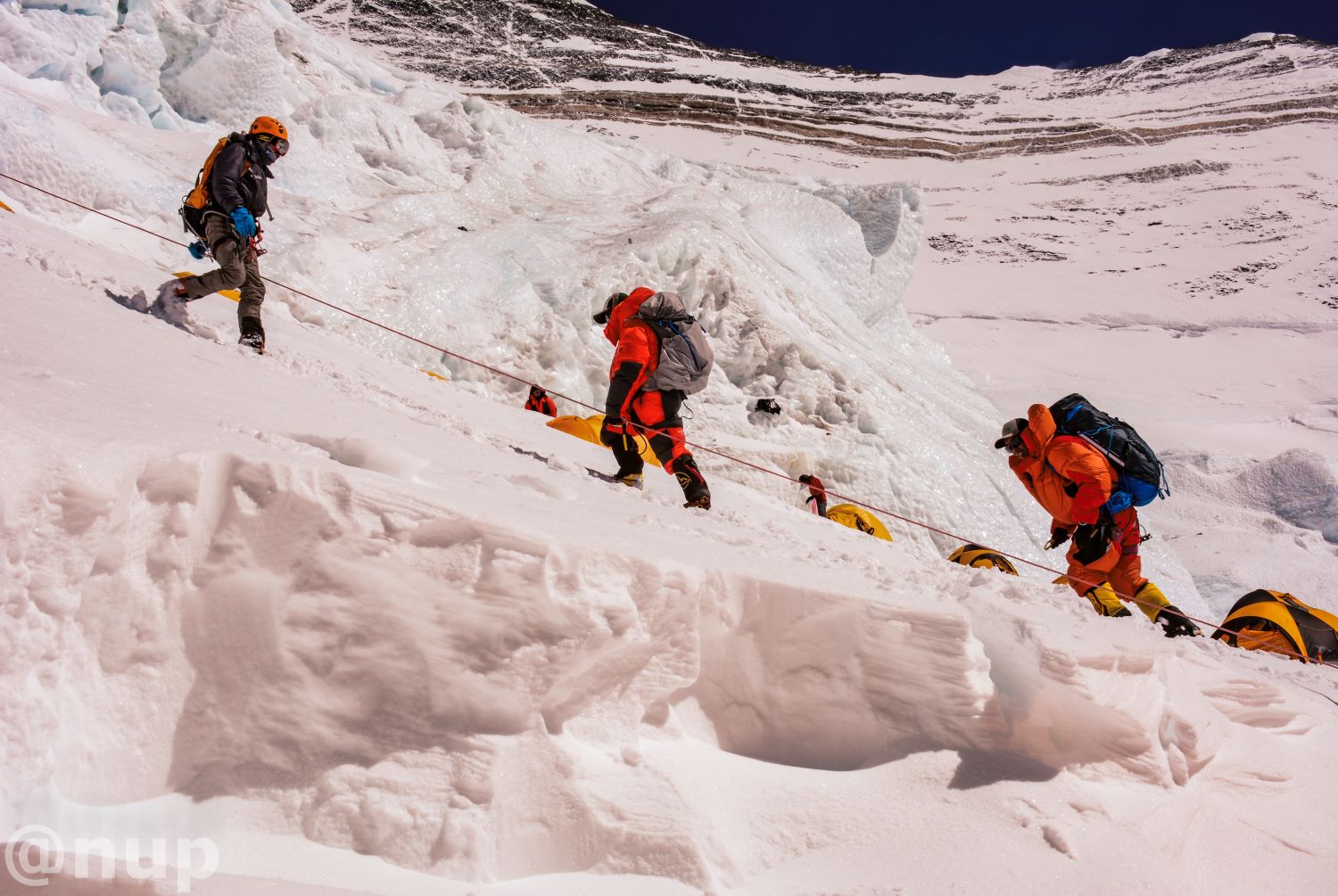
Max. Elevation









Annapurna I stands at the western end of Nepal's Annapurna Himal and rises dramatically above a complex landscape of glaciers, ridges and steep mountain faces.
Despite being lower than Everest, K2, Kanchenjunga, Lhotse and several other 8,000-meter peaks, Annapurna should never be considered an easier objective simply because of its elevation.
The mountain presents considerable objective hazards. Glacier movement can alter the climbing line, crevasses may open or change during the season, and snow accumulation can significantly affect avalanche conditions. Serac exposure and rapidly changing weather also require careful route selection and disciplined decision-making.
For this reason, the expedition schedule cannot be treated as a fixed daily climbing plan. Acclimatization rotations, high-camp movements and the final summit attempt are adjusted according to the condition of the mountain, weather forecasts, rope fixing, climber health and decisions made by the expedition leadership team.
Our priority throughout the expedition is to create the strongest possible combination of acclimatization, logistics, experienced support and careful mountain decision-making.
Welcome to Nepal. On arrival at Tribhuvan International Airport, an Alpinist Club representative will meet you and transfer you to your hotel.
After check-in, you can rest and recover from your international journey. In the evening, we will introduce you to the expedition team and provide an overview of the program.
Altitude: 1,400m
Meals: Welcome dinner
Accommodation: Hotel
The expedition leader will check your personal climbing equipment, high-altitude clothing, boots, crampons, harness, ascender, sleeping bag and other essential gear.
We will also discuss the climbing plan, safety procedures, communication systems, supplemental oxygen, emergency arrangements and expedition logistics.
Any missing equipment can be purchased or rented in Kathmandu.
Altitude: 1,400m
Meals: Breakfast
Accommodation: Hotel
After breakfast, we transfer to Kathmandu Domestic Airport for the short flight to Pokhara.
Weather permitting, the flight offers impressive views of the Himalayan range, including Manaslu, Dhaulagiri and the Annapurna massif.
After arriving in Pokhara, transfer to the hotel. The remainder of the day is used for rest and final organization of expedition equipment.
Altitude: 822m
Flight: Approx. 25–30 minutes
Meals: Breakfast
Accommodation: Hotel
After breakfast, we leave Pokhara and drive toward Beni before continuing into the Kali Gandaki Valley.
The road follows deep river valleys surrounded by terraced hills, waterfalls and mountain villages.
We arrive at Tatopani in the afternoon and spend the night in a local lodge.
The expedition team will organize equipment and prepare for the trekking approach toward Annapurna Base Camp.
Altitude: 1,190m
Drive: Approx. 5–6 hours
Meals: Breakfast, Lunch & Dinner
Accommodation: Lodge/Teahouse
After breakfast in Tatopani, we make the short journey toward Dana and begin trekking toward Lete.
The trail gradually gains altitude while following the Kali Gandaki Valley through forests and traditional settlements.
As we climb higher, the landscape becomes cooler and more mountainous, with increasingly impressive views toward the Annapurna and Dhaulagiri regions.
We arrive at Lete in the afternoon and settle into our lodge.
Altitude: 2,480m
Meals: Breakfast, Lunch & Dinner
Accommodation: Lodge/Teahouse
Today is an important acclimatization and recovery day.
Rather than gaining altitude too quickly, we stay in Lete and allow the body to adjust gradually.
After breakfast, we can take a short acclimatization hike above the village before returning to the lodge for lunch and rest.
The expedition leader will also check everyone's general condition before we continue toward the remote upper valley.
Altitude: 2,480m
Meals: Breakfast, Lunch & Dinner
Accommodation: Lodge/Teahouse
After breakfast, we leave Lete and enter a much more remote section of the expedition.
The trail moves away from the main settlements and continues through forest, mountain terrain and increasingly isolated landscapes.
As we gain elevation, views of the surrounding Himalayan peaks become more dramatic.
Because accommodation becomes limited in this region, our expedition support team will establish a camp for the night.
Altitude: Approx. 3,265m
Meals: Breakfast, Lunch & Dinner
Accommodation: Expedition Camp
Today is one of the most demanding days of the approach.
We continue through remote alpine terrain toward the Annapurna I Base Camp area.
The environment gradually changes from forest and grassland to moraine, rock and glacial terrain as we approach the mountain.
After reaching Base Camp at approximately 4,190 metres, our expedition staff will welcome us to the camp.
The Base Camp will include sleeping tents, dining facilities, kitchen facilities, toilet arrangements and other expedition infrastructure.
After arrival, the priority is rest, hydration and adapting to the altitude.
Altitude: Approx. 4,190m
Meals: Breakfast, Lunch & Dinner
Accommodation: Full Board Expedition Camp
Our first full day at Base Camp is kept relaxed.
After several days of travel and trekking, the body needs time to recover and adapt to the higher altitude.
Members can organize their personal tents, climbing gear and equipment while the expedition team continues preparing the mountain logistics.
Altitude: Approx. 4,190m
Meals: Breakfast, Lunch & Dinner
Accommodation: Full Board Expedition Camp
Today we participate in the traditional Himalayan Puja Ceremony.
The climbing equipment, ropes, crampons, ice axes and other expedition gear are blessed before the team begins serious climbing on Annapurna I.
The Puja is an important tradition for Nepalese climbing teams and marks the formal beginning of the expedition on the mountain.
The remainder of the day is used for rest and equipment preparation.
Altitude: Approx. 4,190m
Meals: Breakfast, Lunch & Dinner
Accommodation: Full Board Expedition Camp
Today we begin technical preparation near Base Camp.
Depending on conditions, training may include:
The purpose is to make sure every member is comfortable with the systems that will be used higher on the mountain.
Altitude: Approx. 4,190m
Meals: Breakfast, Lunch & Dinner
Accommodation: Full Board Expedition Camp
Another acclimatization day allows the team to recover before beginning the first climbing rotation.
Members may take a short hike above Base Camp while the climbing Sherpas continue checking the route and preparing equipment for the higher camps.
In the afternoon, the expedition leader reviews the upcoming rotation plan.
Altitude: Approx. 4,190m
Meals: Breakfast, Lunch & Dinner
Accommodation: Full Board Expedition Camp
Annapurna I climbing Period
The next eighteen days are dedicated to gradually acclimatizing and preparing the route toward the upper mountain.
Unlike a normal trekking itinerary, exact climbing days cannot be fixed months in advance. Weather, snow conditions, glacier movement, avalanche risk, route preparation and individual acclimatization determine when the team moves higher.
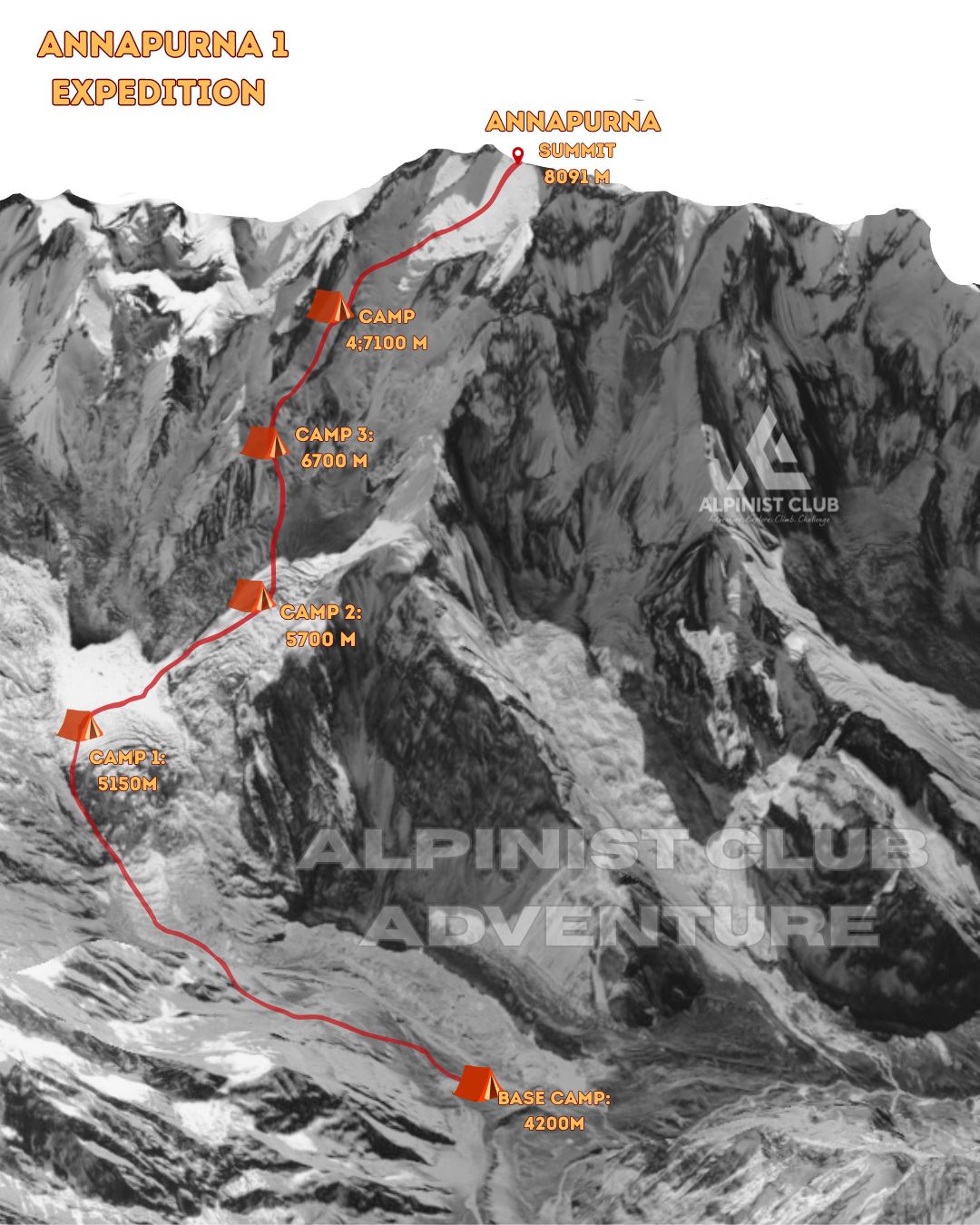
The planned camp system may include approximately:
Base Camp: 4,190m
Camp I: Approx. 5,200m
Camp II: Approx. 5,700m
Camp III: Approx. 6,400–6,500m
Camp IV: Approx. 7,100–7,400m
Summit: 8,091m
Exact camp positions may change according to mountain conditions.
The first rotation introduces climbers to the route above Base Camp.
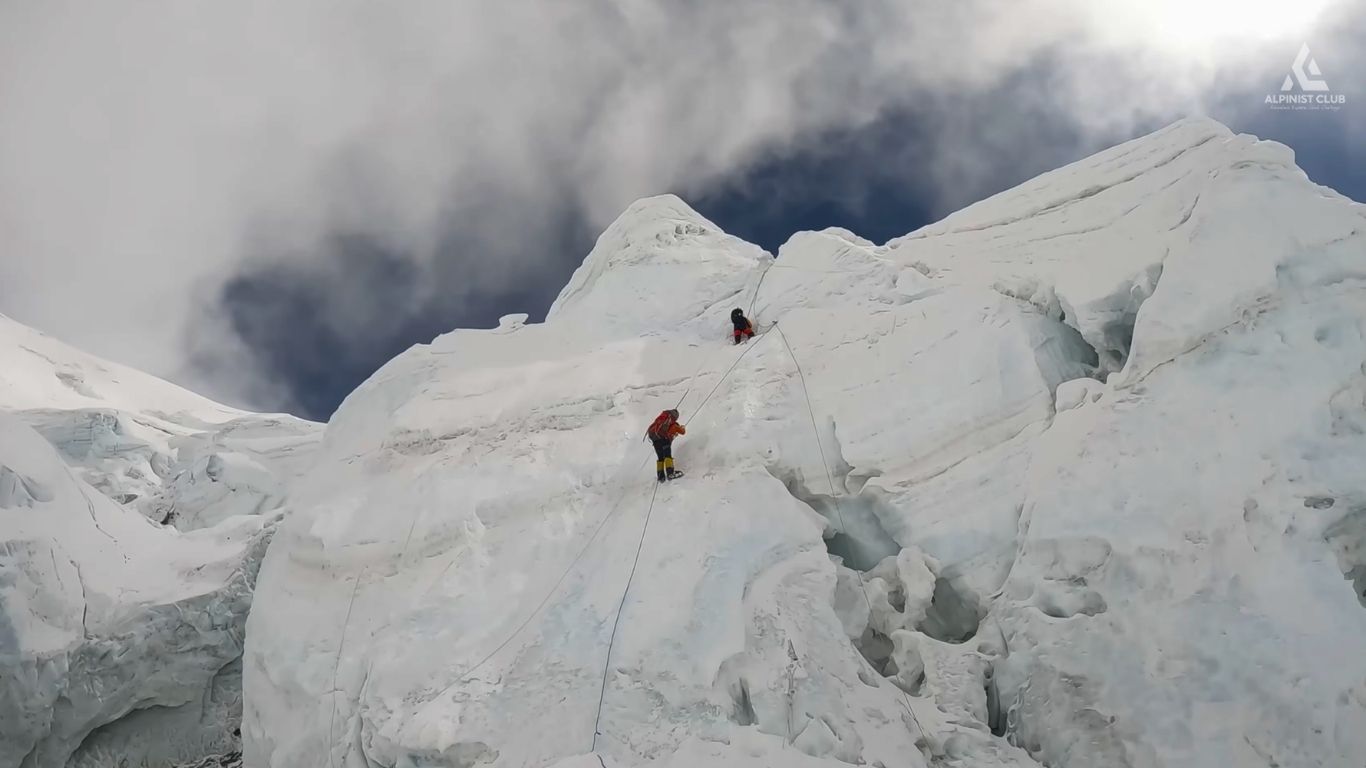
Members climb progressively toward Camp I while becoming familiar with glacier travel, fixed ropes and the technical terrain.
Depending on individual acclimatization, the team may spend one night at Camp I before returning to Base Camp.
After the first rotation, several days are spent at Base Camp.
These recovery days are essential for:
Meanwhile, the climbing Sherpas continue carrying equipment and preparing the upper camps.
Once sufficiently recovered, the team begins the second rotation.
Members climb through Camp I and continue toward Camp II.
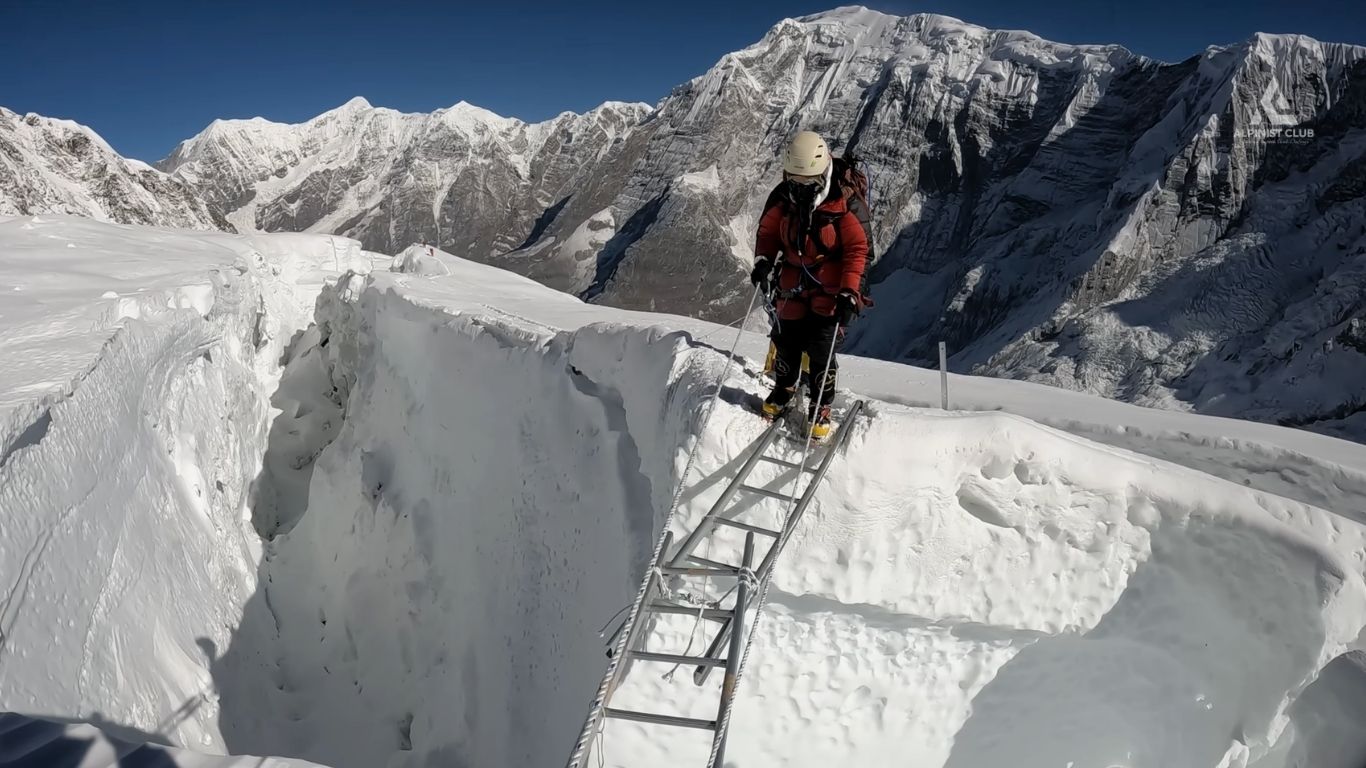
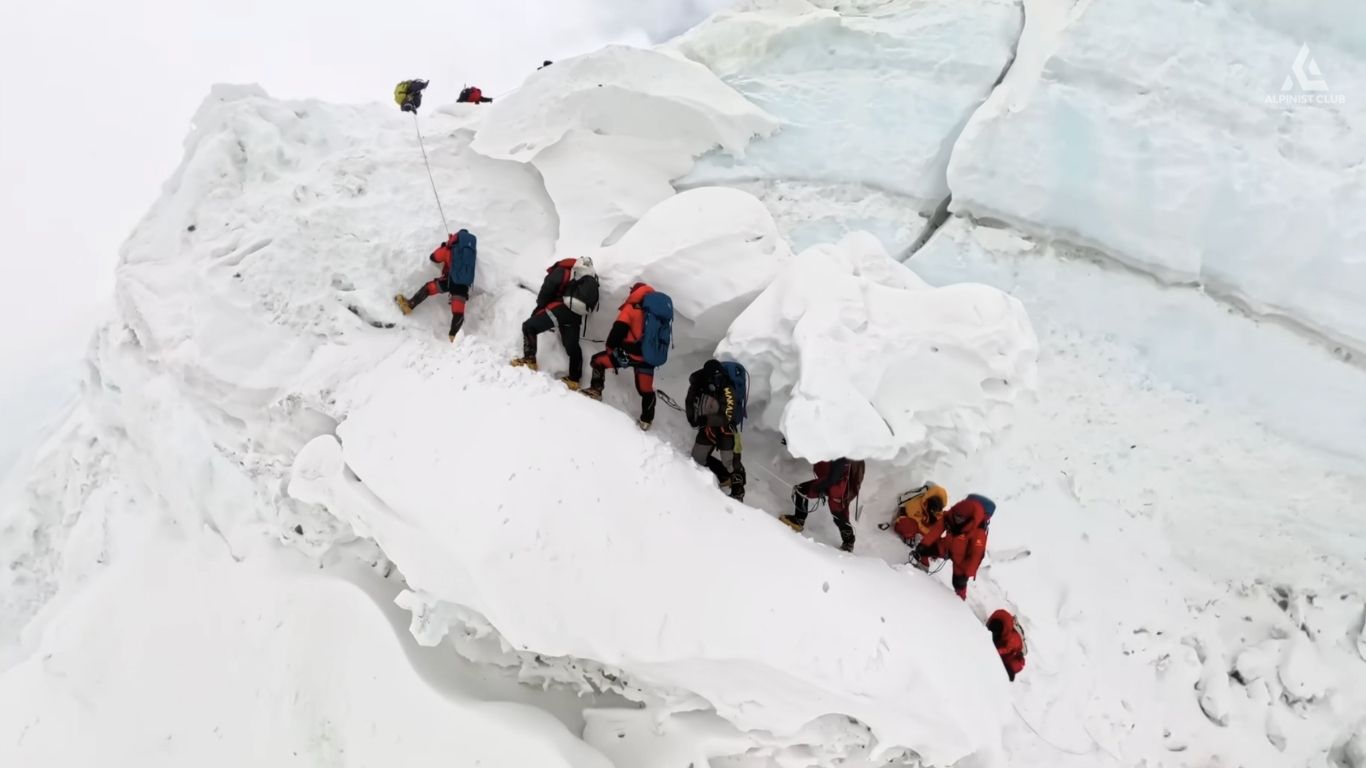
This section of Annapurna I can involve complicated glacier terrain, crevasses and sections exposed to serac and avalanche hazards.
The expedition leader and route-fixing team will select the safest available line according to current conditions.
After spending time around Camp II, climbers descend again to Base Camp.
The third acclimatization rotation takes the team higher.
After sleeping at Camps I and II, climbers continue toward Camp III at approximately 6,400–6,500 metres.
Reaching and sleeping around this altitude is an important stage before the final summit push.
Depending on weather, route conditions and individual performance, members may climb slightly above Camp III before descending.
After completing the higher rotation, the team returns to Base Camp.
Several days of complete rest are normally required.
During this period, the expedition leader closely follows:
When the team is sufficiently recovered and a suitable weather window appears, preparations begin for the summit rotation.
After completing the acclimatization rotations and resting at Base Camp, the team prepares for the final summit push. The exact schedule will depend on weather, route conditions, avalanche risk, individual acclimatization and the condition of each climber.
Once a suitable weather window is confirmed, the team gradually climbs from Base Camp to Camp I, Camp II, Camp III and Camp IV. Members climb with their high-altitude Sherpa support, carrying essential personal equipment while the expedition team manages high-camp logistics, food, tents and supplemental oxygen.
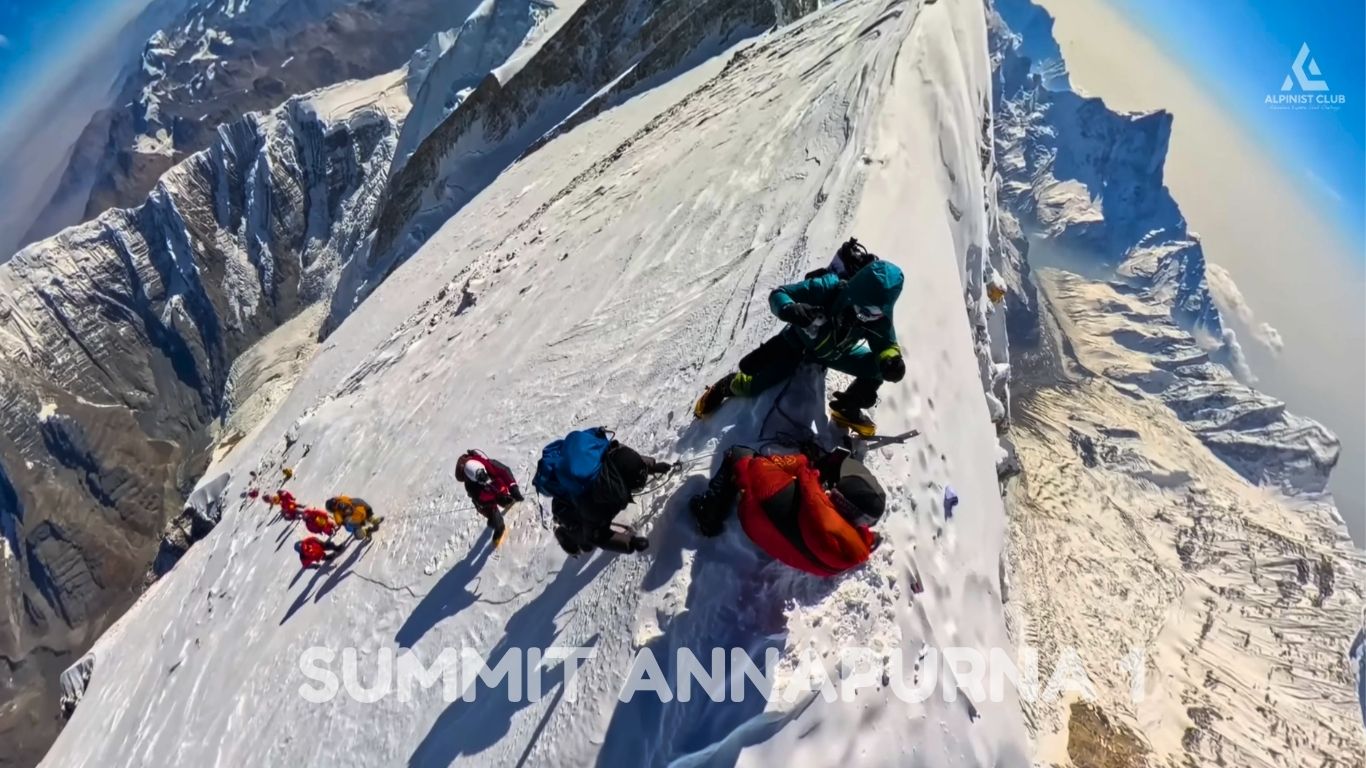
From Camp IV, the summit attempt normally begins late at night or in the early hours of the morning. Climbers continue slowly toward the upper slopes and summit ridge of Annapurna I at 8,091 metres.
After reaching the summit, conditions permitting, the team begins descending immediately. The priority is to lose altitude safely and return through the high camps toward Base Camp.
The exact number of days required for the summit rotation may change according to mountain and weather conditions.
Highest Altitude: 8,091m
Meals: High-altitude meals
Accommodation: High Camps / Expedition Tents
We complete the descent and return to Base Camp.
The Base Camp team welcomes the climbers with warm meals and drinks.
After weeks of preparation and climbing, today is mainly about rest and recovery.
After breakfast, we leave Base Camp and begin descending through the remote mountain terrain.
The lower altitude quickly provides easier breathing and warmer temperatures.
Overnight at expedition camp.
Meals: Breakfast, Lunch & Dinner
Accommodation: Camp
We continue descending through forests and mountain terrain toward Lete.
After several weeks in expedition camps, returning to a lodge provides a welcome level of comfort.
Altitude: Approx. 2,480m
Meals: Breakfast, Lunch & Dinner
Accommodation: Lodge/Teahouse
After breakfast, we descend toward Dana and reconnect with our vehicle.
From here, we drive through the Kali Gandaki Valley to Pokhara.
After checking into the hotel, the remainder of the evening is free for rest.
Altitude: 822m
Meals: Breakfast & Lunch
Accommodation: Hotel
After breakfast, transfer to Pokhara Airport for the flight back to Kathmandu.
On arrival, transfer to the hotel.
The afternoon is free for rest, shopping or exploring Kathmandu.
In the evening, we gather for a farewell dinner to celebrate the expedition.
Altitude: 1,400m
Meals: Breakfast & Farewell Dinner
Accommodation: Hotel
Your Annapurna I Expedition comes to an end.
An Alpinist Club representative will transfer you to Tribhuvan International Airport according to your international flight schedule.
We wish you a safe journey home and hope the experience of Annapurna I remains with you for many years.
Meals: Breakfast
 Note:
Note:
If you have a private group and prefer a personalized experience, we can organize a custom trip tailored to your requirements and group size, running it any day you choose.
Plan a Private TripYour Guide and Team Your guide, from your arrival in Kathmandu until your departure, is responsible for the success of your trip and oversees your team. Do not hesitate to ask him questions, respect his position as the team leader, and above all follow his advice! Often your guide is the only English-speaking member of the team. In the mountains and, especially when during high-altitude travels, your guide is responsible for the safety of the group. The instructions he gives and the remarks he makes to all participants must be carefully followed. The interest and safety of the trekking group must be preserved, even when it may be to the detriment of an individual member of the group.
Read MoreFor an experienced mountaineer, Annapurna I represents something very different from simply reaching another high summit.
It is a mountain with an important place in Himalayan history. When Maurice Herzog and Louis Lachenal reached its summit in 1950, Annapurna became the first 8,000-meter mountain ever climbed.
Today, it remains an objective for climbers who already understand high-altitude expeditions and are looking for a serious step in their mountaineering journey.
Annapurna demands patience, experience, strong physical preparation and the ability to make conservative decisions in a difficult environment.
The summit matters, but on a mountain like Annapurna, returning safely is always more important than reaching the top.
The Annapurna I Expedition is not suitable for beginner mountaineers.
Participants should already have strong high-altitude experience and be comfortable operating independently with standard mountaineering equipment.
Previous experience on 6,500m–7,000m+ mountains is strongly recommended, while previous 8,000-meter experience is highly valuable.
Climbers should be confident using:
You should also have experience climbing for long periods in extreme cold while carrying personal equipment at altitude.
The exact route on Annapurna I can change from season to season because of glacier movement, snowfall, crevasses and serac conditions.
The expedition normally establishes a sequence of high camps between Base Camp and the summit.
Base Camp becomes our home for the main climbing period. Members have time to recover, acclimatize, prepare equipment and monitor weather and route conditions.
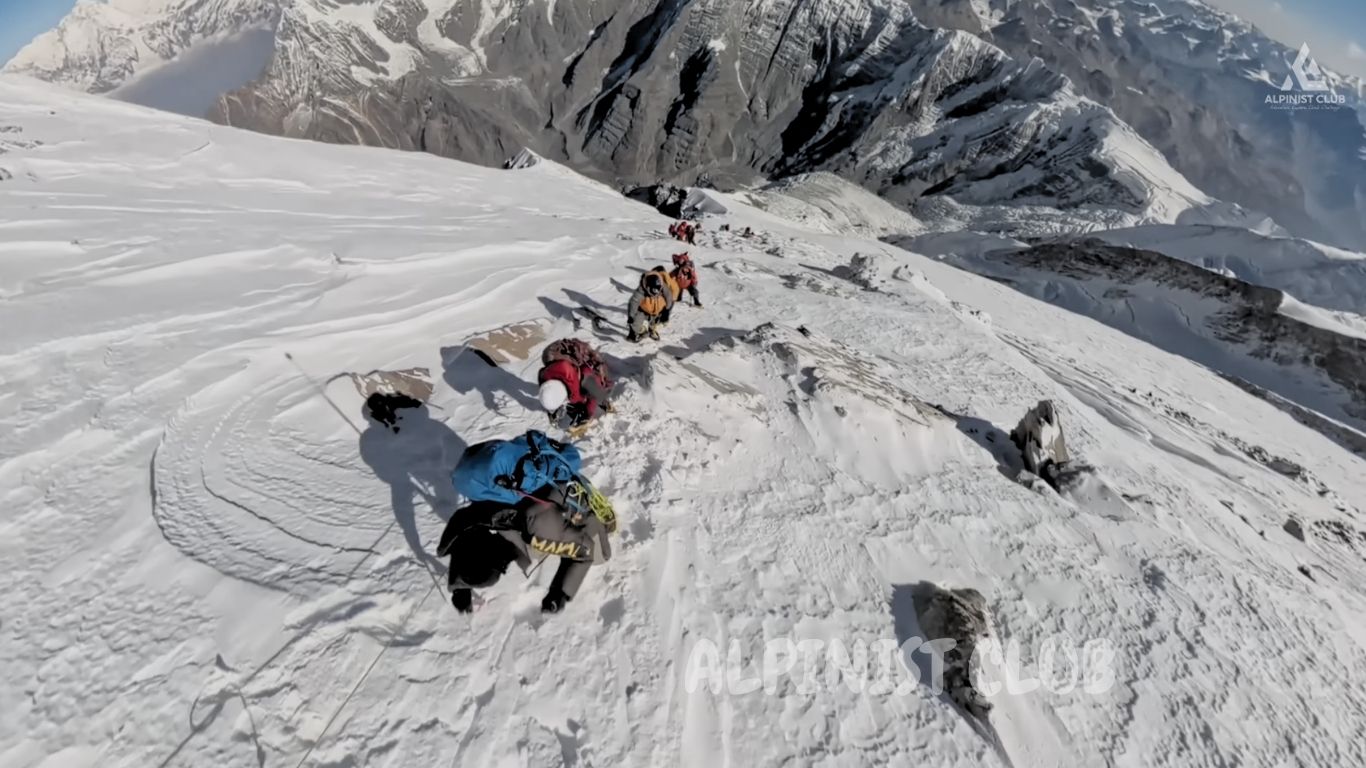
The first section above Base Camp enters glaciated terrain. Climbers begin using fixed ropes where required and move carefully through crevassed areas.
The terrain becomes more complex as the route crosses further into the glacier system. Objective hazards, including crevasses, seracs and avalanche exposure, require careful movement and route assessment.
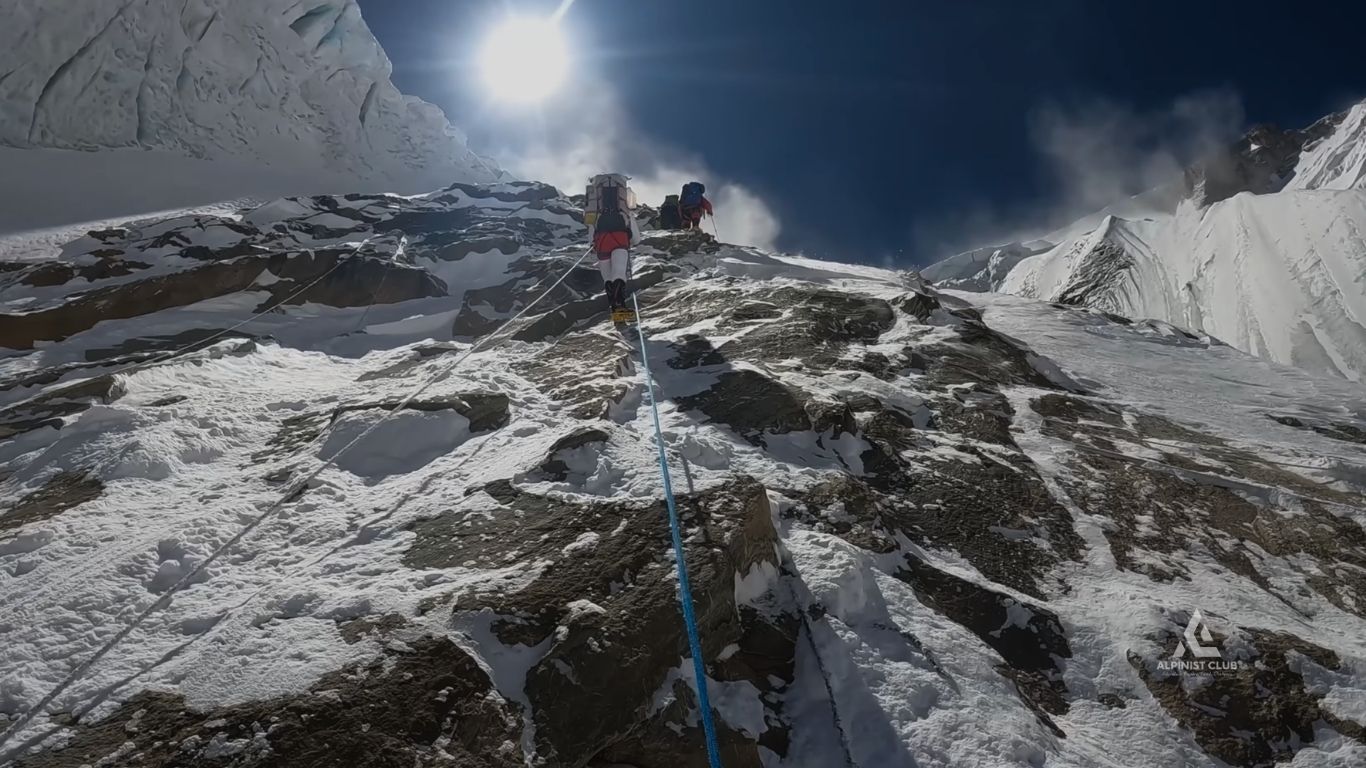
Above Camp II, altitude becomes an increasingly important factor. Movement becomes slower and recovery takes longer.
Camp IV is normally the final high camp used before the summit attempt. Climbers rest, hydrate, prepare oxygen systems and organize equipment for the final push.
The final summit climb takes place according to weather, snow conditions, route safety and the condition of each member.
All camp elevations are approximate. Camp positions and the climbing route can change depending on conditions during the expedition.
The primary season for our Annapurna I Expedition is spring, particularly April and May.
Spring generally provides the most established commercial expedition window for Nepal's 8,000-meter mountains.
However, Himalayan weather cannot be guaranteed. Snowfall, wind and temperature can change quickly, and summit timing is determined according to actual conditions rather than a predetermined summit date.
Spring: April–May
There is no way to remove all risk from climbing an 8,000-meter mountain, and Annapurna presents significant objective hazards.
Our expedition management focuses on reducing unnecessary exposure through careful planning, acclimatization, communication and decision-making.
Support includes:
No operator can guarantee a summit.
Safety decisions made by the expedition leader and climbing team take priority over summit objectives.
Every expedition member receives one dedicated high-altitude climbing Sherpa.
Your Sherpa works with you during rotations and the summit attempt and assists with movement between high camps, high-altitude logistics and technical sections of the route.
The 1:1 system provides more individualized support and allows the climbing team to better manage each member's pace and condition.
Supplemental oxygen is provided for the high-altitude climbing phase according to the expedition package.
Our team provides:
The exact oxygen plan and flow rate are determined according to the climbing strategy, altitude and individual requirements.
A well-organized Base Camp is important because members may spend several weeks there between climbing rotations.
Our Base Camp setup includes:
Base Camp meals are prepared by our expedition kitchen team with attention to nutrition, hygiene and the high energy requirements of climbers.
High camps are established according to mountain and route conditions.
High-altitude services include:
High-camp tents are normally shared between members.
Our Base Camp kitchen team prepares a variety of meals designed to provide sufficient calories, carbohydrates and protein for prolonged high-altitude activity.
Preparation should begin several months before arrival in Nepal.
A strong training program should combine:
Long hikes, running, cycling, stair climbing and other endurance training help prepare the body for prolonged climbing days.
Focus particularly on:
Training should include carrying a weighted backpack uphill.
Long mountain days of 6–10 hours are valuable preparation.
Before joining Annapurna I, climbers should already be comfortable with:
The expedition should not be used as the place to learn basic mountaineering techniques for the first time.
Every expedition member must have comprehensive travel insurance before arriving in Nepal.
The policy should specifically cover:
Standard travel insurance often excludes mountaineering above certain elevations, so climbers must check their policy carefully.
The final price depends on the expedition services, group size, oxygen requirements and any private or customized arrangements.
We provide transparent information about what is included before confirming your booking.
Private and customized expedition arrangements are also available.
The schedule may change according to weather and mountain conditions.
Annapurna I is a serious 8,000-meter expedition intended for experienced high-altitude mountaineers.
Previous 8,000-meter experience is highly valuable.
You should already be experienced with fixed ropes, crampons, ascenders, descenders and glacier travel.
Our standard full-service expedition provides 1:1 high-altitude climbing Sherpa support.
The exact number of cylinders and oxygen plan will be confirmed before booking.
Camp locations vary according to glacier movement, snow conditions and the route established during that season.
The summit date depends entirely on weather, route conditions, acclimatization, rope fixing and the condition of individual climbers.
Our role is to provide professional logistics, experienced support and careful decision-making while giving the team the best reasonable opportunity to climb safely.
The climbing schedule may be delayed, shortened or changed if conditions are unsafe.
For serious illness or injury, evacuation may be required. This is why comprehensive high-altitude rescue insurance is mandatory.
Members must have insurance covering high-altitude helicopter evacuation.
A complete equipment list will be provided before departure.
Private expeditions and customized services can be arranged according to your experience, preferred schedule and climbing objectives.
Individual climbers can contact us about joining a scheduled expedition team or arranging a private expedition.
Our team will review your experience and provide the complete expedition proposal and price.