






Saribung Pass 6042 m and Peak Climbing – 6,328 m

The Saribung Pass Trek and Peak Climbing is a challenging Himalayan expedition that combines remote trekking, high-altitude mountaineering, and cultural exploration in Nepal. Located in the Damodar Himal, the route connects the restricted region of Upper Mustang with the remote Naar and Phu valleys, crossing dramatic mountain landscapes, glaciers, and high-altitude terrain. With Saribung Peak reaching 6,328 m and Saribung Pass at 6,042 m, this expedition is ideal for experienced trekkers and mountaineers seeking an adventurous journey away from Nepal's popular trekking routes

  • Cross Saribung Pass (6,042 m) between Upper Mustang and the Nar Phu region.
  • Discover the traditional Himalayan culture of Phu and Naar villages.
  • Explore the dramatic landscapes and ancient monasteries of Upper Mustang.
  • Explore remote trails away from Nepal's popular trekking routes.
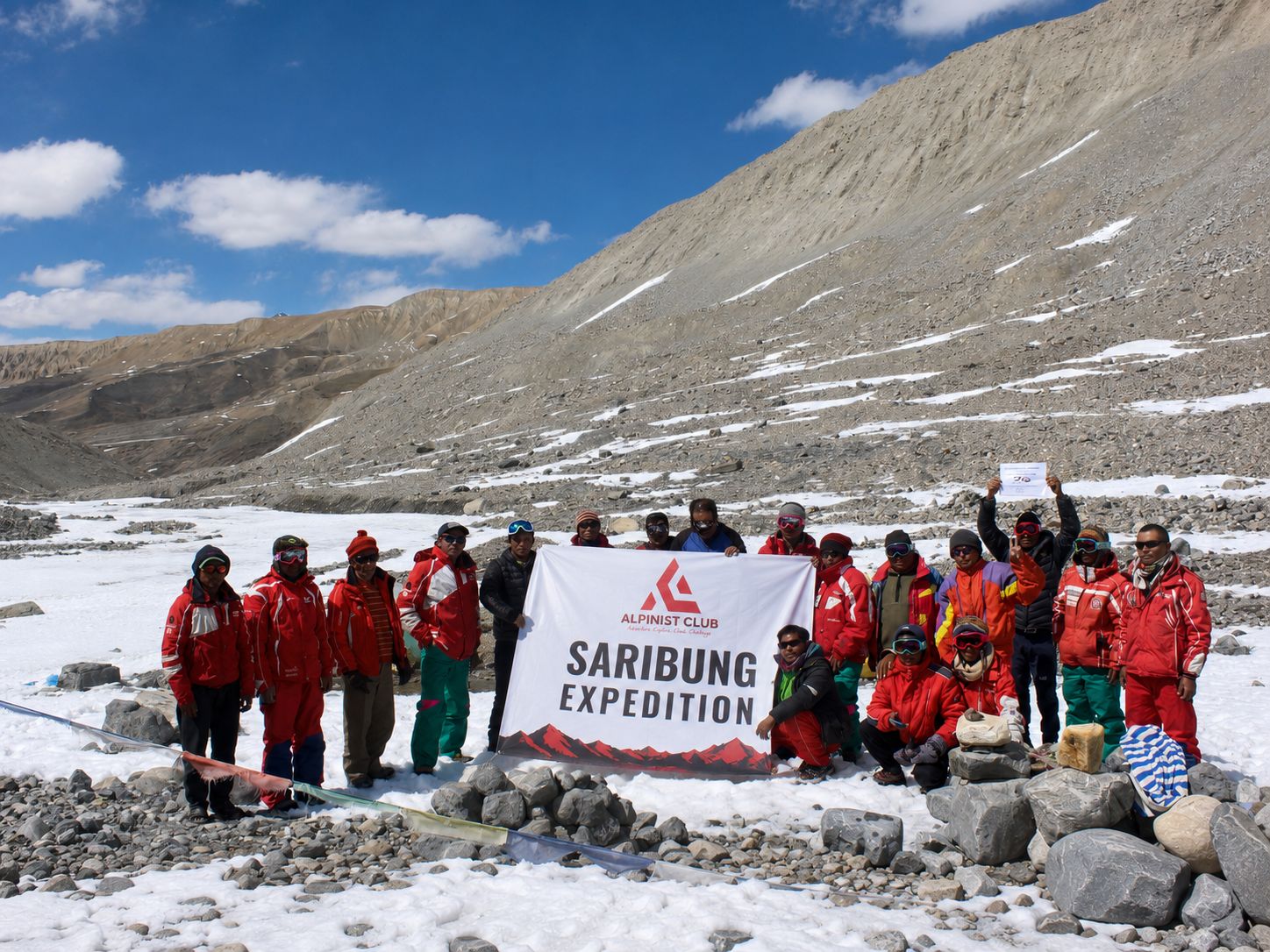
  • Receive professional guidance and expedition support from Alpinist Club

Saribung Pass and Peak Climbing: From Mustang to Nar Phu Valley

The journey begins in Upper Mustang, a remarkable region known for its arid landscapes, red sandstone cliffs, ancient caves, traditional Tibetan-influenced villages, and historic Buddhist monasteries. As the trail moves deeper into the Damodar Himal, the scenery changes from dry Himalayan valleys to rugged mountain terrain, glacial landscapes, and remote high-altitude wilderness.

One of the expedition's major highlights is crossing Saribung Pass (6,042 m), a demanding mountain pass connecting Upper Mustang with the Naar and Phu region. The expedition also includes an attempt to climb Saribung Peak (6,328 m), providing a challenging mountaineering experience with expansive views of the surrounding Himalayan ranges.

After crossing the high mountain terrain, the route continues toward the remote villages of Phu and Naar. These traditional settlements offer a glimpse into Himalayan culture, with ancient monasteries, stone houses, and customs preserved over generations.

Saribung Peak climbing requires excellent physical fitness, proper acclimatization, and previous high-altitude trekking and mountaineering experience. Depending on weather, snow, and glacier conditions, climbers may need crampons, ice axes, ropes, and other technical equipment. A carefully planned itinerary and experienced climbing support are essential for managing the challenges of this remote expedition.

With experienced guides and professional logistical support from Alpinist Club, participants can explore the spectacular landscapes and cultural heritage of Upper Mustang and the Nar Phu Valley while undertaking a demanding Himalayan climbing adventure.

From Mustang's dramatic desert scenery to the glaciers of the Damodar Himal and the traditional villages of Naar and Phu, the Saribung Pass Trek and Peak Climbing expedition offers an exceptional combination of remote trekking, cultural discovery, and high-altitude mountaineering in Nepal.

Itinerary

Expand All

Upon your arrival in Kathmandu, our local team warmly welcomes you at the airport. You will then be escorted to the hotel, where you can enjoy some well-deserved relaxation. The itinerary includes a briefing about the trek's progress and presentation, followed by leisure time. If you arrive in the morning, you'll have the entire day at your disposal. This can be used for rest or for those interested, to explore the surroundings freely. It's an ideal chance to deeply experience Nepalese culture and indulge in the local culinary delights.

  • Transfer to hotel
  • Final altitude: approximately 1,350m
  • Meals: Dinner
  • Accommodation: night in the hotel

Have breakfast and then you have the whole day to explore the best Kathmandu Sightseeing spots with your guide. You can visit and explore one of the most famous Shiva temples, Pashupatinath, recognized as the monkey temple; Swyambhunath, the largest Stupa in the world, also called Boudhanath Stupa; and finally the Royal Palace, Kathmandu Durbar Square. The next day, you will begin your Sarebung trek, so you have to check your equipment to make sure that you are ready for your adventure and climb. Have dinner and stay overnight in the same hotel in Kathmandu

  • Day tour
  • Final altitude: approximately 1,350m
  • Meals: Breakfast
  • Accommodation: night in the hotel

Early morning drive to pokhara

  • Accommodation: hotel. 
  • Meal: Breakfast (no Lunch and dinner) 
  • Transfer: 6 hrs drive.
  • Flight is optional 

The small twin-engine aircraft flies over the deep Kali Gandaki valley: with spectacular views of the Annapurna and Dhaulagiri massifs, landing at Jomsom. To avoid hiking on the dusty trail of the lower Mustang, where the wind often blows in gusts, we take advantage of a transfer to Samar (3,660m). We are entering a world of great mineral beauty. We cross the villages of Kagbeni (2,810m) and then Tangbe (3,030m), a pretty little fortified village, before reaching Samar (3,660m) where we will spend the night.

NB: The flight to Jomsom is subject to weather hazards and is very regularly canceled during the rainy season (in summer). In the event of cancellation, the flight may be postponed to the next day. If the weather conditions do not forecast any improvement and the terrain conditions permit, a transfer by jeep can be organized.

  • Accommodation: lodge.
  • Meals included: morning, noon, and evening. 
  • Transfer: 45 minutes flight
  • 4 hours drive.

Descent into the river bed followed by a leisurely climb. Then there is a magnificent balcony path facing the Nilgiri and the Annapurna range. Here, some mountain pastures where shepherds settle in summer. We quickly plunge into a superb canyon with steep walls. A round trip, 40 minutes to an hour, to visit the sacred cave where many pilgrims come to pray, before quietly reaching Syangboche, a tiny white village with flat roofs tight on itself. We take a vehicle to take us to Dhakmar (3,820m). The village is overlooked by extraordinary red ocher cliffs which close the horizon. As usual, a few chortens mark the entrance to the village.

  • Positive altitude difference: 850 m.
  • Negative altitude difference: 500 m.
  • 5 hours of walking.
  • Accommodation: lodge.
  • Meals included: breakfast, lunch, dinner
  • Transfer: 1 hour

Departure from Dhakmar towards the ridges and climb into the multicolored cliffs with jagged rocks. At the top, the panoramas are breathtaking as far as the eye can see. To the west, there are the fields of Dhakmar where in summer the contrasts are surprising and intense and to the east extends the wide valley of Tsarang. The village of Tsarang is relatively important due to its position in the valley and is home to a monastery imposing in size and red color which overlooks the Kali Gandaki valley.

  • Positive altitude difference: 540 m.
  • Negative altitude difference: 710 m.
  • 4 to 5 hours of walking.
  • Accommodation: lodge.
  • Meals included: Breakfast, Lunch, Dinner

We attack the day towards the west along the Tsarang Khola then we quickly reach the village of Marang before heading north and the capital of Mustang. We visit the Lo Gekar monastery, built in the 8th century, created by the founder of Tibetan Buddhism and which presents splendid wall paintings. In a landscape of magnificent colored hills ranging from white to red ocher with all shades of yellow, all crowned with snow-capped peaks, we reach Lo Manthang, the fortified capital of the ancient and mythical kingdom of Lo. It has two doors: one on the north side, the main entrance passing under a large porch, and one on the south side, a hidden door, hidden and discreet. Traditionally, only the north door was open during the day and closed each night.

  • Positive altitude difference: 400 m.
  • Negative height difference: 150 m.
  • 5 hours of walking.
  • Accommodation: lodge.
  • Meals included: Breakfast, Lunch, Dinner

A day to enjoy the fortified city founded in 1380 by Ame Pal and to rest. Visit the monasteries of Chode and Jampa, with ancient frescoes, including dozens of mandalas . We take the time to wander the streets. Short hike possible towards Namgyal Gompa.

  • 1 to 2 hours of walking.
  • Accommodation: lodge.
  • Meals included: Breakfast, Lunch, Dinner

Departure from Lo Manthang and transfer by jeep to the village of Bharcha. Departure on foot to reach the secret cave of Konchok Ling and its paintings dating from the 12th century. Visit the cave and return to Bharcha. The day continues with visits to the Choeser valley, more particularly to the monasteries of Ni-Phu, Gar-Phu and the Choeser cave, also called the Jhong cave. Return to Lo Manthang.

  • Positive altitude difference: 400 m.
  • Negative height difference: 400 m.
  • 5 hours 30 minutes walk.
  • Accommodation: lodge.
  • Meals included: Breakfast, Lunch, Dinner

Direction Lo La (3945 m) via the track. Then the very pleasant sandy path takes us leisurely, skirting each valley, overlooking jagged and colorful canyons, with the Annapurna massif and Dhaulagiri in the background. A final pass at 4100 meters, before the descent among earth penitents to the village of Dhi Gaon. We follow the bed of the Puyun Khola river for about an hour, then the path straightens sharply to arrive at Yara, a small hamlet with white houses huddled together. Beautiful, very wild day in splendid landscapes. This evening, we find a new part of the local team who will accompany us in Damodar Himal.

  • Positive altitude difference: 680 m.
  • Negative altitude difference: 800 m.
  • 6 hours of walking.
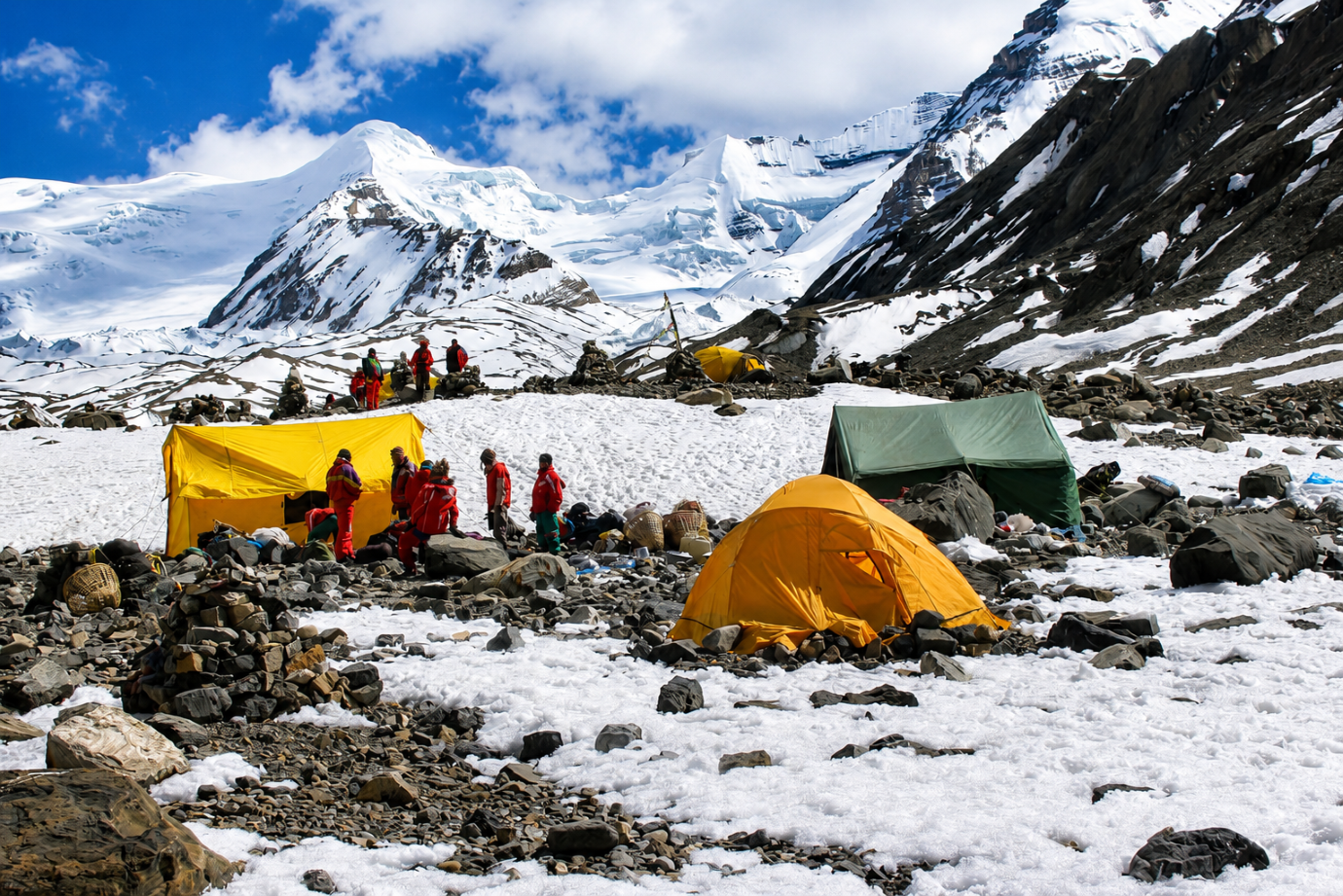
  • Accommodation: Tent.
  • Meals included: Breakfast, Lunch, Dinner

During this rather quiet day, with a passage to the village of Gara (3,875m), we join Lori by a side path which allows us to arrive at the village from the top (pass at 3,935m). We are entering the more “intimate” part of our trip. The afternoon is devoted to visiting a sanctuary from another time to acclimatization and to getting our local team “getting started”. In a hermitage above the village, we discover a chorten and thousand-year-old frescoes.

  • Positive altitude difference: 650 m.
  • Negative height difference: 50 m.
  • 2 hours 30 minutes walk.
  • Accommodation: Tent
  • Meals included: Breakfast, Lunch, Dinner

We go down the gorge to join the main path which goes from Yara to Ghuma Thanti, a walk from ridge to ridge in the mountain pastures. At 4780 meters, crossing a large grassy plateau from which the majestic Dhaulagiri emerges. Passage of a large pass (4,940m), before descending towards the shelter of Ghuma Thanti (4,745m), built for pilgrims going to the sacred lakes of Damodar Khunda.

  • Positive altitude difference: 1,200 m.
  • Negative height difference: 250 m.
  • 6 hours 30 minutes walk.
  • Accommodation: Tent
  • Meals included: Breakfast, Lunch, Dinner

We go up large slopes in a lunar setting. The trail, well marked, is easy to follow. As you pass the pass, at 5,320 meters, the view of Dhaulagiri (8,167 m) is magnificent. Further down, after a long crossing, it is Annapurna I that we can admire. Steep descent to reach the Porsche Khola River at the bottom of the thalweg. Short day, because at these altitudes, it is important to acclimatize gently.

  • Positive altitude difference: 580 m.
  • Negative altitude difference: 350 m.
  • 4 hour 30 minutes walk.
  • Accommodation: Tent.
  • Meals included: Breakfast, Lunch, Dinner

We go up the gorge for 200 meters before following a large slope on the left bank of the river via a path that allows us to quickly gain altitude. A long crossing leads to the pass (5,490m) – a breathtaking view of Dhaulagiri and the peaks of Damodar Himal – then joins a new path that avoids a landslide. We join the river at 4920 meters to easily ford it. Through a wide valley, we reach the sacred lakes. A small Hindu sanctuary upstream of the camp and a very old Buddhist chorten on the ridge marks the sacredness of the place.

  • Positive altitude difference: 570 m.
  • Negative altitude difference: 570 m.
  • 5 hours of walking.
  • Accommodation: Tent.
  • Meals included: Breakfast, Lunch, Dinner

We follow small paths which lead to the kharkas. A magnificent Marco Polo mouflon trophy and numerous saligrams decorate these high-altitude sheepfolds. The end of the route in the river bed is uncomfortable. You can have lunch directly at the camp, where there is a large chorten built by the Japanese.

  • Positive altitude difference: 270 m.
  • 3 hours 30 minutes of walk.
  • Accommodation: Tent.
  • Meals included: Breakfast, Lunch, Dinner

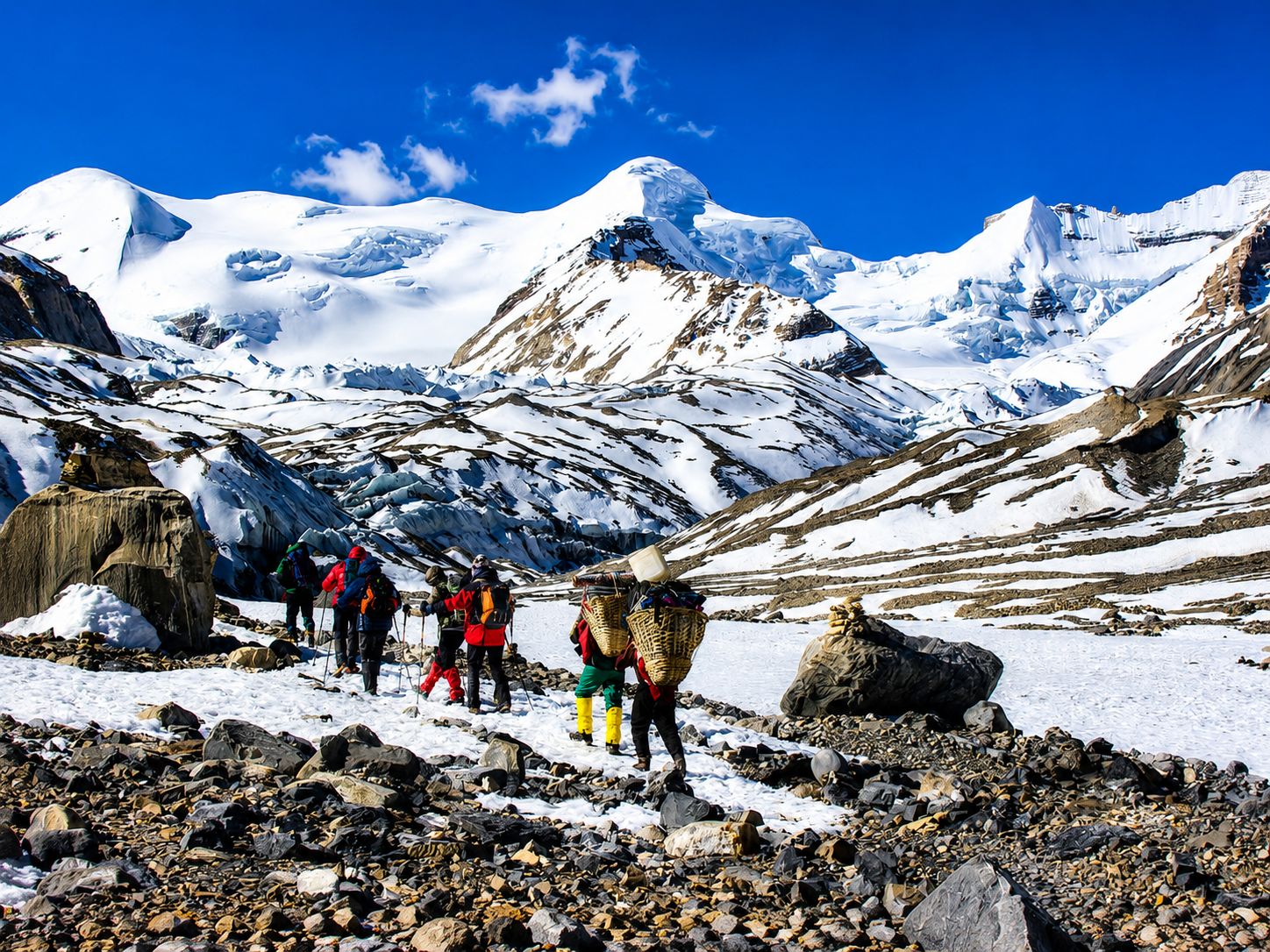
Transition day to approach the high mountains and change the universe. The first part of the climb takes place on the moraines on the left bank of the glacier. Small cairns indicate the passage. You have to reach the glacier itself to follow a large avenue of penitents to the end, splendid! Around 5700 meters, we cross the glacier almost horizontally to change banks and join the right bank moraine. We discover the highest peak of Damodar Himal: Khmjunggar Himal (6,759m).

  • Positive altitude difference: 530 m.
  • Negative height difference: 50 m.
  • 5 hours of walking.
  • Accommodation: Tent.
  • Meals included: Breakfast, Lunch, Dinner

The climb to the pass takes place on the moraine, then on a slightly crevassed glacier; then, for the most sporty and the best acclimatized, climb to the summit of Saribung Peak (6,328m) via an easy route with large snow slopes at 30 degrees then a very wide ridge. From the summit, the view is splendid over the surrounding peaks: Gyajikang, Himlung... Descent from the summit by the same route. From the pass, the long descent on the opposite slope requires attention to navigate between ice and permafrost. We set up our camp at the foot of a moraine.

  • Positive altitude difference: 700 m.
  • Negative altitude difference: 900 m.
  • 10 hours of walking.
  • Accommodation: Tent.
  • Meals included: Breakfast, Lunch, Dinner

We continue an endless journey along the edge of the left bank moraine to the Bhrikuti base camp (5070 m). Descent on a ridge with blocks to cross a tributary. We continue along the river until we reach a second tributary which can be forded. A climb opposite on the glacial shoulder allows you to join a well-marked path in the mountain pastures which is easily followed to Ngaru, an old abandoned village. Restorative night after several days above 5,000m.

  • Positive elevation: 100 m.
  • Negative altitude difference: 900 m.
  • 5 hours 30 minutes walk.
  • Accommodation: Tent.
  • Meals included: Breakfast, Lunch, and Dinner.

A short steep climb then a magnificent balcony path led us to the medieval village of Phu, perched on a rocky peak. A Gurung community lives in this tangle of cube-shaped houses with flat roofs. Lunch in Phu and the afternoon devoted to rest and discovery of this magnificent village.

  • Positive elevation: 100 m.
  • Negative altitude difference: 700 m.
  • 3 hours 30 minutes walk.
  • Accommodation: tent.
  • Meals included: Breakfast, Lunch, Dinner

The path goes down the Phu Khola Gorge. We cross the abandoned villages of Kyang and Chyako. What a pleasure to find the trees again! We continue beyond Jhunum. The main trail leads to Meta, we leave it for the Naar trail and stop at Mahendra. The camp is located after the bridge which overlooks the gorge by a hundred meters, impressive! 

  • Positive altitude difference: 510 m.
  • Negative altitude difference: 1100 m.
  • 5 hours 30 minutes walk.
  • Accommodation: tent.
  • Meals included: Breakfast, Lunch, Dinner

Steep climb at first then quiet to the village of Naar. Exceptional views of Pisang Peak and Kang Guru. A large chorten and imposing mani walls mark the entrance to this remarkable village. Above Naar, we travel up a wide valley to Kangla La Phedi, where a shelter has been built for the porters. Last night in tents and last evening with part of our team who will go directly to Chame rather than passing Kang La.

  • Elevation gain: 1,175m.
  • Negative height difference: 100 m.
  • 5 hours 30 minutes walk.
  • Accommodation: Tent.
  • Meals included: Breakfast, Lunch, Dinner

Steep climb, we pass near a small lake before starting the final climb. The view of Kang Guru is majestic. From the pass, breathtaking panorama of all the peaks of the Annapurna massif. The first 100 meters below the pass require attention. We dive towards the Marsyangdi Kola, to the village of Ngawal.

  • Positive altitude difference: 820 m.
  • Negative altitude difference: 1570 m.
  • 7 hours of walking.
  • Accommodation: lodge.
  • Meals included: Breakfast, Lunch, Dinner

We take the balcony path with extraordinary panoramas of the Annapurna's and cross the magnificent village of Gyaru (3,670m), before joining the classic path of the Annapurna tour. We join the track at Pisang (2,675m). Transfer by Jeep via the track to Dharapani.

  • Positive elevation: 100 m.
  • Negative altitude difference: 1025 m.
  • 4 hours 30 minutes walk.
  • Accommodation: lodge.
  • Meals included: morning, noon, and evening.
  • Transfer: 2 hours 30 minutes 

Early in the morning, departure by Jeep to reach Besisahar by the track. From Besisahar, bus to reach Kathmandu.

  • Accommodation: hotel.
  • Meals included: morning, noon. Free meal: evening.
  • Transfer: 4 hours on the track and 6 hours on the road.

Free time depending on the departure time of your flight and our representative will drop you at the airport, ending your journey in Nepal. We hope to be of service to you again. Thank you and safe travels.

  • Meals included: Breakfast.
  • Airport Transfer

Everest Very High altitude Note:

If you have a private group and prefer a personalized experience, we can organize a custom trip tailored to your requirements and group size, running it any day you choose.

Plan a Private Trip

Included & Excluded

Included Points

Airport Pick-Up and Drop-Off : Airport–Hotel–Airport transfers on arrival and departure.
Airport Reception : Company representative with a banner and identification card upon arrival.
Accommodation in Kathmandu : Three nights in a tourist-standard to 5-star hotel, according to your package preference.
Climbing Guide : Experienced, government-licensed high-altitude trekking and climbing Sherpa guide.
Kitchen Team : Chef and kitchen assistants at Advanced Base Camp during the climbing period.
Staff Expenses : Wages, accommodation, meals, climbing equipment, and medical and accident insurance for trekking and climbing staff.
Ground Transportation : Surface transportation for members and staff as specified in the itinerary.
Domestic Flights : Kathmandu–Pokhara–Jomsom flights for members and climbing Sherpa guides, as per the confirmed itinerary.
Teahouse Accommodation : Accommodation during the trekking section, excluding luxury or chain hotels.
Meals : Breakfast, lunch, and dinner, including tea or coffee during the trek.
Camping Accommodation : Camping at Advanced Base Camp and designated high camps during the climbing period.
Saribung Peak Climbing Permit : Issued by the Nepal Mountaineering Association (NMA).
Restricted Area Permits : Upper Mustang and Nar Phu Valley permits.
Conservation Permit : Annapurna Conservation Area Permit (ACAP).
TIMS Card : Trekkers' Information Management System permit, where applicable.
Group Equipment : Essential trekking, climbing, and camping equipment for the expedition.
High-Altitude Tents : The North Face V25 or equivalent tents with comfortable mattresses at Advanced Base Camp and high camps.
Technical Climbing Gear : Dynamic and static ropes, ice screws, snow bars, rock pitons, and locking and non-locking carabiners for route fixing and safety.
Camp Cooking Supplies : High-altitude food supplies, gas, and stoves for preparing meals and hot drinks.
Baggage Transport : Up to 20 kg of personal climbing equipment per member, carried by porter, yak, or mule, depending on the route and local logistics.
Weather Updates : Regular weather updates during the expedition, where available.
Satellite Phone : Satellite phone access through the climbing guide for communication and emergencies, subject to the agreed service arrangements.
First-Aid Kit : First-aid medical kits for the expedition team and staff.
Government Taxes : Applicable government taxes, VAT, and official service charges.
Departure Assistance : Assistance with flight reconfirmation and visa-extension information.
Farewell Dinner : Dinner at a traditional Nepali restaurant with a cultural show in Kathmandu.
Farewell Gift : Company T-shirt, pashmina, or brochure, subject to availability.

Excluded Points

Lunch and Dinner : Meals in Kathmandu, except for the included farewell dinner.
Snacks and Drinks : Packed food, energy drinks, soft drinks, alcoholic beverages, cigarettes, chocolates, and energy bars during the trek and expedition.
Personal Gear : Personal trekking and climbing clothing, equipment, and accessories.
Other Expenses : Laundry, mobile phone and internet charges, personal walkie-talkies, additional satellite phone usage, and other personal expenses.
Personal Insurance : Travel insurance covering high-altitude mountaineering, emergency helicopter evacuation, medical treatment, hospitalization, and related expenses.
International Flights : Flights to and from Nepal.
Visa Fees : Nepal tourist visa fees.
Unexpected Costs : Additional expenses resulting from landslides, natural disasters, political disturbances, strikes, flight disruptions, or changes in government regulations.
Extra Staff : Charges for additional guides, Sherpa, porters, cooks, or other staff beyond the package allocation.
Extra Services : Any accommodation, meals, transportation, or services not specifically listed under Cost Includes.
Staff Tips : Tips for trekking and climbing guides, Sherpas, porters, cooks, and other expedition staff.

Trip Information

Saribung Pass Trek and Peak Climbing – Trip Information

The Saribung Pass Trek and Peak Climbing is a challenging Himalayan adventure combining remote trekking, high-altitude camping, glacier travel, and mountaineering. The journey reaches approximately 6,042 m at Saribung Pass and 6,328 m at Saribung Peak. Due to the altitude, remote terrain, and changing mountain conditions, participants need excellent physical fitness, proper acclimatization, suitable equipment, and previous high-altitude trekking or mountaineering experience.Alpinist Club organizes the trekking and climbing support, accommodation, meals, transportation, and expedition logistics according to your confirmed package.

Read More

1. Your Guide and Expedition Team

Alpinist Club coordinates your journey from arrival in Kathmandu to departure after the expedition. Your guide leads the trekking team, manages daily activities, monitors weather and route conditions, and prioritizes everyone's safety.

Your support team may include:

  • Guide (Team Leader): Coordinates trekking staff, logistics, and daily operations.
  • Climbing Sherpa: Provides technical climbing assistance, supports rope work, and assists climbers during the ascent and descent.
  • Assistant Guide: Supports the team leader, assists participants, and helps coordinate camps.
  • Cook: Prepares meals during camping stages.
  • Kitchen Assistants: Help prepare meals and manage kitchen supplies.
  • Porters: Carry personal baggage and group supplies according to the agreed weight allowance.

All participants must follow the guide's instructions, particularly during high-altitude trekking and technical climbing. Alpinist Club arranges appropriate insurance and equipment for its Nepalese staff according to the requirements of the expedition.

2. Personal Baggage Allowance

Porters carry your personal baggage during the trek according to the agreed weight limit. Please pack carefully and carry only essential items in your daypack. 

3. Accommodation During the Expedition

Accommodation varies between Kathmandu, lodge-based trekking sections, and remote camping areas.

Accommodation in Kathmandu

You will stay in a comfortable tourist-standard hotel in Kathmandu, generally on a twin-sharing basis. The final hotel depends on availability and the confirmed package. Single-room accommodation may be available at an additional cost.

Lodge Accommodation During the Trek

During lodge-based sections of the expedition, you will stay in local teahouses or mountain lodges. Rooms are generally twin-sharing, although facilities vary between villages.

Lodges in Upper Mustang and the Annapurna region often provide dining areas and basic amenities. Bathrooms may be shared or private, depending on the property. Hot showers, electricity, and internet access may be limited in remote locations.

Camping Accommodation

Approximately 12 nights of camping are planned for the remote sections between Upper Mustang and the Nar Phu region, subject to the final itinerary.

During camping stages, the expedition team provides:

  • Two-person sleeping tents, generally shared by two participants.
  • Sleeping mattresses, as specified in the package.
  • A dining tent with tables and seating.
  • Kitchen facilities and cooking equipment.
  • Toilet facilities suitable for the camping environment.

The team aims to make camping as comfortable as possible in remote mountain areas. However, facilities become basic at higher elevations, and cold temperatures, wind, and changing weather can affect sleeping conditions.

4. Meals During the Saribung Pass Trek

Meals in Kathmandu

A welcome dinner is provided on arrival, and a farewell meal is arranged after the expedition. Breakfast is provided during the specified hotel nights. Lunch and dinner in Kathmandu are generally at your own expense unless stated otherwise.

Meals During Lodge-Based Trekking

Breakfast, lunch, and dinner are served at local teahouses or lodges. Meals typically include rice, lentils, vegetables, noodles, potatoes, eggs, soup, bread, and other locally available dishes.

Meals During Camping

During camping stages, the expedition cook and kitchen team prepare meals using available ingredients. Meals may include rice, pasta, lentils, potatoes, vegetables, eggs, and other suitable foods.

Hot drinks, including tea and coffee, are provided according to the package arrangements. Lunch may be served hot or as a packed meal, depending on the day's walking distance, weather, and available facilities.

Sample Daily Menu
  • Breakfast: Eggs, toast, chapati, Tibetan bread, or pancakes, with tea or coffee.
  • Lunch: Rice, noodles, or another main dish, with a hot drink.
  • Dinner: Soup, a main course, and fruit when available, with tea or coffee.

Menu options depend on the location and availability of ingredients. Special dietary requirements should be communicated to Alpinist Club before departure.

5. Drinking Water

Safe drinking water is essential throughout the expedition. Carry reusable water bottles and use water purification tablets, a suitable filter, or another approved treatment method.

Avoid drinking untreated water from streams or other natural sources. Limiting single-use plastic bottles also helps reduce waste in remote mountain environments.

6. Saribung Pass Trek and Peak Climbing Difficulty

The Saribung Pass Trek and Peak Climbing expedition is a challenging high-altitude adventure reaching approximately 6,042 m at Saribung Pass and 6,328 m at Saribung Peak. The route involves long trekking days, remote camping, cold weather, glacier travel, and technical climbing. Depending on conditions, climbers may need crampons, an ice axe, a harness, a helmet, and ropes.

Participants should have excellent fitness, previous high-altitude trekking experience, and appropriate mountaineering skills. This expedition is not recommended for unprepared beginners. Contact Alpinist Club to discuss your experience and preparation before booking.

7. Physical Preparation

Begin training several months before departure to develop the endurance and strength required for this demanding expedition.

Recommended preparation includes regular hiking, uphill walking, cardiovascular exercise, and strength training for the legs and core. Practice long walks while carrying a daypack and, if possible, train on steep or uneven terrain.

Previous experience using mountaineering equipment is beneficial. Climbers should also practice essential techniques, including crampon use, ice-axe handling, and movement on snow and ice, under qualified instruction.

Increase your training gradually and consult a healthcare professional if you have concerns about your fitness.

8. Medical Check-Up Before the saribung Trek

A medical check-up before departure is strongly recommended. Discuss the expedition's altitude, physical demands, and remoteness with your healthcare professional.

A dental check-up is also advisable before travelling to isolated mountain areas where medical and dental services may be limited.

If you have concerns about altitude or an existing medical condition, seek advice from a doctor experienced in mountain medicine before booking.

9. Acute Mountain Sickness (AMS)

Acute Mountain Sickness (AMS) can affect anyone at high altitudes. Common symptoms include headaches, nausea, dizziness, loss of appetite, and unusual fatigue. Inform your guide immediately if symptoms develop, and never continue ascending if they worsen.

Severe altitude sickness can be life-threatening and may require urgent descent and medical treatment. Medication such as Diamox should be discussed with a healthcare professional before departure. Gradual ascent, proper acclimatization, and timely decisions about descent are essential for a safer expedition.

10. Transportation During the Trip

Airport transfers and scheduled transportation are arranged by private vehicle according to the confirmed itinerary.

Depending on the route, transportation may include airport transfers in Kathmandu, road journeys to the starting point of the trek, and return transportation from the trek's ending point.

Road conditions, traffic, weather, and the remoteness of the region can affect travel times. The exact transportation arrangements will be confirmed before departure.

11. Group Size

The expedition is planned for small groups of approximately 1–10 participants, subject to the confirmed departure arrangements.

Small groups allow for more personalized support, efficient coordination, and a better experience in remote mountain communities.

The guide-to-participant ratio, climbing Sherpa support, and group arrangements will be confirmed before booking.

12. Camping and Climbing Equipment

Alpinist Club arranges the group camping and climbing equipment specified in the expedition package. Depending on the confirmed arrangements, this may include:

  • Sleeping tents for camping stages.
  • Dining and kitchen tents.
  • Cooking equipment and fuel.
  • Sleeping mattresses at designated camps.
  • Group ropes and technical climbing equipment required for the planned route.
  • High-altitude tents and suitable cooking equipment for climbing camps.

The exact equipment provided depends on the itinerary, group size, and climbing conditions. Confirm the included equipment list with Alpinist Club before departure.

13. Personal Trekking and Climbing Equipment

Personal trekking and climbing equipment is generally not included unless specified in the package. A detailed equipment checklist will be provided before departure. Essential items may include:

  • Warm, layered clothing and an insulated down jacket.
  • Waterproof jacket and trousers.
  • Trekking boots and suitable mountaineering boots.
  • Warm gloves and mountaineering mittens.
  • A sleeping bag suitable for expected temperatures.
  • A headlamp with spare batteries.
  • A climbing harness and helmet.
  • Crampons and an ice axe.
  • Sunglasses, sunscreen, and personal toiletries.

Selected items, including down jackets and high-altitude sleeping bags, may be available for rent by prior arrangement. Rental prices, availability, and deposit requirements should be confirmed before travel.

14. Safety and Communication

Safety is a priority throughout the Saribung Pass and Peak Climbing expedition. The guide and climbing leader monitor weather forecasts, route conditions, altitude-related symptoms, and the overall condition of the team.

The itinerary and summit attempt may be adjusted or cancelled if weather, snow conditions, route safety, or the team's health make the planned ascent unsafe. Reaching Saribung Peak's summit cannot be guaranteed; the safety of the team always comes first.

Mobile network coverage and internet access may be unreliable in remote areas. Communication arrangements and emergency procedures should be explained during the pre-expedition briefing.

All participants must have travel insurance that explicitly covers high-altitude mountaineering, emergency medical treatment, and helicopter evacuation up to the maximum altitude planned for the expedition.

Less More

Frequently Asked Questions

Expand All

The maximum altitude of the Sarebung trek is  6,042 meters above the sea level.

Although full-fledged mountaineering skills are not necessary, crossing Saribung Pass may demand for skills like crampon use, rope handling, and ice awl handling. Given the less-traveled routes, you may require adequate navigation skills.

The two main seasons that are ideal for the Saribung Pass Trek via Upper Mustang are spring and fall.

The Annapurna Conservation Area requires an entry permit( ACAP)  which costs $20 per person and is good for the duration of the trek. Additionally, you will require a Restricted Area Permit. For ten days, each trekker must pay $500. An extra $50 per day is charged if more time is needed.

Saribung Pass trek will pass you through Buddhist communities that have been unchanged for decades, is a blend of harsh, ancient cultures. You may enjoy the breathtaking views of Annapurna II, Dhaulagiri, Cheo, Peri, Himlung, Ratnachuli, and many other mountains as the trail leads you through Saribung Pass.

The entire Saribung Pass Trek, from arrival to departure in Nepal, can cost anything from USD 2,000 to USD 4,000 or more per person. Numerous variables affect this price, such as the length of the hike, the route selected, the number of participants, the services and amenities offered, your individual preferences, and the trekking agency you select (domestic or foreign).

The Saribung Pass trek typically takes 20 to 25 days, depending on a number of variables, including the route taken, hiking speed, acclimatization preferences, and weather.

The Saribung Pass Trek meal consists of a combination of classic Asian and local dishes, however it will get limited as we ascend. For your health, we strongly advise you to drink more liquids at high altitudes, such as green tea, lemon tea, hot lemon, ginger tea, garlic soup, etc., as well as fresh vegetables.

Snowstorms and strong winds are common of the unforeseen climate changes that the high-altitude environment can bring. You can experience extreme coldness at a higher altitude, particularly at night. You need to prepare yourself well to prevent any kind of illness due to the change in weather.

Yes, you need to prepare yourself physically for the Sarebung Pass Trek. The journey will be less stressful if you are physically healthy. At least one month before embarking on a Himalayan journey, begin exercising. Running, hiking, long walks, cycling, swimming, and all the aerobic workouts can be included for the preparations. Working out in the gym can also be a wise choice.