Max. Elevation









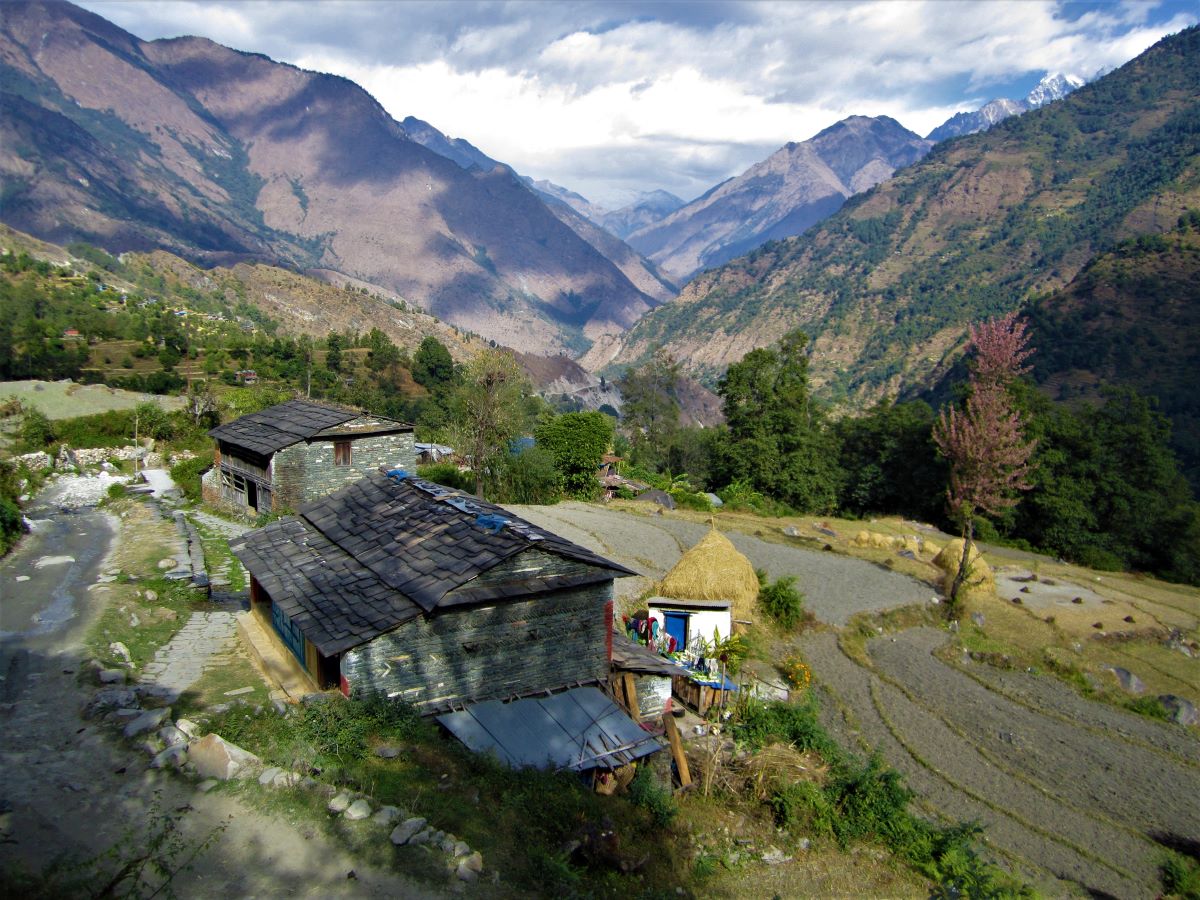
Follow the famous Annapurna And Dhaulagiri Balcony Trail on an unforgettable Himalayan adventure combining breathtaking mountain views, traditional villages, and peaceful nature trails. Walk through beautiful terraced hillsides, lush rhododendron forests, and charming Gurung settlements, including the picturesque village of Ghandruk, known for its traditional stone houses and warm hospitality.
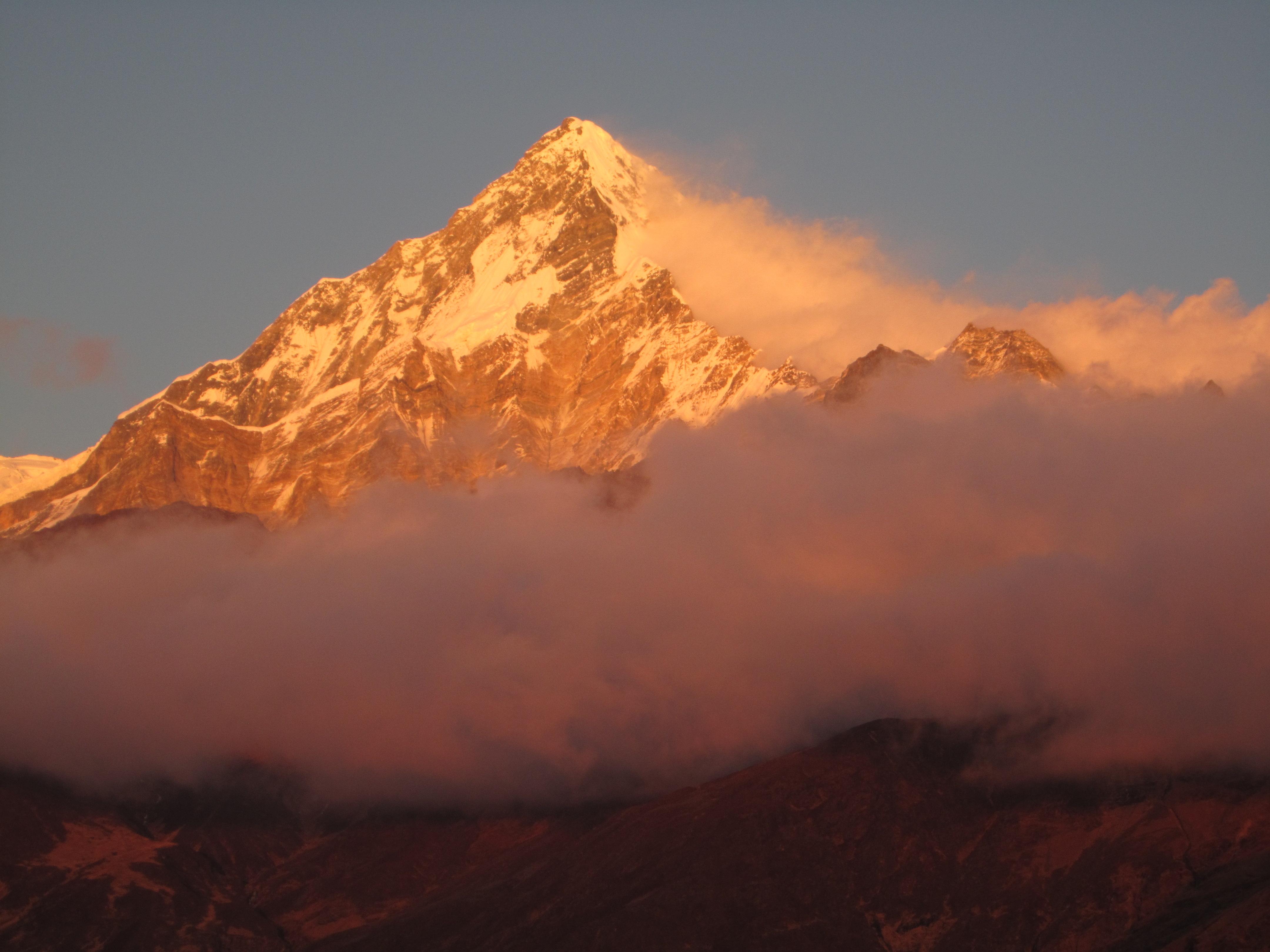
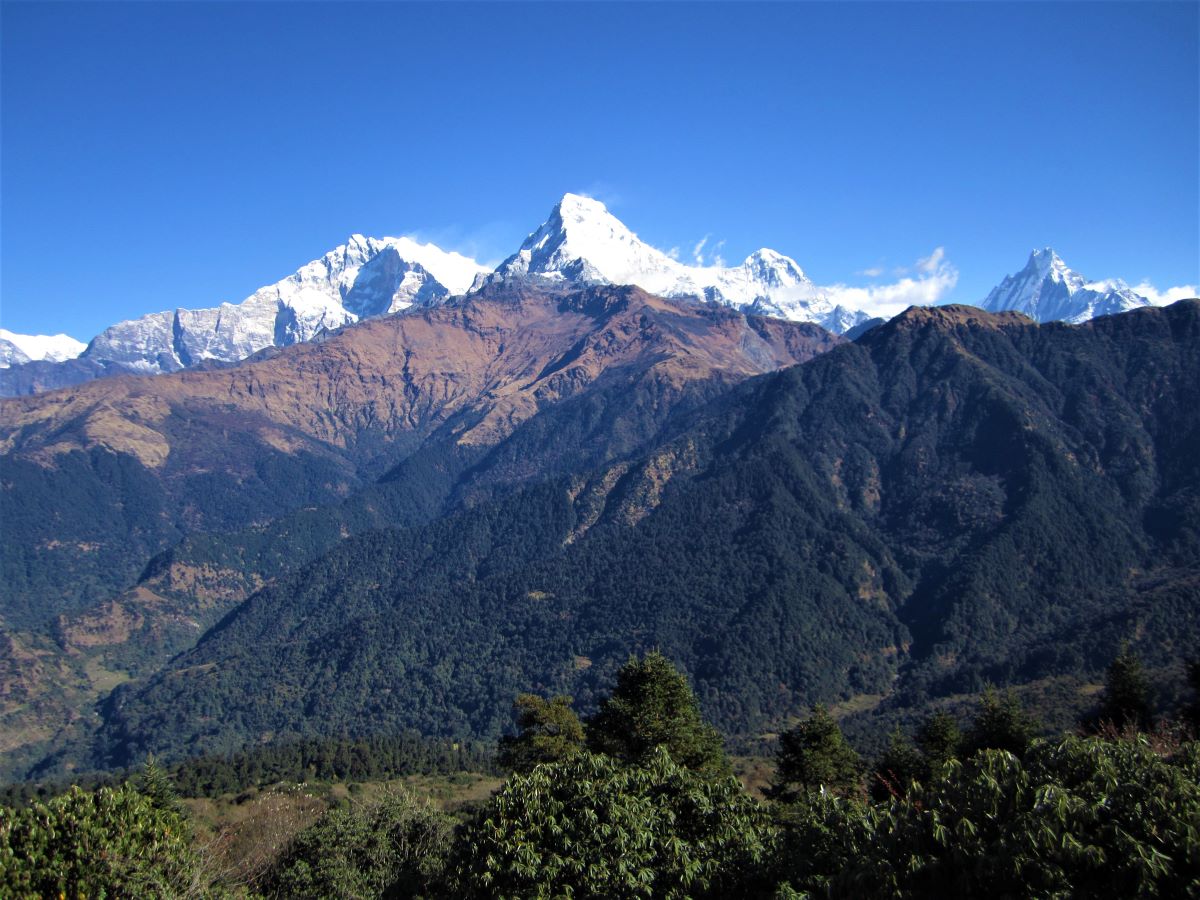
Leave the busy trekking routes behind and explore the quieter trails of Khopra Ridge, where spectacular close-up views of Annapurna South, Hiunchuli, Machhapuchhre, and the mighty Dhaulagiri range await. Experience unforgettable Himalayan sunrises from Poon Hill (3,160 m), one of Nepal's most famous mountain viewpoints, as the first golden rays illuminate the snow-covered peaks.
The adventure continues to Mohare Danda (3,300 m), a peaceful panoramic viewpoint offering magnificent 360-degree Himalayan scenery. Here, you will stay at a community-run eco-lodge, enjoy authentic local hospitality, and support sustainable tourism and mountain livelihoods.
Combining the famous highlights of the Annapurna region with hidden trails and authentic cultural experiences, this trek offers the perfect balance of adventure, comfort, and natural beauty. If you want to experience Nepal's spectacular Himalayas while avoiding the busiest trekking routes, this journey is an excellent choice.
Join Alpinist Club and discover the magic of Khopra Ridge, Poon Hill, and Mohare Danda – your unforgettable Himalayan adventure awaits!
Upon your arrival in Kathmandu, our local team warmly welcomes you at the airport. You will then be escorted to the hotel, where you can enjoy some well-deserved relaxation.The itinerary includes a briefing about the trek's progress and presentation, followed by leisure time. If you arrive in the morning, you'll have the entire day at your disposal. This can be used for rest or for those interested in exploring the surroundings freely. It's an ideal chance to experience Nepalese culture and indulge in the local culinary delights.
Breakfast and finalization of luggage. Flight to Pokhara in the morning. Once landed, we board local jeeps. On the road to Nayapul, we make a stop at Khare to admire the mountains before following the Modi Khola by a track. A few bends lead us to the village of Chane around 1700 m. Here, the porters load the bags and we start the trek on a beautiful path, with already views of Machhapuchhare, Gangapurna, and Annapurna South. From Chane, the trail climbs up to the village of Gandrung, where we stop to spend the night. Superb views of the Annapurnas and the Machapuchare.
Gandrung is the largest village of the Gurung ethnic group. Each family is proud to have at least one member belonging to the clan of the famous warriors who are the Gurkhas! We take the time to visit the village, its temples, and museums before starting the walk towards Thadapani. Tadapani means “distant water” in Nepali. We resume the climb towards the Komrong Danda pass (2650 m). Very nice views of the Machapuchare. A balcony path leads to the villages of Melanje (2,050 m) and Chiule (2,050 m). The path straightens and crosses a forest of imposing rhododendrons, real trees, in bloom from March. Placed on the ridge, Thadapani (2590 m) offers a plunging view of the steep-sided valley leading to the Annapurna sanctuary. Annapurna III (7555 m) and Gangapurna (7454 m) dominate the scene.
We leave the main path that leads to Ghorepani to follow a path rarely used by people other than locals. The path first climbs through the thick rhododendron forest before arriving at the water buffalo pastures. Short grass is a precious commodity in these villages. The views of the Annapurna Range emerging above the tree line are stunning. We arrive at Dobato after the place called Isharu.
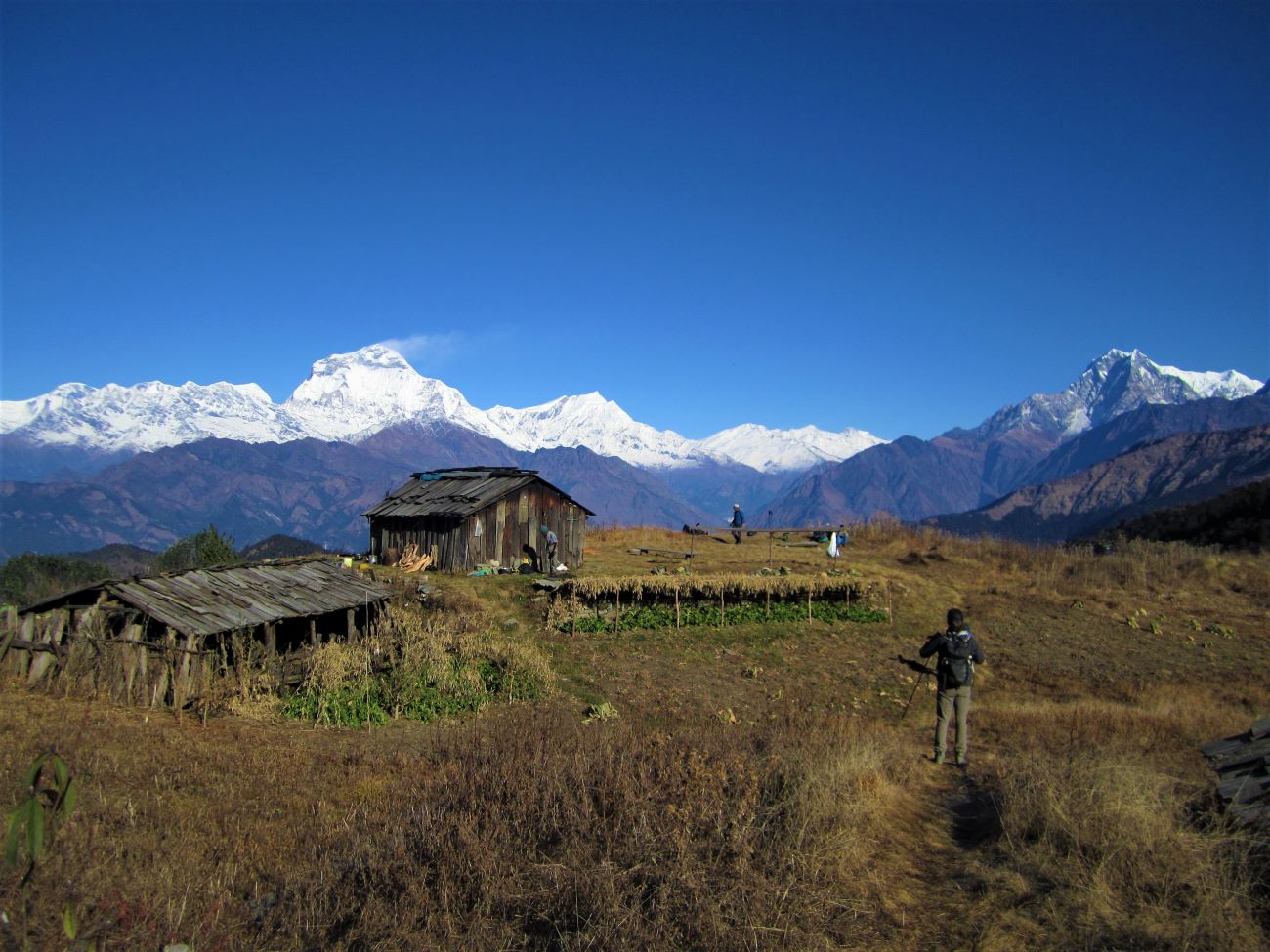
For the more adventurous, the day begins before dawn with an optional sunrise walk to the Muldhai Viewpoint, reached in about 45 minutes from the lodge. This first encounter with Dhaulagiri is nothing short of spectacular. From this outstanding 360-degree panorama, the Himalayan giants unfold in every direction. To the north rise the Nilgiri peaks (North, Central, and South), Annapurna I, Annapurna South, Hiunchuli, Annapurna III, and the iconic Machhapuchhre. To the east, emerging through the morning mist, lie Lamjung Himal and Himalchuli, extending as far as Ganesh Himal. To the south, rolling hills descend endlessly toward the distant Terai plains. Turning west, the view opens toward the remote ranges bordering Dolpo, with Putha Hiunchuli, Gurja Himal, and the vast Dhaulagiri massif dominating the skyline, crowned by Dhaulagiri I. Nearby stand Tukuche Peak and the rugged mountains of western Mustang.
It is the kind of viewpoint where one could linger for hours, captivated by the sheer scale and silence of the high Himalaya. Eventually, we descend back toward the trail and continue along this quieter second balcony route, far removed from the main trekking paths. After a few hours of walking, we reach the alpine pastures of Bayeli, home to a single, remote lodge. If weather conditions allow, the setting sun paints the surrounding peaks in warm evening light, offering another unforgettable moment high above the valley.
From here, the landscape becomes increasingly wild and serene. There are no signposts or famous viewpoints—only yak pastures, rhododendron forests, and wide-open mountain scenery. Surrounded by these magnificent Himalayan giants, we continue our descent to Chistibung, arriving after approximately three hours of downhill walking.
The path crosses a beautiful forest of rhododendrons to a small sacred pond; the view clears; the path winds between the blocks and joins a spur from where the view of the Dhaulagiri is remarkable. Another effort to reach the Kopra community lodge. Magnificent views, extraordinary panorama formed by the Annapurna South, close to a few kilometers (but the ascent of which takes weeks!), and the peaks of Fang and Nilgiri to the north. Beyond the depths of the Kali Gandaki valley, the Dhaulagiri Himal dominates the entire skyline to the west. After lunch, to enjoy this sumptuous landscape even more, a hike on the ridges that dominate Kopra Ridge, towards the sacred lake of Khayar (4025 m), is possible. In summer, a pilgrimage takes place on the shores of the lake; in spring and autumn, the snow does not allow it to be reached. A belvedere located at 4000 meters is already a beautiful objective. Return to the lodge.
NB: Allow 3 to 4 hours of walking for Kopra Ridge and 3 hours of walking for the optional hike to Khayar Lake.
After admiring one last sunrise over the familiar peaks—Annapurna, Dhaulagiri, Machhapuchhre, and Hiunchuli—we begin a long descent toward lower valleys. The trail winds through high alpine pastures, first shared with grazing yaks, then gradually giving way to buffalo herds as we lose altitude. Beyond Chistibung, the landscape changes once more, leading us into rhododendron-covered slopes. Crossing a suspension bridge, we tackle a final short climb before reaching the welcoming village of Swanta.
After leaving the village, we descend to a river and cross it by suspension bridge before rejoining the classic trekking trail. The path then climbs gently through a series of villages toward Ghorepani, whose name—“water of the horses”—recalls its long history as a stop on regional caravan routes. Today, Ghorepani is a lively mountain settlement with numerous lodges and convenient facilities.
Early departure for Poon Hill (about 45 minutes), the region’s iconic viewpoint. While the sunrise attracts many visitors, once the crowds turn back we continue onward toward our fourth panoramic ridge, heading for the quiet heights of Mohare Danda. The trail becomes increasingly wild, crossing open alpine pastures where yaks and buffalo graze, with the immense face of Dhaulagiri constantly in view.
Reaching Mohare Danda, we spend our final evening in the highlands, surrounded by vast Himalayan scenery. As the light fades, the silhouettes of Lamjung Himal, Mardi Himal, and many other peaks stand out against the sky. With clear conditions, some may even catch a distant glimpse of Phewa Lake far below in Pokhara—a fitting and memorable conclusion to this high-altitude journey.
On this final day of walking, we remain on the ridge with Dhaulagiri still in view. The trail leads us gently toward the Hampal Pass (2,990 m) before descending into the beautiful Gurung and Magar village of Lespar, a fitting and authentic conclusion to our journey through the highlands.
Early departure for our last day of the trek. We walk “on a balcony” first in the heart of forest landscapes then from hamlet to hamlet, we descend along the Patikhola river to Patichaur. Transfer to Pokhara. Enjoy rest and a comfortable night at Phewa Lake.
Return to Kathmandu along the Himalayan range. The peaks of Annapurnas, Manaslu, Ganesh Himal, and Langtang parade on the horizon
Free day. Take advantage of this day to stroll in the city center or visit the cultural sites. Marvel at Shree Buddha Nath, a 36-meter-high stupa in the Tibetan Quarter of the Nepalese capital. Discover Pashupatinath, the holy place of Hindus dedicated to Shiva, one of the four highest places of pilgrimage in Asia. Nestled in the center of old Kathmandu, Durbar Square never fails to captivate the visitor with its fine woodcarvings and rich history. Explore the dynamic district of Thamel and its colorful bazaars, an ideal place to do your last shopping. In the Kathmandu Valley, the traditional village of Bhaktapur will amaze you with its 17th-century architecture.
We will drive you back to Tribhuvan International Airport for your scheduled flight to your destination.
 Note:
If you have a private group and prefer a personalized experience, we can organize a custom trip tailored to your requirements and group size, running it any day you choose.
Plan a Private TripThe 14-Day Annapurna Balcony Trek is a beautiful Himalayan adventure combining breathtaking mountain views, traditional Gurung and Magar villages, and peaceful forest trails. The journey takes you through Ghandruk, Khopra Ridge, Ghorepani, Poon Hill, and Mohare Danda, offering spectacular views of Annapurna, Dhaulagiri, Machhapuchhre, and Hiunchuli. Enjoy quieter trekking routes, authentic local culture, and community-based accommodation for an unforgettable Himalayan experience.
Read MoreYour trekking guide will accompany and support you throughout the journey, from your arrival in Kathmandu until the completion of your trek. The guide is responsible for coordinating daily activities, managing the trekking team, monitoring trail and weather conditions, and ensuring your safety and comfort.
Your guide is also your main point of contact for information about local culture, mountain landscapes, villages, and the trekking route. Please follow the guide's instructions, particularly during challenging sections and changing weather conditions.
Your Nepalese trekking team may include:
For this lodge-based trek, each participant is allowed a maximum of 15 kg of personal luggage for the porter to carry.
Alpinist Club ensures that our guides and porters receive fair wages, appropriate clothing and equipment, and insurance coverage during the trek.
We believe in responsible trekking and treating every member of our team with respect and care.
In Kathmandu, you will stay in a comfortable 3-star category hotel on a twin-sharing basis with breakfast
Hotel selection depends on availability and the season. A similar-standard hotel may be arranged when our preferred hotels are unavailable.
In Pokhara, you will enjoy one night in a comfortable 3-star category hotel with breakfast, providing an opportunity to relax after your trekking adventure.
A welcome dinner is included on your first evening in Kathmandu. Other meals in Kathmandu and Pokhara are generally at your own expense unless specified in your package.
During the Khopra Ridge, Ghorepani, and Mohare Danda Trek, you will stay in locally operated mountain lodges and teahouses.
Accommodation is generally arranged in twin-sharing rooms with basic beds, mattresses, pillows, and blankets. Bathroom facilities may be shared, particularly in remote mountain villages.
Meals are freshly prepared by local lodge cooks and served in communal dining rooms, where you can relax and enjoy the mountain atmosphere.
Tea or coffee is included with meals, up to two cups per person per meal. Additional beverages, snacks, bottled drinks, and alcoholic beverages are at your own expense.
Alpinist Club provides water purification tablets. We recommend bringing a reusable water bottle and refilling it with purified water throughout the trek. This helps reduce plastic waste and protects the beautiful Himalayan environment.
The Annapurna Balcony Trek is graded Moderate to Challenging, suitable for trekkers with a reasonable level of fitness. Expect 4–7 hours of walking daily through uphill trails, downhill paths, forests, and stone steps. The highest point is Khopra Ridge (3,640 m), with an optional hike to Khayar Lake (4,025 m). No technical climbing skills are required, but good stamina and endurance are essential. Porters carry your main luggage, so you only need a light daypack.
We recommend starting your physical preparation at least 2–3 months before departure. Regular walking and hiking, especially 4–6-hour weekend walks, will help build the stamina needed for consecutive trekking days. Include uphill and downhill training, cycling, swimming, or jogging in your routine to improve endurance and leg strength. Practice walking with a small backpack and wear your trekking boots during training to ensure comfort. Good preparation will help you enjoy the trek more comfortably and
Alpinist Club organizes this trek for small groups of 2–10 participants. We intentionally keep our groups small to provide a more personal trekking experience, maintain flexibility, and encourage meaningful interactions with local communities.
Small groups also allow us to enjoy quieter trails and respect the accommodation capacity and daily life of mountain villages. Private departures are available for individuals, couples, families, and groups of friends. We can customize the itinerary and travel arrangements according to your preferences.
Good general health is essential for enjoying this Himalayan trekking adventure. Before departure, we recommend consulting your doctor, especially if you have existing health concerns or have not had a recent medical check-up. Inform your doctor about the trek's physical demands, walking duration, and maximum altitude. We also recommend bringing your personal medications and a small first-aid kit, checking your dental health, informing Alpinist Club about any relevant allergies or medical conditions, and arranging suitable travel insurance covering high-altitude trekking and emergency evacuation.
Although the Khopra Ridge Trek is not an extreme high-altitude expedition, some sections reach above 3,000 m, with the optional Khayar Lake hike reaching approximately 4,025 m. Trekkers may experience Acute Mountain Sickness (AMS), including headaches, nausea, dizziness, tiredness, or difficulty sleeping. To reduce the risk, walk slowly, stay hydrated, eat regularly, and allow your body time to adjust. Inform your guide immediately if you experience any symptoms. If symptoms worsen, stop ascending, descend to a lower altitude, and seek medical assistance. Any medication, including Diamox, should only be taken after consulting a qualified medical professional.
Your safety and well-being are our priorities at Alpinist Club. Our experienced trekking guides monitor weather forecasts, trail conditions, and the physical condition of participants throughout the journey. Our trekking team carries a first-aid medical kit and an oximeter to check oxygen saturation and heart rate when necessary.
In case of an emergency, your guide will coordinate appropriate assistance and evacuation arrangements, depending on the situation, location, and weather conditions. We ask all participants to follow the guide's instructions and inform the team immediately about any health concerns or difficulties along the route.
Mobile network coverage is available in several villages along the Annapurna trekking route, but signals may be weak or unavailable in remote areas. Some mountain lodges offer Wi-Fi and charging facilities for an additional fee, depending on availability. We recommend carrying a power bank and keeping your devices charged whenever possible. Please note that reliable mobile and internet connectivity cannot be guaranteed throughout the trek.
Travel insurance is compulsory for all participants.Your insurance policy must cover trekking in Nepal up to at least 4,100 m, emergency medical treatment, and helicopter evacuation. Before departure, carefully check that your insurance specifically covers high-altitude trekking and emergency rescue.
Please carry a copy of your insurance details and emergency contact information during the trek. Personal travel insurance is not included in the Alpinist Club package and must be arranged independently before arrival in Nepal.
The Annapurna region is rich in natural beauty, traditional villages, and diverse local cultures. At Alpinist Club, we promote responsible and sustainable tourism by encouraging trekkers to respect local traditions, avoid single-use plastics, dispose of waste responsibly, conserve water, and protect wildlife and natural surroundings. We also encourage supporting locally operated lodges and businesses while treating guides, porters, and local communities with respect. By staying at the community-run lodge in Mohare Danda, you directly contribute to local livelihoods and sustainable mountain tourism..
Travel insurance is compulsory for all participants and must cover trekking in Nepal up to at least 4,100 m, including emergency medical treatment and helicopter evacuation. Please ensure your policy specifically covers high-altitude trekking and emergency rescue. Carry a copy of your insurance policy and emergency contact details throughout the trek. Travel insurance is not included in the Alpinist Club package and must be arranged independently before arriving in Nepal.
14. Customized and Private Trekking
Would you like to experience the Annapurna region at your own pace?
Alpinist Club offers private and customized departures for the Annapurna Balcony Trek. We can adjust the itinerary, travel dates, group arrangements, and accommodation preferences according to your requirements.
Whether you are traveling alone, as a couple, with family, or with friends, our team is ready to help organize your Himalayan adventure.
Discover the spectacular Annapurna and Dhaulagiri ranges, explore traditional mountain villages, and experience the peaceful trails of Khopra Ridge, Poon Hill, and Mohare Danda with Alpinist Club.
Less More