Makalu base camp Circuit Trek and Popti La pass via Tin Pokhari
Makalu Circuit Trek and Popti La via Tin Pokhari: Exploring the Remote Himalayas of Eastern Nepal
Nepal has many beautiful trekking routes, but some of its most remarkable mountain landscapes remain far from the usual trekking trails. The Makalu Circuit Trek via Tin Pokhari is one of these journeys, taking trekkers deep into the remote Makalu Barun region of eastern Nepal.
This 22-day trek combines the well-known route to Makalu Base Camp with a challenging circuit through Kalo Pokhari, Tin Pokhari, and the Popti La area. Along the way, the landscape changes from subtropical forests and traditional villages to high mountain passes, glacial valleys, alpine lakes, and isolated camping grounds.
Unlike popular trekking routes in the Everest and Annapurna regions, the Makalu Circuit offers long stretches of wilderness, where settlements are few and the mountains dominate the landscape.
 The Journey Begins in the Arun Valley
The trek begins with a flight from Kathmandu to Tumlingtar, followed by a drive towards Num. From here, the walking route descends towards the Arun River before climbing through terraced farmland and small villages.
The first days pass through Seduwa and Tashigaon, where trekkers experience the everyday life of communities living in the foothills of the eastern Himalayas. Narrow trails connect villages, agricultural fields, and forested hillsides.
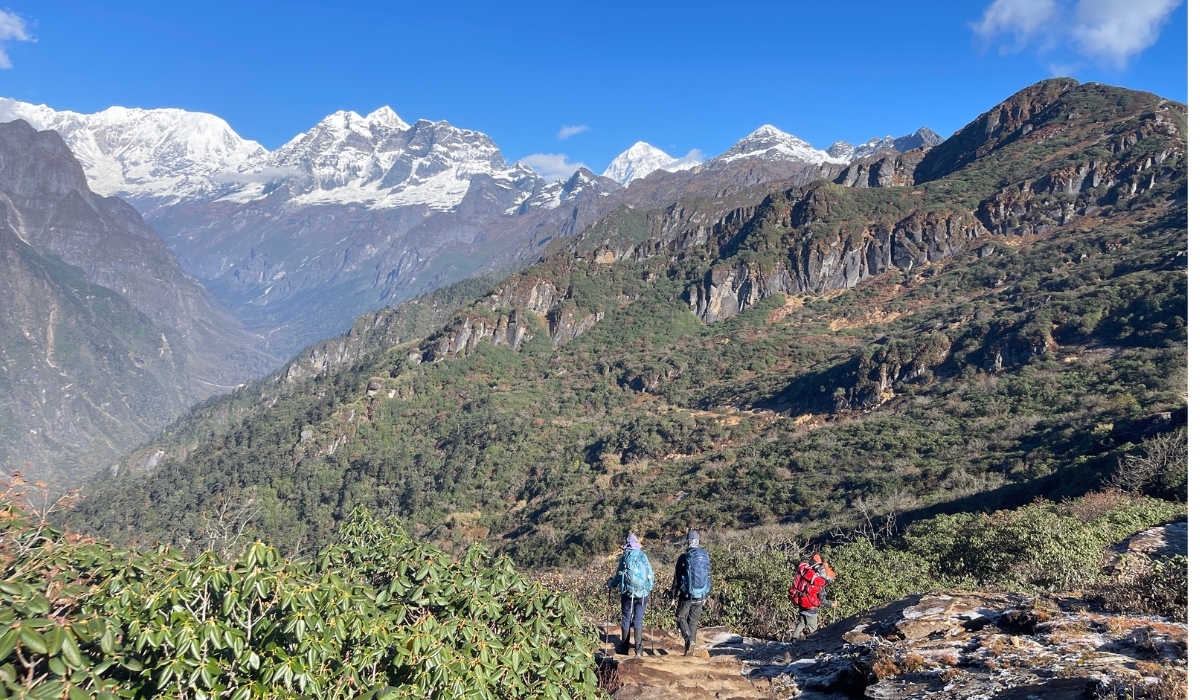
Beyond Tashigaon, the climb becomes steeper as the trail enters dense rhododendron forests and approaches Kongma Danda. The temperature begins to drop, and the surrounding landscape gradually changes as the route gains altitude.
Crossing Shipton La and Entering the Barun Valley
One of the first major challenges of the Makalu Circuit Trek is crossing the high passes between Kongma Danda and Dobato.
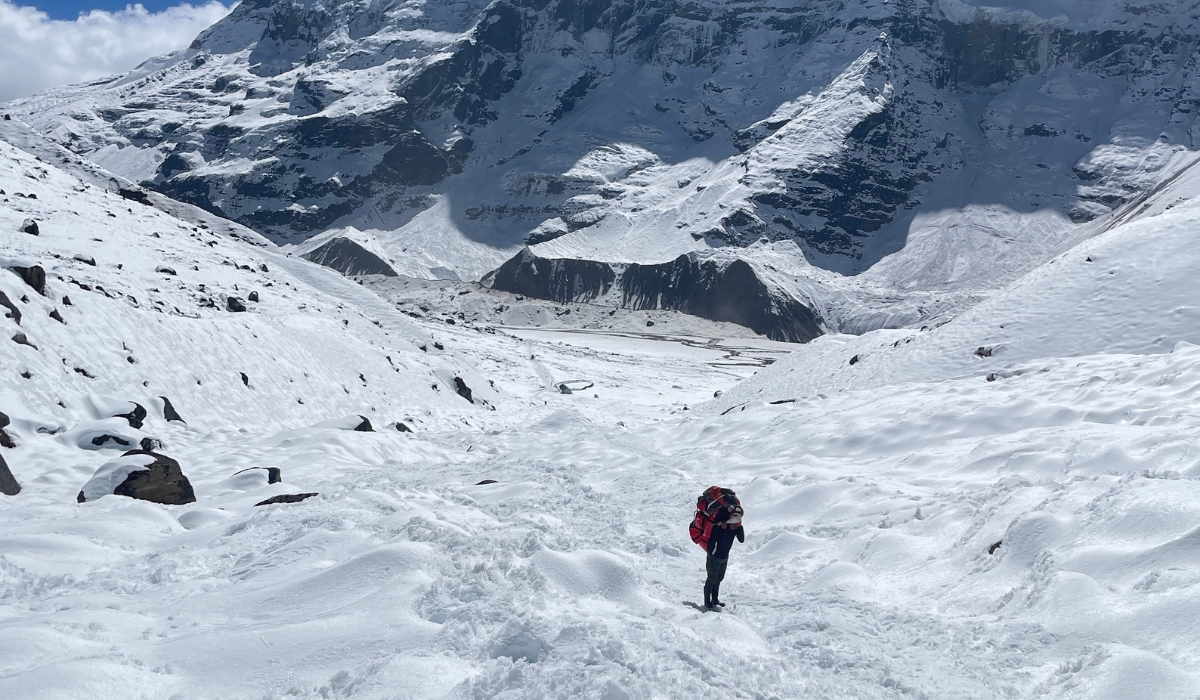
The trail crosses Shipton La and Keke La, with elevations above 4,000 metres. Depending on the season, snow and ice may remain on sections of the route, making the crossing more demanding.
On clear days, the surrounding ridges provide views of Mount Makalu, Chamlang, and other peaks of the eastern Himalayas.
After crossing the passes, the trail descends towards the Barun Valley. The scenery changes again, with steep mountain slopes, waterfalls, forests, and the Barun River running through the valley.
This section is particularly interesting because it shows how quickly the natural environment changes with altitude in the Makalu Barun region.
Reaching Makalu Base Camp at 4,850 Metres
Makalu Base Camp is one of the journey's main destinations. At about 4,850 metres, it sits below Mount Makalu (8,485 m), the world's fifth-highest mountain.
The approach follows the Barun Valley through Yangri Kharka and Langmale Kharka. As the trail climbs higher, trees gradually disappear, replaced by alpine grasslands, rocky slopes, glacial moraines, and snow-covered mountains.
From Base Camp, the massive form of Makalu rises above the surrounding glaciers. Its steep ridges and pyramid-shaped summit make it one of the most distinctive mountains in the Himalayas.
Trekkers may also explore the surrounding area and hike towards Makalu Patthar, weather and acclimatization permitting. This high viewpoint provides a different perspective of Makalu and the neighbouring Himalayan peaks.
For many trekkers, reaching Base Camp is the main objective. However, on this circuit, it marks only one part of a longer journey.
Beyond Base Camp: Kalo Pokhari and Tin Pokhari
The most remote section of the Makalu Circuit begins after returning from Base Camp towards the lower Barun Valley.
Instead of completing the traditional return route, the circuit continues towards Korlangue Kharka, Kalo Pokhari, Kholakharka, and Tin Pokhari.
These areas are considerably less visited than the main Makalu Base Camp trail. Routes pass through open pastures, steep mountain slopes, rocky ridges, and isolated valleys where camping is often necessary.
Tin Pokhari, meaning Three Lakes in Nepali, is one of the most interesting places along this route. Set among remote highland landscapes, the lake area offers a quiet camping environment surrounded by rugged hills and distant Himalayan peaks.
The journey through Kalo Pokhari and Tin Pokhari is not only about reaching particular destinations. It also allows trekkers to experience parts of the Nepal Himalayas where there are few permanent settlements and little modern infrastructure.
At night, the camping team prepares meals while trekkers rest in tents, surrounded by the quiet mountain environment.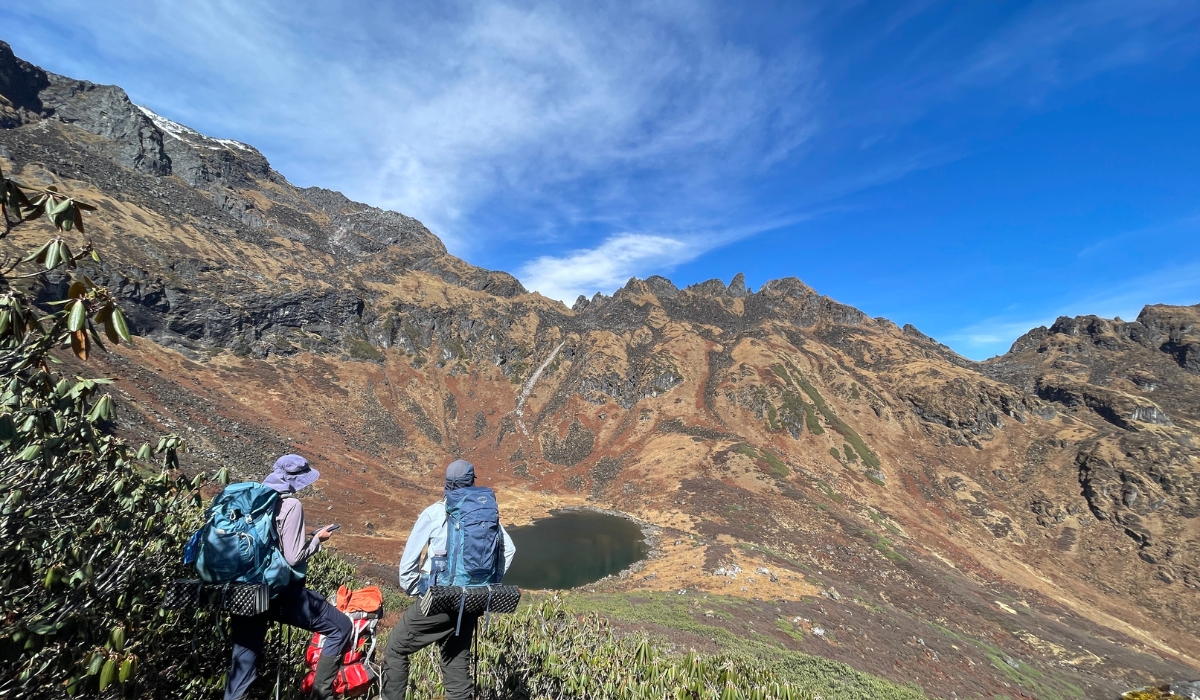
Crossing the Popti La Area
From Tin Pokhari, the route continues through the Popti La area towards Molun Pokhari and Bakhim Kharka.
This is one of the most demanding sections of the circuit. The trails can be narrow and difficult to follow, with rocky ground, steep descents, and exposed mountain slopes. Weather conditions can change quickly, particularly at higher elevations.
The landscape is also different from the forested valleys experienced earlier in the trek. Open ridges, isolated lakes, and wide mountain views give this section a strong sense of remoteness.
Beyond the higher terrain, the route descends towards Bakhim Kharka and Hongong, eventually reaching the lower valleys near Barun Dovan.
The return to the warmer foothills brings a noticeable change in vegetation and daily life, completing a journey through several different Himalayan environments.
Why Is the Makalu Circuit Trek Different?
The Makalu Circuit is not simply another route to a Himalayan base camp. Its main attraction lies in the variety of landscapes and the experience of travelling through remote mountain country.
The traditional Makalu Base Camp Trek follows an established route into the Barun Valley and returns along much of the same trail. The circuit via Tin Pokhari extends the journey into more isolated areas with fewer facilities and more demanding terrain.
The route also requires a different approach to trekking. Accommodation is often in tents, daily walking hours can be long, and the support of experienced local guides and camping staff is important.
For trekkers who have already explored popular trails in Nepal, the Makalu Circuit provides an opportunity to experience a quieter and less-developed part of the Himalayas.
Best Time for the Makalu Circuit Trek
The most suitable seasons are generally spring (April–May) and autumn (October–November).
During spring, forests at lower elevations are often filled with blooming rhododendrons, while the mountains may still hold winter snow. Autumn typically brings clearer mountain views and more stable conditions.
However, high passes and remote sections around Tin Pokhari and Popti La may still be affected by snow, ice, rain, or difficult trail conditions in either season.
Weather, trail conditions, and available camping locations should always be assessed before entering the remote circuit.
How Difficult Is the Makalu Circuit Trek?
The Makalu Circuit via Tin Pokhari is a challenging high-altitude camping trek, best suited to experienced trekkers.
Participants should be comfortable walking for several hours each day on uneven mountain trails. Some sections involve steep climbs, exposed traverses, and long descents. The higher elevations also require careful acclimatization.
Because the route enters areas with limited accommodation and communication facilities, proper planning and a reliable support team are essential.
This trek does not normally require technical mountaineering skills, but snow, ice, or other conditions can make particular sections more difficult.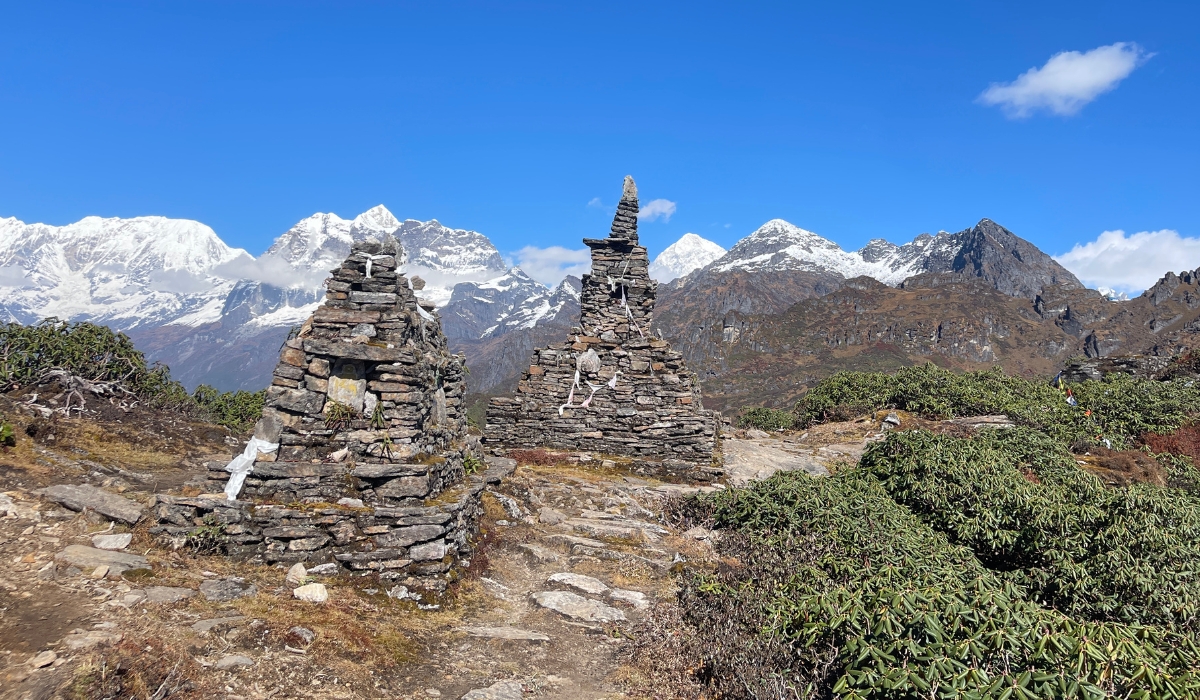
A Journey Through a Quieter Part of Nepal
What makes the Makalu Circuit memorable is not only the view of the mountains but also the gradual changes experienced throughout the journey.
The trek begins among villages and cultivated hillsides, crosses high mountain passes, follows the glacial Barun Valley to Makalu Base Camp, and continues into isolated lake country around Tin Pokhari.
Each part of the route has a different character, from the forests around Tashigaon to the rocky landscapes near Makalu and the quiet camping grounds beyond Kalo Pokhari.
For those willing to spend more time in the mountains and accept the challenges of remote trekking, the Makalu Circuit via Tin Pokhari offers a deeper experience of Nepal's eastern Himalayas.
Plan Your Makalu Circuit Trek
Alpinist Club organizes the 22-day Makalu Circuit Trek via Tin Pokhari with experienced local trekking guides, porters, and camping support staff.
For the complete route, day-by-day itinerary, accommodation, transportation, and cost information, visit ou
Makalu Base Camp Circuit Trek- 22 days